
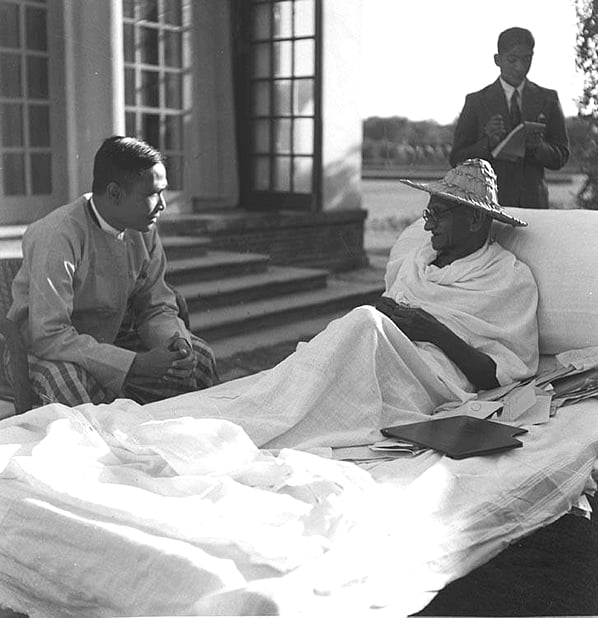
My association with the Burmese community living in exile in India began when I helped secure the release of Burmese pro-democracy activists from an Indian jail in 1989. The first activist I managed to bail out was a student of the Rangoon Institute of Technology, who, after police shot a student protestor named Phone Maw in March 1988, rose up to spark off what became the nationwide 8888 Uprising. The second activist I helped release was a Chin woman who joined the national uprising and had to leave her four children behind in Myanmar. Although at the time they were the only Burmese activists in Delhi, I noticed that the two did not interact at all, and carried out their activities separately. That was my first glimpse into the ethnic minority issues of Myanmar.
Almost all those who came to India after taking part in the national uprising of 8 August 1988 (hence 8888) finally opted for resettlement in a third country, moving on to Europe, Australia or the USA. In the West, they got opportunities to study, work and buy property. Since then, many of them have become full-fledged citizens; one of them, now in Norway, even teaches more recent Burmese arrivals about the Norwegian way of life.
A few refugees did choose to remain and work in India. One of them was Soe Myint, who came to India in November 1990 after he and a friend hijacked a Thai Airways flight from Bangkok to Yangon and diverted it to Kolkata in order to highlight the brutal military rule in Myanmar at the time. The hijacking was done very politely, and without arms. When the second hijacker spoke in Burmese to explain why they were hijacking the plane, a Japanese passenger asked him to translate the speech into English for the benefit of those who did not understand the language. When they landed in Kolkata, the crew and passengers requested that the Indian authorities allow them to have a photograph taken with the two hijackers.
When the Burmese hijackers were produced in court, Bengali youths came to garland them with flowers. In jail, they were treated as freedom fighters. Soe told me: "Aunty, the jails in India are really nice. We got such good food." I warned him not to generalise. Eventually, more than 30 Indian MPs signed for the hijackers' release, and Than Than Nu, daughter of former Burmese prime minister U Nu, stood bail for them. At the time, Than Than Nu and M S Prabhakar, who went by his Burmese name U Maw Thiri, were working for All India Radio's Burmese Service. Prabhakar had come to India after General Ne Win threw out the Indians in 1962; he translated Aung San Suu Kyi's writings into Hindi and ran a school in Delhi.