
(This article is a part of the web-exclusive series from our latest issue 'Labour and its Discontents'. More from the print quarterly here.)
India's tea sector is driven in large part by Assam and West Bengal, which account for over 70 percent of the country's tea production. There are at least one million tea workers employed on more than 1000 tea gardens in these two eastern states. The 150-year-old tea industry is one of the region's economic pillars, and contributes to the livelihoods of up to seven million people.
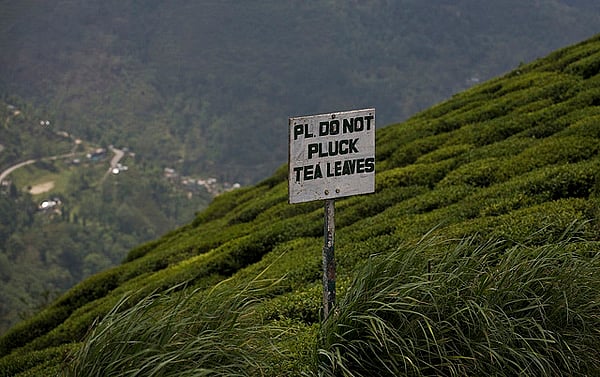
West Bengal, the largest tea growing state in India after Assam, is known for producing Darjeeling tea. More than 21 percent of India's total tea production comes from here. In the north of the state in areas such as Darjeeling, Terai and Dooars, there are around 270 gardens employing upwards of 260,000 workers. Major companies such as Tata Tea, Williamson Magor Group, Goodricke Group and Duncans Group are heavily involved in the state's tea industry, and the Williamson Magor Group is investing USD 20 million in order to expand its market presence.
The rolling tea estates of north Bengal hide the realities of malnutrition and starvation-related deaths. More than 100 people have reportedly died in five closed tea gardens since January 2014. However, the current Trinamool Congress (TMC) government in the state, like its predecessor the Left Front government, refuses to acknowledge that these deaths are related to difficult working conditions. Unofficial estimates put the death toll of workers and their families in Dooars and Terai at more than 1000 since 2002.