
In February, three Hummers – US-made luxury SUVs estimated to cost at least USD 500,000 each – were found abandoned on Dhaka's roadsides. A week later, in Old Dhaka, a crocodile turned up in the heart of a congested neighbourhood. Next, five pythons and a flock of rare deer were found abandoned; the snakes in a residential area, the deer in a disused iron foundry. Next was a luxury Toyota SUV, discarded on a highway.
As a military-backed interim government that suspended Bangladesh's January elections mounts a massive anti-corruption crackdown under a state of emergency, Dhaka's wealthy are feverishly abandoning luxury pets and toys that were once symbols of their power and opulence. By the third week of March, night raids led by the army had netted over 160 top politicians, former ministers and businessmen; their driveways and weekend retreats have given up a cheetah, hundreds of deer, peacocks, another clutch of Hummers and other luxury 4x4s, and even a late-model Porsche Cayenne SUV. In mid-March the interim government froze 53 bank accounts, mostly belonging to politicians, with collective funds worth a staggering USD 377 million. For the Bangladesh that lives on the other side of town – nearly half of whom make less than a dollar a day – these discoveries came as a rare window onto the lives of those who have been governing them.
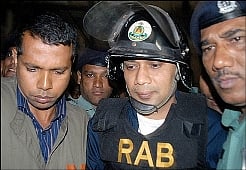
At the heart of the corruption that is being uncovered is Tarique Rahman, son of former Prime Minister Khaleda Zia. Over the past five years, Rahman has become an emblem of plunder and cronyism in the public eye. He earned the nickname of 'Mr Ten Percent' for his alleged cut in almost every big business deal that his mother's regime signed, and her tenure marked a meteoric rise for his business clique. Following his dramatic 8 March arrest (see image), Dhaka's national media reported that Rahman may not only have squirreled away as much as USD 230 million to Malaysian bank accounts – which Kuala Lumpur has reportedly frozen – but his investments run as far afield as South Africa. Among other things, his closest business associates are accused of selling millions of dollars worth of overpriced electric poles to a rural electrification board in Bangladesh, which should have spent that money setting up power plants.
When the current 'interim' regime swept into power on 11 January, it did so riding on the coattails of public outrage over the crude power struggle between the two major political parties, the Awami League and the Bangladesh Nationalist Party (BNP). In the first week of January, Bangladesh was caught in the grips of pre-electoral violence that had left over 30 dead; at that point, the League was boycotting the polls slated for 22 January, accusing the BNP of having rigged the voter rolls. Though the army had been called out to aid the civilian administration in maintaining law and order, there is little doubt that a bloodbath would have ensued had the polls gone ahead.