
In December 2006, King Jigme Singye announced he would abdicate the throne, making way for the young crown prince, King Jigme Khesar Namgyal Wangchuk. This move heralded a new era for Bhutan – the establishment of substantive democracy – under the guidance of its new and popular monarch.
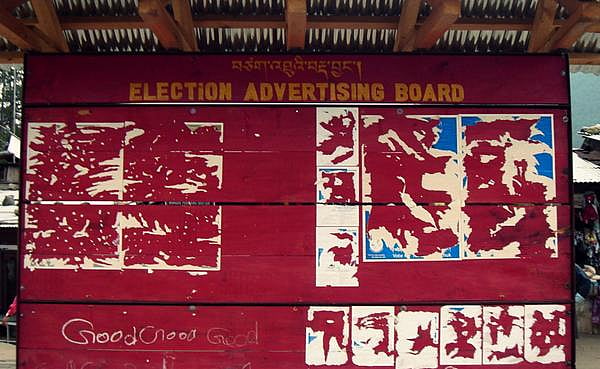
Shortly after his enthronement, King Khesar, often referred to as K5 (he is the fifth King of Bhutan) by his citizens, made clear his desire to see great changes in the country's political system. Political parties, once regarded as a wholesale threat to peace and stability, came into existence. Bhutan's first general election, held in 2008, paved the way for the Bhutanese people to experience the world's most popular form of government. Of the two parties in the field, Druk Phunsum Tshogpa (DPT) won 45 of 47 seats in the lower house, making the People's Democratic Party (PDP) the world's smallest opposition. Bhutan's upper house, meanwhile, is apolitical. Additionally, the constitution promulgated in July 2008 formally changed the absolute monarchy in Bhutan to a constitutional one.
While overall voter turnout was much higher than expected, the election failed to address the prevailing grievances of the people, and was not as democratic as expected. The US-based Hindu American Foundation, which monitors the human rights of Hindus across the globe, reported that around 80,000 eligible people were denied the right to vote.
There were many complaints about the poll results in 2008 and about local government elections held thereafter. The two elected members of the PDP had initially tendered their resignations after allegations of forgery. Election monitoring was poor in 2008, with only a few individuals handpicked by Thimpu acting as observers. Monitoring mechanisms were almost completely absent during local government elections.