
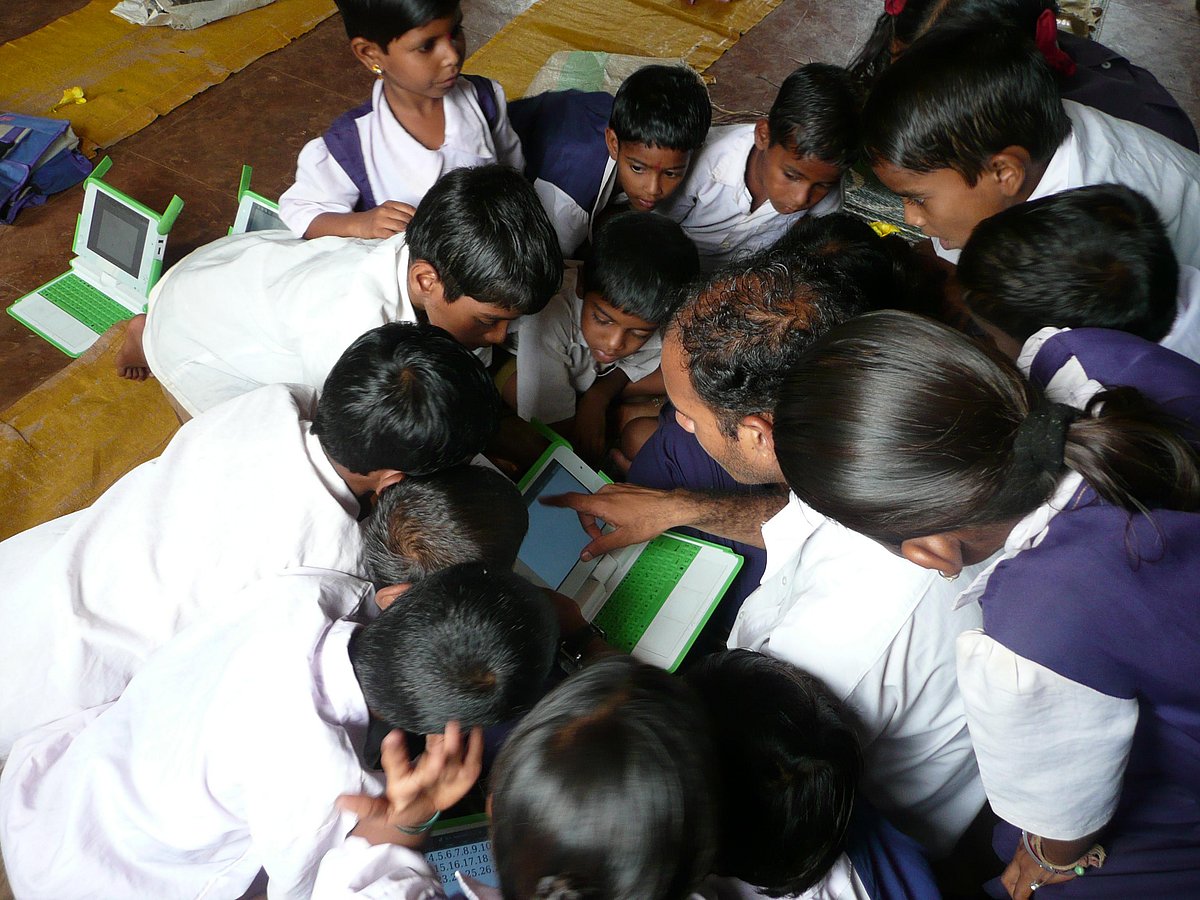
The education sector in India has entered a state of emergency. In August 2021, a parliamentary standing committee report on the learning gap caused by prolonged lockdown (quoting 2020 statistics from UNESCO) estimated that around 320 million children in India had not stepped into a classroom for more than a year and had lost a tenth of their schooling as a result. The central government has come under increased scrutiny, with national and international media covering how the digital divide is exacerbating inequality in the school education system. Amidst this criticism, the Centre has made several proposals linked to developing high-quality online content for schools as part of the 2022-2023 Union Budget. This includes expanding its 'one-class, one TV channel' programme, which allows states to provide supplementary education for students in regional languages, from 12 to 200 channels. The government also proposed setting up 750 virtual labs in science and mathematics and 75 e-labs focused on building livelihood skills, critical thinking and creativity to address this loss in foundational learning during the pandemic. Presented on 1 February, 2022 the second budget since the COVID-19 pandemic provided a chance to usher in reforms to strengthen the social sector and redress inequality. What was the result? A 'betrayal of the poor, a failure of the State in its duties', according to Jyotsna Jha, the Bengaluru-based Director of Centre for Budget and Policy Studies, in an article published in the Deccan Herald.
Finance Minister Nirmala Sitharaman's reliance on infrastructure coupled with increased public capital investment to boost private investment, and her emphasis on digital solutions were criticised by analysts and reporters as the budget failed to address stark income inequality. In the field of education too, the promotion of digitisation as an easy solution has been criticised as impinging on the right to education.
The budget proposals made for this sector are either a reflection of policymakers' minimal exposure to the realities experienced by the wider population, or a determined effort to keep quality education from a large chunk of the population. In the Economic Survey 2021-2022 (an annual report card of the economy by the Ministry of Finance, which is usually tabled just a day ahead of the budget reading), the section on education begins with, "It is difficult to gauge the real-time impact of repeated lockdowns on education sector because the latest available comprehensive official data dates to 2019-20. This provides the longer time pre-COVID trends but does not tell us how the trend may have been impacted by COVID-19 induced restrictions."
The pertinent question is, if the government has no official data, then what served as the basis for its proposals on educational reform and digitisation?