
The Modi government's double take on the directive to punish purveyors of fake news was interesting, not least for the variety of reactions it spawned. Although sections of the pro-Modi rightwing have been known to be amongst the chief purveyors of false facts, they, and the community of journalists, were under no illusion about how the directive would be used – to silence critical media.
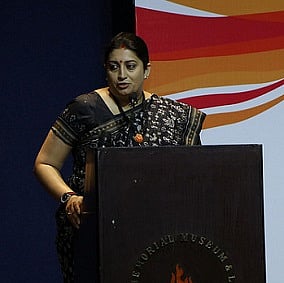
Smriti Irani, who made the news in the past for her fake degree, and under whom the Information and Broadcasting Ministry brought out the 'fake-news' directive, decided to make the most of the rescinding of the directive by calling for post facto consultations on the directive.
Media baron Vineet Jain, known for pioneering the paid-news business model of media through the Times of India, also took to the social media for some epistemological critique of that famously slippery category, 'fake news'.
While his contention that genuine inaccuracies in media should not be equated with fake news was a good idea, one wonders where in the spectrum Jain would place 'paid news,' often seen in the pages of his own paper.