
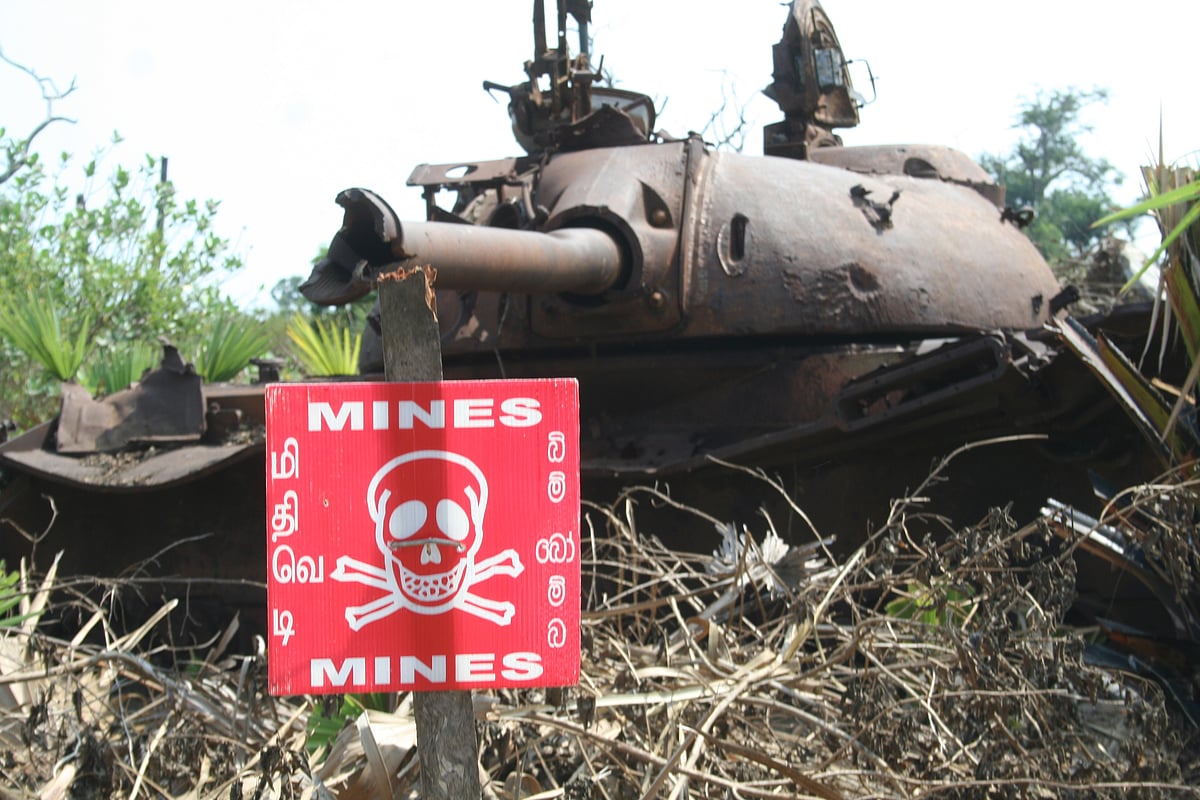
In post-conflict Sri Lanka, governance is being militarised.
After the defeat of the LTTE, it was hoped that Southasia's most desirable capital city, whose many beautiful trees had been cut down due to concerns over security for President Mahinda Rajapakse and his brothers, would once again become people-, pedestrian- and environment-friendly. There was great optimism that life would indeed return to normal, that the barriers and checkpoints would come down, that tourists and foreign investment would flow back into the country, and that the economy would finally take off in an environment of peace and security. Residents of Colombo also looked forward to an end to the culture of impunity that had long surrounded politicians – breaking the capital's speed limits at will, for instance; as well as to the lifting of the Emergency Regulations, which had also been used and abused by the state during the Janatha Vimukthi Peramuna (JVP) uprising of the late 1980s and early 1990s, when tens of thousands died in southern Sri Lanka.
Today, these hopes have been dashed. It is increasingly evident that the Colombo regime's insecurities (despite or perhaps because of weeks of vainglorious victory celebrations), coupled with thirty years of war, has left an institutional legacy and security mindset – both of which will need to see considerable shifts before the country is able to see much positive change, economic or otherwise. The question on many minds now is: Will militarisation be a substitute for democratisation beyond the show of local elections in former LTTE-held areas? Plans are currently on the table to hold polls in the north, despite the fact that some 280,000 people continue to be interned in camps in the area, with serious restrictions placed on their mobility, and despite the fact that army and government-allied paramilitaries control the region.
It is increasingly clear that the governance cost and democracy deficit will be the most long-term impact of the three-decade conflict in Sri Lanka. The human price tag of those long years of war are evident in over 100,000 lives lost and maimed, and over half a million displaced at different times, including today. The mounting economic expenditure of the conflict is also evident in the fact that, during the final year of the war, the Colombo government spent almost 17 percent of gross domestic product on the war effort. This is partly the reason for the currently pending USD 2.5 billion loan request from the government to the International Monetary Fund (IMF). Sri Lanka has the largest armed forces per capita in Southasia, and is having trouble paying salaries, as well as electricity bills in public schools in the president's electorate. Given the possibility of aid monies being used in a less-than-transparent manner, the IMF would need to ensure safeguards that any loan does not subsidise still-greater militarisation in Sri Lanka.