
When one thinks of road construction, one often conjures up images of muscular men digging trenches and moving boulders. At this year's Photo Kathmandu, Nepal's international photography festival, a photograph from 1956 contradicts this cliché. Taken during the construction of the Prithvi Highway – a major roadway in Nepal – it depicts mostly women labourers, clad in fariya, choli and patuki – a traditional garb of Nepal's hills – who are armed with shovels, working their way through the road.
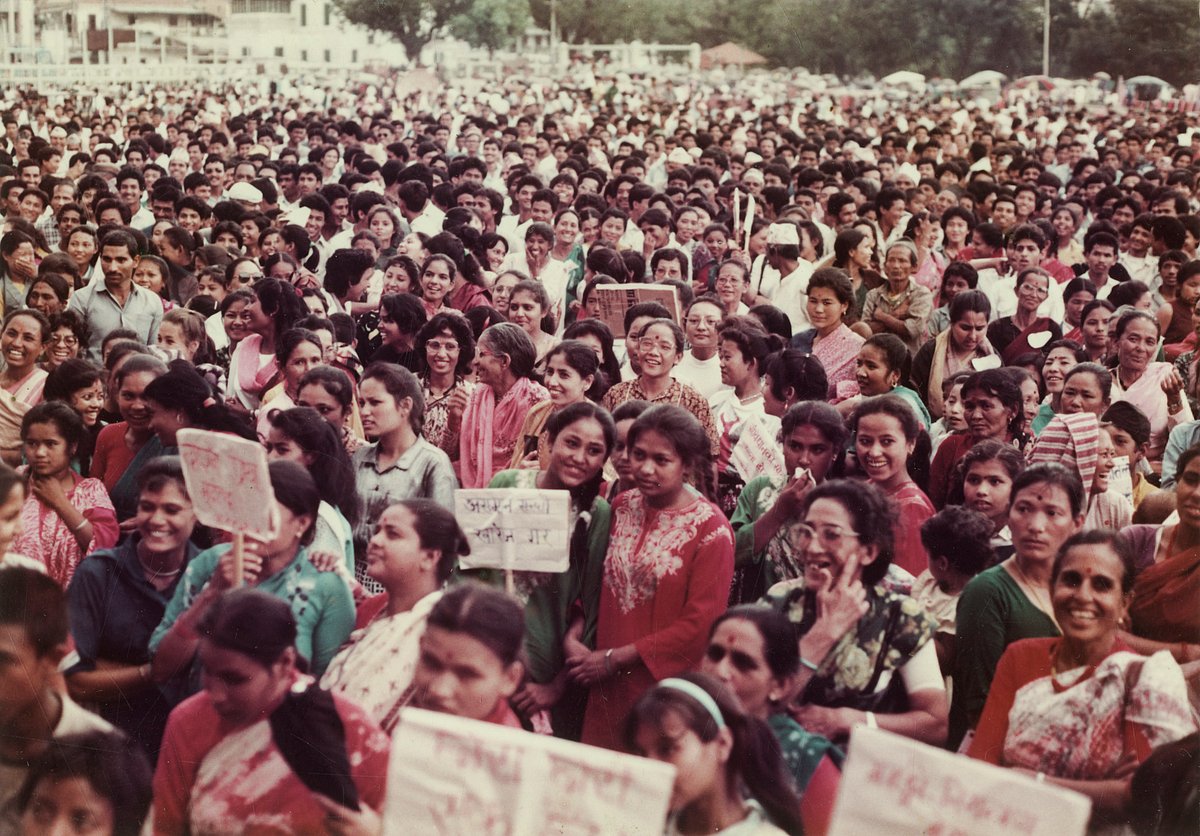
This, in a snapshot, encapsulated the third edition of this month-long festival of photography, organised by photo.circle, a Kathmandu-based organisation which also runs a digital archive of photography. Centered around the themes of "gender, power, identity, patriarchy, and sexuality," this year's Photo Kathmandu (October-November 2018) seemed intent on challenging received wisdom about the public contributions of women in the making of modern Nepal. With its exhibits placed deliberately and prominently in alleys and neighbourhoods of Kathmandu Valley's historic towns, along with archival initiatives like the Feminist Memory Project, the festival was creating a visual archive of Nepali women's struggles that are often missing from mainstream history and public memory.
"Not just in Nepal, but all over the world, the contributions of women to any sector are not well known. That is not because women made fewer contributions, but because the pen was not in their hand. We know that history is written by those who have access to writing, and women have rarely been in that position," says Binda Pandey, a leader of the Nepal Communist Party and a feminist activist, whose photos were among the exhibits.
Women-led political activism for equality is not a Western concept, says Diwas Raja KC, the curator of the Feminist Memory Project. "It has been deeply rooted in Nepali culture, whether it is in political movements that demanded education and property, or in labour movements demanding equal pay and maternity leave," he says. The Feminist Memory Project was, therefore, an attempt to "broaden the definition of feminism and include many movements that contributed to women's improved status today," he adds.