
Do Black lives matter to Southasians? Depressingly, the answer can seem like a resounding 'no'. African residents have faced horrific racism in India: in early 2017, African diplomats accredited to India issued a press release condemning attacks against African students as "xenophobic and racial in nature". Many Southasians blindly subscribe to some of the worst stereotypes of African Americans. In the United States and the United Kingdom, Southasian immigrants' support of Donald Trump and Brexit have had clear racial overtones, drawing a line between 'desirable' and 'undesirable' immigrants and minorities.
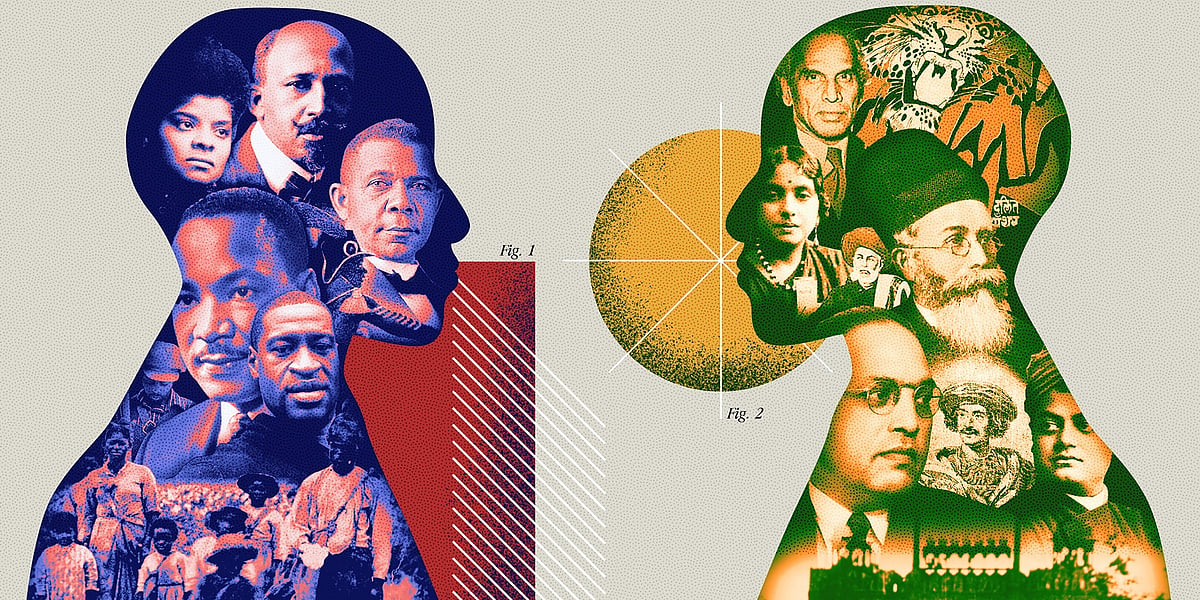
And yet, the Southasian faces at recent Black Lives Matter protests offer hope. They also point to a much longer and deeper history between Southasians, Africans, and members of the African diaspora (leave alone the centuries-long presence of African diasporic communities within Southasian countries). In fact, Black lives have mattered a great deal in the history of modern Southasia – especially through the Indian nationalist movement and the broader campaign against colonialism. There has been a shared struggle that goes well beyond what comes to mind for many Southasians: the influence of M K Gandhi's nonviolent thought on Martin Luther King Jr and Nelson Mandela, or B R Ambedkar's insights into similar predicaments of Dalits and African Americans. Indeed, in this shared struggle, Southasians have greatly relied upon and benefited from the support of Africans, West Indians, and African Americans.
Today, this history should compel Southasians – whether in the Subcontinent or the diaspora – to take the Black Lives Matter movement seriously and to augment antiracist participation. History reminds us that there is a fine line between modern-day prejudices and those that our ancestors faced and fought against.
It is not difficult to see why Blacks (and here I define the term broadly to include Africans and members of the African diaspora in the West) and Southasians worked together in the past. During the 19th and early 20th centuries, they faced remarkably similar predicaments in their respective countries: severe economic injustice, colour prejudice, political disenfranchisement, and colonial violence. Looking at the history of African Americans and Indians, the historian Nico Slate has eloquently written of a "colored cosmopolitanism" shared by political activists in India and the United States. Slate channels the towering African American intellectual W E B Du Bois to describe how coloured cosmopolitanism appealed to those forging "a united front against racism, imperialism, and other forms of oppression." This was a dynamic whereby someone like the nationalist and feminist Kamaladevi Chattopadhyaya, traveling across America between 1939 and 1941 to champion Indian independence, could also take a stand against Jim Crow laws. A similar dynamic existed more broadly with Africans and other members of the African diaspora. From the Subcontinent to the West Indies, from Calcutta to London, and from a plethora of new organisations and institutions that blossomed across the global south, Blacks and Southasians forged common struggles for emancipation.