
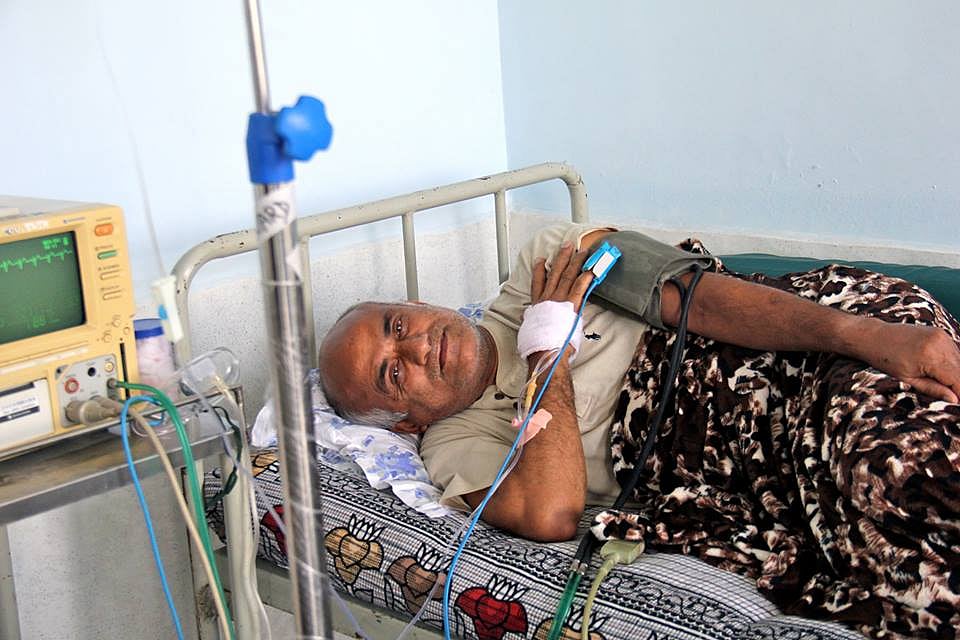
In the tail end of January 2016, the prospect of an orthopaedic surgeon sitting for a fast-unto-death emerged as a prominent media story in the febrile political atmosphere that pervades Kathmandu.
This might have appeared unusual in a country where politics in recent times had revolved around issues like constitution writing and the deadly 2015 earthquake. Yet, a series of protests by Dr Govinda KC – a professor of orthopedics at Nepal's largest public hospital, Tribhuvan University Teaching Hospital (TUTH), popularly called the Teaching Hospital – over the last four years has managed to amass significant popular attention and support.
Since 2012, Dr KC has launched seven separate rounds of hunger strikes to demand a wide range of reforms in medical education within Nepal. The demands began as an objection to political interference in the autonomy of the government-run Institute of Medicine (IoM) but have since expanded their scope. IoM was established in 1972 under the country's first and largest public university, Tribhuvan University (TU), with the aim of training different categories of health professionals in Nepal. With several medicine and nursing teaching colleges and hospitals under its umbrella, including the Teaching Hospital, IoM constitutes the largest such body in the country.
At the core of Dr KC's demands is an effort to curb what is seen as the unfettered privatisation of the medical industry, particularly institutions providing medical education. Fellow activists and critics argue that such a trend compromises the quality of not only health education, but by extension, the public health system, while merely serving to line the pockets of investors and their political allies. In the process, an administrative dispute over the appointment of an official at the IoM has grown and transformed into a movement for the wholesale overhaul of medical education in the country.