
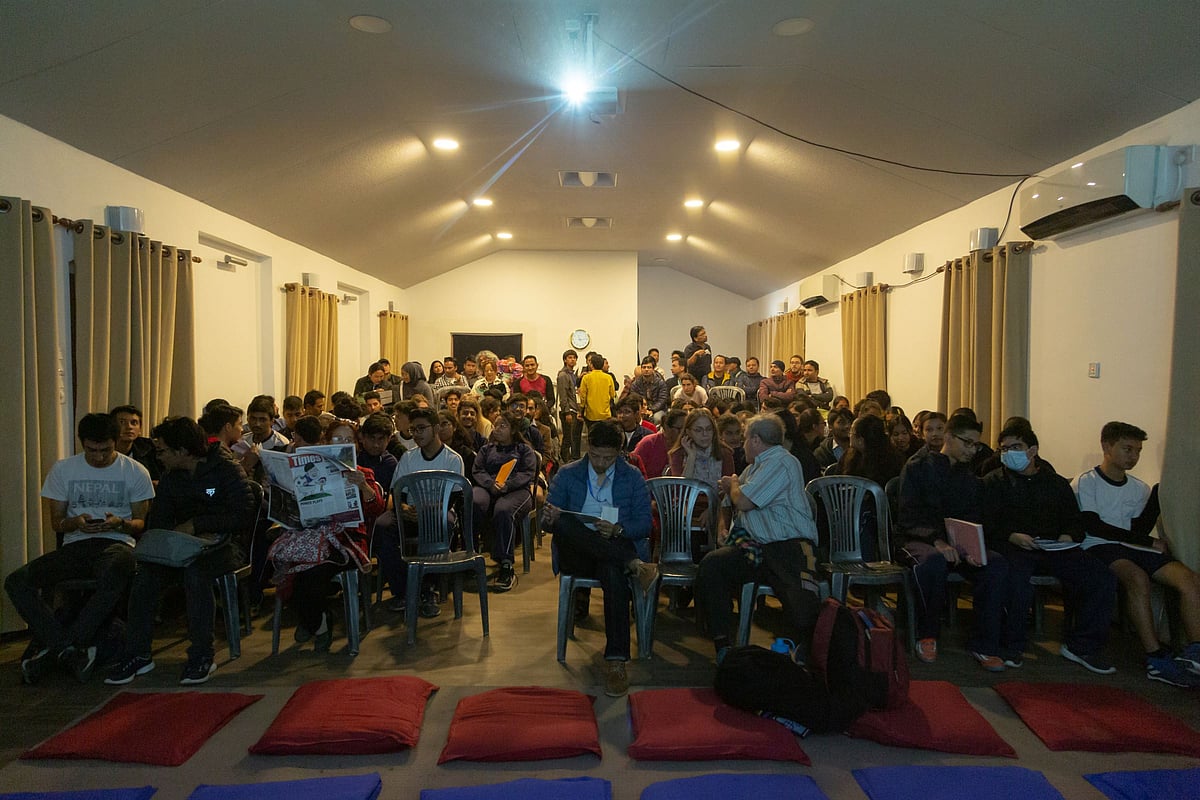
The 12th edition of Film Southasia (FSA) was held in Kathmandu from 14 – 17 November 2019. In her opening remarks at the inauguration, the festival director Mitu Varma said that it took over a year to select the films from 2500 entries. The festival had opened its doors this year to digital entries, which had multiplied the number of films. Kanak Mani Dixit, currently the chairperson of the FSA, pointed out in his inaugural address that the festival was being held at a time of democratic distress in Southasia. The title of the festival, 'Where the Mind is Free', Dixit said, was inspired by Tagore's poem 'Where the Mind is Without Fear'. This point was amply demonstrated in the festival's inaugural film Indus Blues (2018) from Pakistan, directed by Jawad Sharif (2018) – a documentary on the dying art of making musical instruments and the associated musical traditions that were becoming extinct. As the film illustrated, the combination of globalisation and ideological fundamentalism in Southasia had resulted in a shrinking space for music and art. In particular, the cultural formations linked to musical instruments were getting lost. Some of the musicians documented in the film were the last surviving members of their tradition.
All in the family
Family was a central theme in many of the documentaries shown at the festival. Abu (2017) by Arshad Khan dealt with the difficult relationship of a gay son with his father through changing political times and spaces, as the family migrates from Pakistan to Canada. The film was interesting in its use of home videos, Hindi film songs, photos and albums that charted the protagonist's life from childhood to adulthood. The mother, who loves her son dearly, and dances with abandon in Pakistan to Chalte, Chalte from Pakeezah in a home video, becomes quite conservative in Canada and is critical of her son and his life choices.
Anant Raina's Badshah Lear (2019) focused on the emotional return of actor and theatre director M K Raina to his home Kashmir after many years. The film also looks at his attempt to revive the local theatrical form of bhand to stage an adaptation of King Lear. The text of Shakespeare's famous play is unknown to the folk artists and its adaptation to a form that relies on improvisation has its moments of humour and pathos. Like Indus Blues, this film depicts the threats to the arts by fundamentalist forces. Merely practicing an art form becomes an act of great bravery and resistance. Interestingly, Kashmir was featured in several other films at the festival, including Naseer Khanday's Iron Khan (2017), Mehvish Rather's Backyard Chefs (2019), and Simone Mestroni's After Prayers (2018) that won the Tareque Masud Award for Best Debut Director.