
In 1981, the cinema theatre near my home in Calcutta became a mehfil-e-mushaira. At the end of each show, majnoohs walked out of the darkness humming tunes and reciting ghazals. Muzaffar Ali's Umrao Jaan allowed non-Urdu speakers to revel in the richness of Urdu culture, which most of us non-Muslims saw as exotic and attractive, yet distant. (Muslim culture would be further rendered exotic in 1982 in two films, Nikaah and Deedar-e-yaar.) These are all films of decline, where a supposedly homogenous Muslim culture is rife with problems – some easy to overcome (divorce rates), and others intractable (the demise of the kotha culture). The elegance of the language thrilled many urbane Indians, who enjoyed the patois but felt uncomfortable with the working-class and rural sections that actually spoke it.
As Ali's movie thrilled, Biharsharif burned. The local Rashtriya Swayamsevak Sangh chapter provoked a major fight over cemetery land, the first confrontation since 1945. The riot that ensued left many dead, and inaugurated a new dynamic in Indian politics. In the mid-1980s, 60 riots shook the small towns and cities of Uttar Pradesh. Late in that decade, in 1987, Ramanand Sagar's Ramayana (written by Rahi Masoom Raza) entered the homes of millions of people. All this prepared the terrain for the rise of Hindutva, and for the mayhem of the 1990s.
Umrao Jaan's lyricist Shahryar anticipated this evolution, as the courtesan travels to Faridabad, the town that neighbours Ayodhya, and sings, "Yeh kya jageh hai, doston." What kind of place is this, friends?
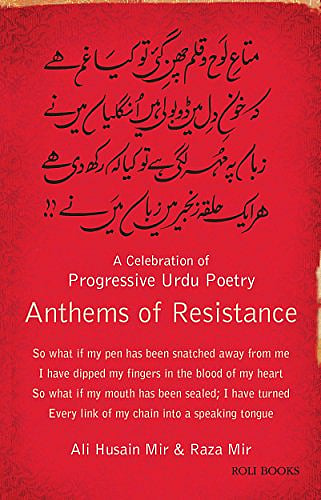
With Anthems of Resistance, Ali Husain Mir and Raza Mir, two brothers hailing from Hyderabad, in the Deccan, come bearing a substantial gift. Archaeologists of a lost sensibility, they tear the wild foliage of communal hatred aside and take us to a promised land: this is not freedom itself, but the articulation of revolution by a generation of poets. The story begins in 1934, at a Chinese restaurant in London, where some of the greatest artists of the day met to found the Progressive Writers' Association (PWA). Their unabashedly modernist manifesto called upon artists to "rescue literature and other arts from the priestly, academic and decadent classes in whose hands they have degenerated so long; to bring the arts into the closest touch with the people; and to make them the vital organs which will register the actualities of life, as well as lead us to the future."