
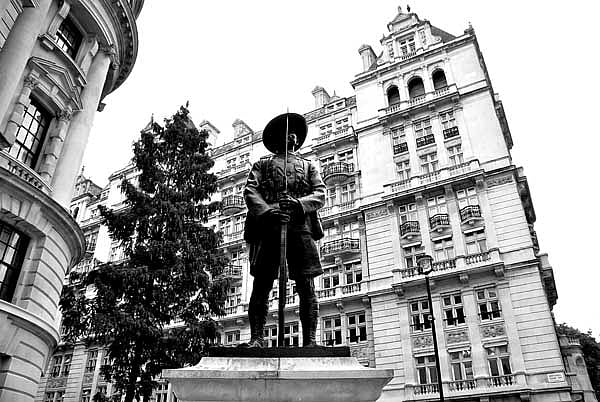
Laxuman Gurung was awarded the Victoria Cross for his performance in the Burma Front in 1945. He lost his right arm and much of his hearing during the medal-winning action. In 1993, he was asked by Gorkha Sainik Awaj, a magazine representing the interests of former and serving soldiers, how many people he had recommended for the army. The pensioner replied: "I joined a foreign army; was involved in a war and lost my arm. I could have died but with luck I lived. Many of my friends died in the war, some froze to death, many were blinded when engaged in war in the high Himalaya. Anybody who sends an able young person to the army to experience all that dukha is guilty of paap. I cannot do such paap. I cannot recommend anybody to join the army."
Dukha – bodily pain, mental suffering, extreme hardship and death – has been real in the life of Laxuman Gurung. And yet, as a subject of reportage and scholarship, the Gurkha's dukha has remained virtually unexplored. Celebratory accounts over the course of the century have glorified the dogged courage and loyalty of the men from Nepal's hills, and the vicarious honour they bring their country while fighting the Empire's war. Gurkhas emerged from the two world wars as icons of superhuman bravery, and were in a class apart when it came to enduring the pain and suffering of battle.
The genre of celebratory writing is exemplified by B M Niven's 1987 coffee-table book. The Mountain Kingdom: Portraits of Nepal and the Gurkhas. Niven, himself a Gurkha officer, wrote: "Even terribly wounded [Gurkhas] cling on and their tough bodies and harsh upbringing enable them to endure. The job in hand and the name of the regiment are everything… Death and the threat of it, they are used to by their very upbringing and so they do not hold back at the prospect of death or of danger that may precede death. Discomfort, they are inured to from childhood and so at war the prospect of being out in, and at the mercy of, the elements, does not in any way inhibit them."
The Gurkha's stoicism, accounted for by 'harsh upbringing', is invariably linked to his proverbial loyalty to the saheb commanding officer. There is, for example, the lore reported by the writer Edmund Candler in his 1919 book, The Sepoy: in France, a British officer is knocked out by shell-shock. He opens his eyes to find his orderly kneeling over him fanning the flies off his face, tears streaming down his cheeks.