
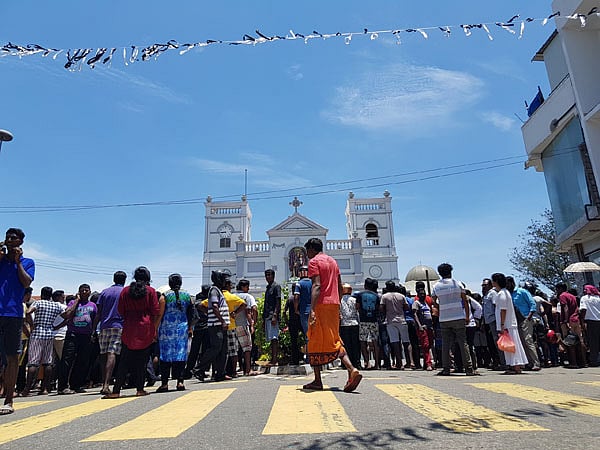
The Islamic State of Iraq and Syria (ISIS) has claimed responsibility for Sri Lanka's Easter Sunday massacre. The claim, made more than 48 hours after the coordinated series of attacks targeting churches and downtown hotels on April 21 is yet to be independently verified, but appears to have been accepted by the authorities. The government has also claimed that the local partner of this murderous enterprise was a little-known organisation called the National Thowfeeth Jamath (NTJ), or a breakaway from it.
What is beyond doubt is that every single suicide bomber – reportedly eight men and one woman – were Lankan Muslims, many of them from middle and upper-middle-class families, successful businessmen and professionals, even parents approaching middle age, rather than hot-headed young men. They had everything to live for, and chose to die, taking with them more than 250 innocent lives. (Initial figures of more than 350 deaths have been revised by the government)
That choice is in stark contrast to the conduct of the community the bombers belonged to. Lankan Muslims have not resorted to politically motivated violence, not even when they were attacked. And they have been attacked repeatedly, by Sinhala-Buddhist mobs and by the Liberation Tigers of Tamil Eelum (LTTE). The last such incident was the anti-Muslim riot of Digana, Kandy, in March 2018. But the community never employed retaliatory violence. After each attack, they'd pick themselves up, and return to the work of living. They received little commendation, and even less justice; on the contrary, every single crime of every single Islamic terrorist or extremist anywhere in the world was held against them as part of the rise of Islamophobia in Sri Lanka, as elsewhere. Though they themselves had not opted for political violence, Lankan Muslims were forced to bear the burden for others' crimes.
The eschewing of retaliatory violence was something Lankan Muslims had in common with Lankan Christians, the community the planners of the Easter Sunday massacre chose as their primary victims. Like Muslims, the Christians of Sri Lanka have been subjected to violent attacks repeatedly. Like Muslims they never fought back. Like Muslims they got little or no justice or protection from whatever the government in office.