
Chhup na sakega ishq hamara/charon taraf hai uska nazara
Our love is impossible to be hidden away/Its signs are to be seen everywhere
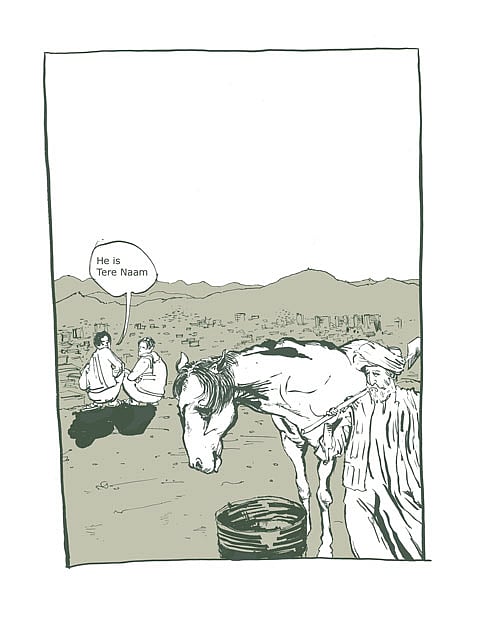
In a country estate in Paghman, northwest of Kabul, I once encountered a horse that had its mane cut in a strange way. Something about the way the hapless animal peered out from behind its locks of hair seemed familiar. But it wasn't until the boys who worked on the farm spoke his name that the penny dropped. "He is 'Tere Naam'," they giggled, pushing their own hair, cut in the same pudding-bowl style, out of their eyes. Tere Naam was a popular Hindi film that had taken the country by storm, and the movie's hero Salman Khan had made the signature haircut all the rage. I had seen almost every young man in Kabul sporting the same look. This was 2006 and my first visit to the city. From reading and anecdotes, I was somewhat prepared to encounter such sights, and find the notorious popularity of Bollywood films reflected in fads and fashions. But horses styled like Hindi film heroes were beyond my preparation. That was one of the first inklings I got of the many ways in which you encounter Bollywood in Kabul, sometimes in places you least expect.
The love affair of Afghans with mainstream Hindi cinema is well documented over the years. It found a new lease of life with the ouster of the Taliban regime in 2001, and the lifting of the ban on theatres and TV. The arrival of truckloads of Hindi movie VCDs via Pakistan coincided with the waves of journalists arriving from all over the world, and the happy reunion was reported across the globe. Then, as now, the first visual impressions of the city are marked by its obsession with Bollywood. From the posters and pictures of various stars on shops all over town, to references in conversations and the music on the radio, Bollywood seems both ubiquitous and incongruous in this town, its plasticky glamour made all the more garish by the contrast with the battered, bullet-riddled facade of the city.
That's how it seemed to me when I first arrived in Kabul. Like most Indian journalists, I faithfully sent back stories to newspapers at home about the soft power of India, the fame and love we got because of Bollywood and Indian TV soaps. My articles had funny observations on the overblown aspects of this adulation with quotes from Afghans professing admiration for various stars, and an appropriately cutesy ending about a city battered by decades of war finding hope and happiness in Hindi films. Interestingly, most of these reports followed almost the same narrative arc as those of successful movies – a set up of romantic comedy, an interlude of tragedy and separation, and finally a tentative hopefulness and reunion of the lovers, in this case Mumbai and Kabul.