
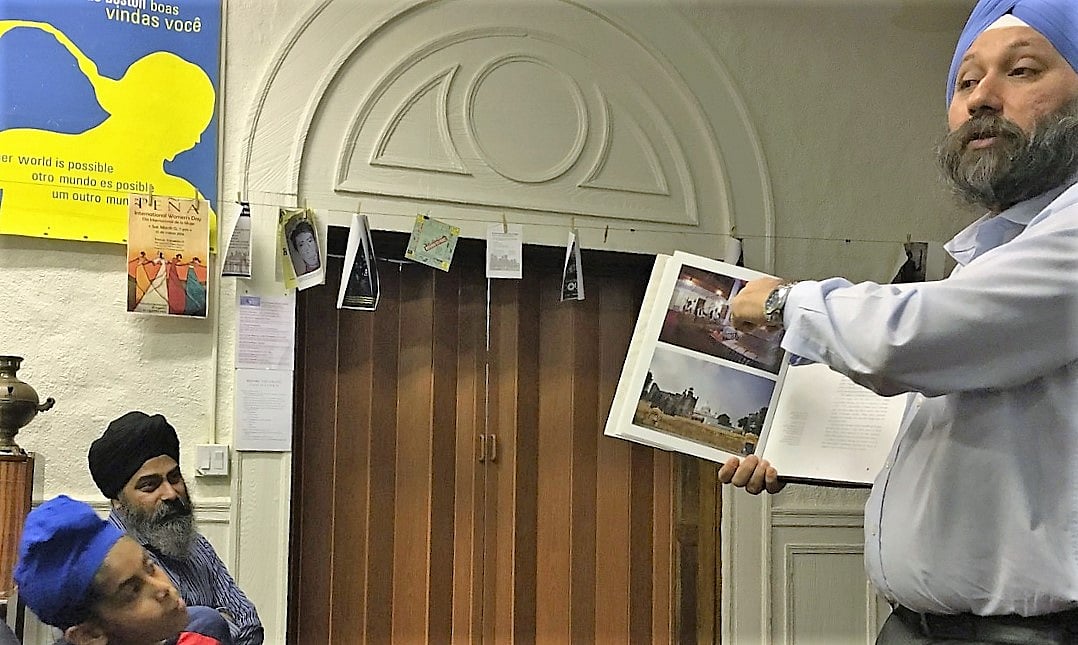
If you could visit any place in Pakistan, where would you go?" asks Amardeep Singh each time he gives a talk to introduce his recently published travelogue Lost Heritage: The Sikh legacy in Pakistan.
The question, aimed primarily at members of the audience who are Sikh, invariably elicits two answers: Sikh holy places. And the desire to see their ancestral village. It was the same in Boston on 18 June 2016 at the E-5 Center, where Singh gave his talk. He understands the responses all too well. After all, he too once had the same "myopic" reasons, as he says, for wanting to go to Pakistan, which he considers his "homeland" – land of his ancestors and the site of many of Sikhism's holiest shrines like Nankana Sahib, birthplace of Guru Nanak.
When Singh finally did fulfill his dream of visiting the country in 2014, he had an epiphany halfway through his solitary trip that changed the meaning of his travels. He realised that reducing Pakistan to religion was doing a disservice to its people and heritage.
The process may have begun earlier, when Singh applied for a visa at the Pakistan embassy in Singapore, where he has lived for the past 16 years. When the visa officer handed him back his passport, Singh refused to take it.