
A baby cried, an old man coughed with tuberculosis-infected lungs, and two young men and a girl crooned an old Mara song. A Burmese cheroot was lit, and passed it to anyone who showed any enthusiasm for smoking this vile imitation of a cigar. Suddenly, the vehicle we were all travelling in skidded, the tires spinning and splattering us with mud. We were stuck again.
Still, things seemed perfectly normal in the early-morning chill. It was November 2006, and I was making my way back to the village of Phura, deep in southern Mizoram. The ride from the town of Saiha to Phura is a mere 98 kilometres, yet it was to take 14 hours in a battered Mahindra pickup, loaded with people and sacks of rice. During that time, our vehicle snaked along precipitous foot trails, which had been cut wider to serve as tenuous roads. The rice sacks were meant for the public distribution system, but for the moment they also served as seats for the 30 to 40 passengers at the back. Twelve of my co-passengers were friends from nearby villages, and the others I recognised by sight. They knew that I was here for the ramsa ('wild animal' in the Lushai language) survey, which was to document mammals and birds in the area.
A little more than a year earlier, my colleague Arpan and I had been sitting in the state capital Aizawl, trying to decide where to start a community-based conservation initiative. We could hardly have imagined that we would eventually reach Mara District, in the southernmost tip of Mizoram, a place that seemed surprisingly blank on the political map. It intrigued us that there still existed areas with such minimal human presence and vast forest cover. Even wildlife biologists had neglected this lush area, due simply to its remoteness.
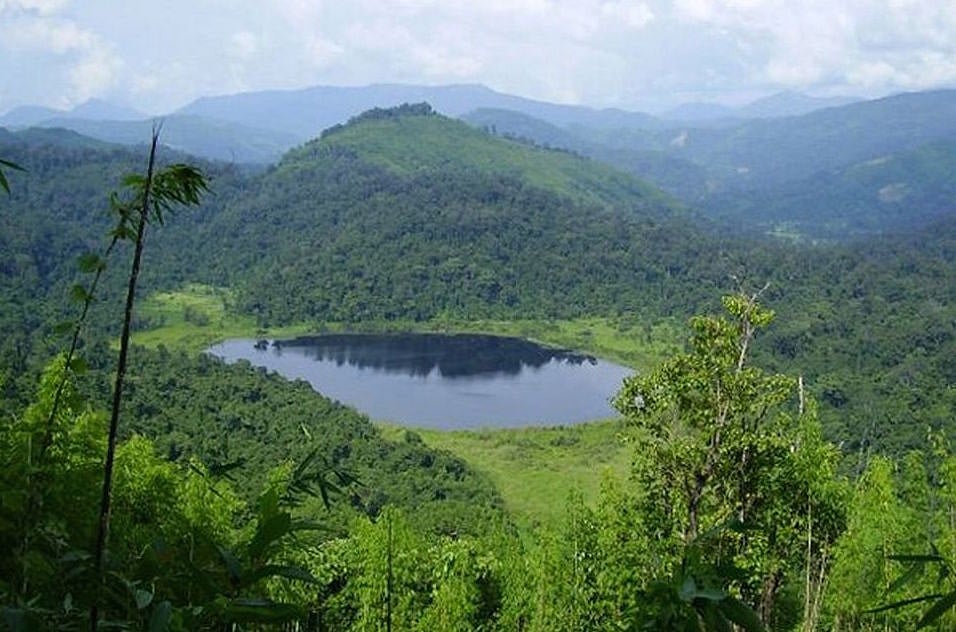
Within a week we were in Saiha, the district headquarters, sitting in the house of Deputy Conservator of Forests Thaly T Azyu, of the Mara Autonomous District Council Forest Department. He told us that we could visit Palak Lake – pala tipa in the local Tlosai Mara tongue. The lake was close to the village of Phura, but going further south into those blank spaces on the map, we were told, would involve "a bit of walking". With that bit of advice, we set out.