
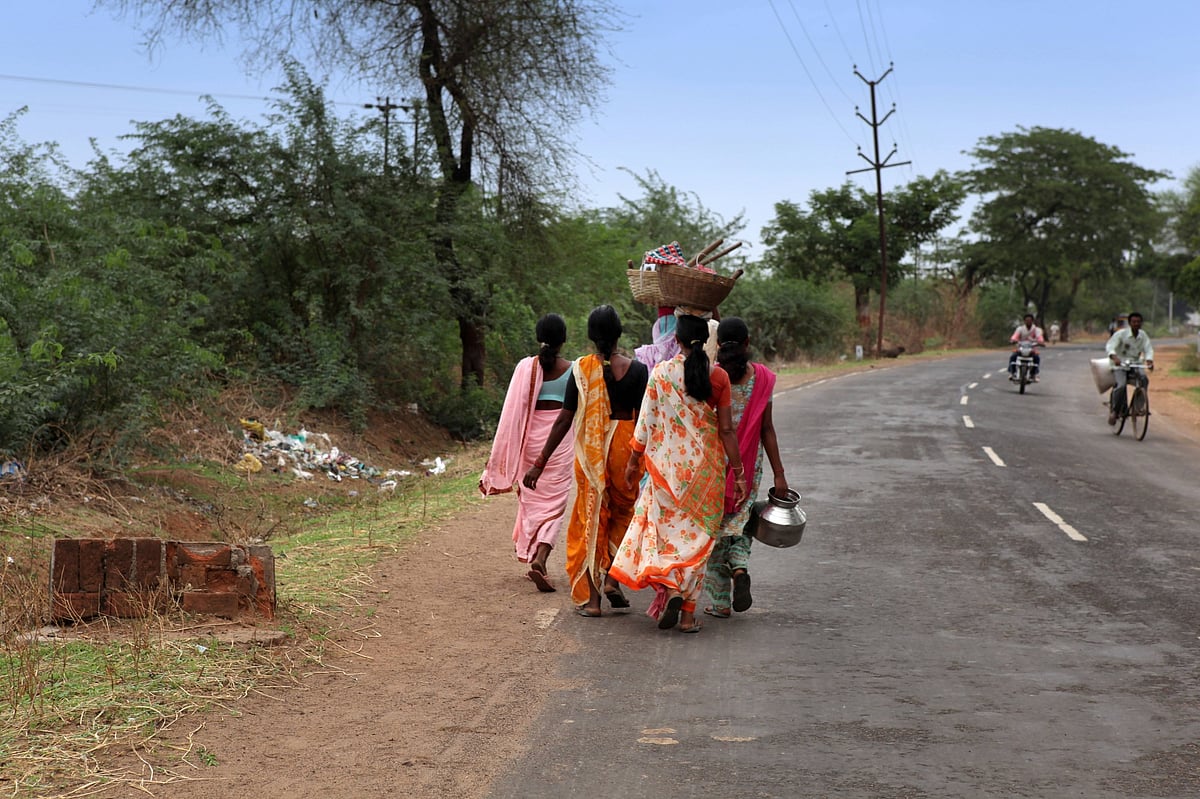
I went to jail for the first time in June 2000, in protest against the Indian central government's decision to curb subsidies for foodgrains under the public distribution system and replace them with targeted programmes. I had just started work as a community organiser in rural areas of Chandrapur district, in Maharashtra, and among the many new words I learnt was haadok (skeleton-like). The villagers would say: 'Haadok suru ahe ji' (The month of bones is upon us). This meant there were no opportunities for wage labour available in the vicinity, that there was no food in the houses, and people's haade (bones) were beginning to show. Since then, things in Chandrapur, my home district, have changed on the surface – instead of starving in the villages, people migrate elsewhere in hordes, seeking work from unscrupulous contractors and toiling under inhuman conditions. 'Haadok' has since been replaced by the vocabulary of seasonal migration and exploited labour.
In 2013, India passed the National Food Security Act, a law conceived of, drafted and advocated by activists. It ensured a certain amount of foodgrain to poor families, mid-day meals to pre-school children and at anganwadi centres (mother and child care centres), as well as nourishment for the elderly, single women, dependents, and pregnant and nursing mothers. It was an important step forward, but has failed to achieve adequate and sustainable results. In 2010, Shramik Elgar, the organisation I was working with, did an extensive report on the public distribution system in Chandrapur. The study exposed massive inefficiencies and corruption – shopkeepers stealing from people and selling grain on the open market, and poor families struggling to get ration cards. There were also other problems, such as that mid-day meal cooks had not been paid for months and food coupons had not been distributed under the assured employment scheme to labourers on several work sites. Even the introduction of Aadhaar, India's biometric identification system, often failed to ensure effective distribution of grains to ration card holders and other intended beneficiaries. As a country, India has not moved beyond guaranteeing families in need five kilos of grain, and a few kilos each of wheat and sugar (at subsidised rates) per month.
Last year, the National Family Health Survey reported that 36 percent of Indian children under the age of five are stunted and over 60 percent of children aged between 5 and 59 months suffer from anaemia. Nearly half of Chandrapur's children under the age of five are severely underweight. Three-fourths of children aged 6 to 59 months are anaemic with a hemoglobin count of less than 11.0 grammes per decilitre, and more than half the women aged from 15 to 49 years are anaemic with a count of less than 12.0 grammes per decilitre. Overall in 2019-20, Chandrapur performed worse on these indicators than the state average, and worse than it did in the last NFHS survey, conducted in 2015-16.
Food and collective memory