
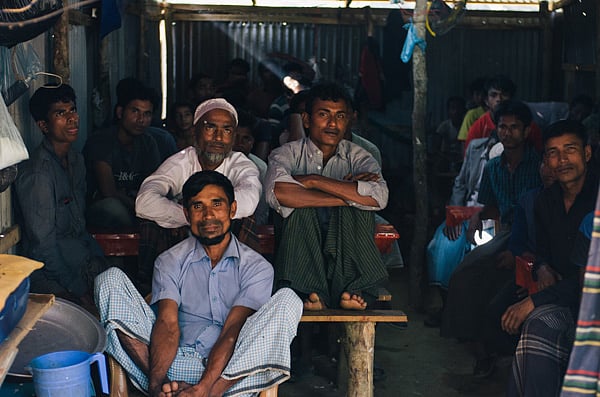
The key was in finding the tea hut – a low-roofed bamboo frame filled only by a bench, where, in May 2015, I was with a group of Rohingya men, each gripping slips of paper with phone numbers of the human traffickers holding their sons.
Over several visits to Bangladesh's now-sprawling camps for Rohingya refugees, I had been looking for the tea shop, to find out what had happened to those families in the two years that had passed. The problem was that the Kutupalong refugee camp in the town of Cox's Bazar, on Bangladesh's southeastern tip, had since become the world's largest –sheltering more than 626,000 refugees.
Since 25 August 2017, when Myanmar's armed forces started attacking Rohingya settlements in western Myanmar's Rakhine State, more than 700,000 Rohingya have sought refuge in Bangladesh in a rapid and almost complete transfer of the minority Muslim ethnicity – something that the United Nations has described as ethnic cleansing. Rohingya refugees had been living in Bangladesh in neglected, even lawless, makeshift settlements like Kutupalong for decades, settling and sometimes returning only to flee again in repeated waves since 1978. But that was transformed a year ago by Myanmar's military operation that killed an estimated 6700 Rohingya.
How many lived in Bangladesh was always hard to tell because the country stopped registering refugees in the 1990s. But we now know that more than a million Rohingya people have been registered biometrically by the Bangladesh government. And if you look at the area from the sky, as seen in satellite images, you will see forests swallowed by a brown mass, pockmarked with the black, blue and orange of the tarpaulin sheets under which the Rohingya now sleep.