
The long lines at the venue for the screening of Castaway Man at Film Southasia 2015 were a measure of director Kesan Tseten's popularity on his home turf. Two years ago, I had braved similar crowds to watch the director's 2012 documentary, Who Will Be A Gurkha, a riveting and delicate work of observation set in a Gurkha recruitment camp. Similar reflections on Nepali society and its traditions run through Castaway Man. It is a testimony to the filmmaker's skill that he can draw out these themes over such diverse subjects and get to the heart of the matter, while telling an absorbing story.
Castaway Man revolves around the charismatic and contested figure of Dor Bahadur Bista, a leading intellectual, anthropologist and writer. Born to a high-caste Chhetri family in Nepal, Bista's seminal book Fatalism and Development (1991) is the backbone of the film. Broadly, the text argues that the pervasive influence of "hierarchic fatalism" is a key reason that holds back Nepali society. "Development, therefore, can occur only when the Hindu caste system is thoroughly purged of its ʻfatalistic' tendencies," reads a 1994 review of the book. While these thoughts are by no means unfamiliar to other Southasians, Tseten anchors the emotional location of the film in Nepal. The film itself is structured as a mystery; Bista vanished without a trace in 1995, and Castaway Man attempts to find answers linked to this disappearance, as well as everything that the vanished man represented.
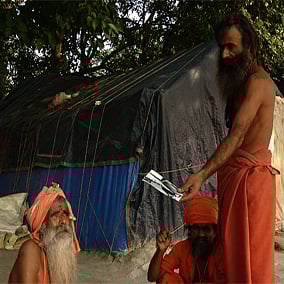
The documentary begins in Haridwar, where, according to rumours, Bista was last seen. Basanta Thapa, his translator as well as friend and colleague, walks through the narrow galis of the Indian town, showing a faded photo of Bista to people he encounters. He also speaks to Bista's family in Kathmandu, travels to the mountain community the anthropologist worked with, and interviews the man who saw Bista before he boarded a bus and was never heard of again. Thapa, a former editor of Himal magazine, is the stand-in for the director, undertaking the search that moves the film forward across different terrains.
The story of Bista, told through his family and friends, is interspersed with short interviews with a representative cross section of Nepalis speaking about their own experience of caste. These are both insightful as well as heartbreaking – a woman speaks about being spurned in love because of her caste; an elderly Brahman man harangues about how a poverty stricken high-caste family lacks the support that is given to lower castes and a few others talk of how they would have been able to achieve much more had they not have been held back by the accident of birth. Bista himself was born to privilege, and in a letter he talks about gaining a typical high-caste education before criticising the societal structure he was bound to. As the scholar was at pains to point out, his opposition was to Bahunbaad (Brahmanism) not Brahmans. In the film, he emerges as an iconoclastic thinker with a fearless intellect, who began his own research while assisting the Austrian anthropologist Christof von Furer-Haimendorf on his field trips. Bista's voice, speaking with the clipped accent of the region's elite, is featured prominently in the film through audio recording of his interviews, and video footage, besides letters and interviews with those who knew him.