
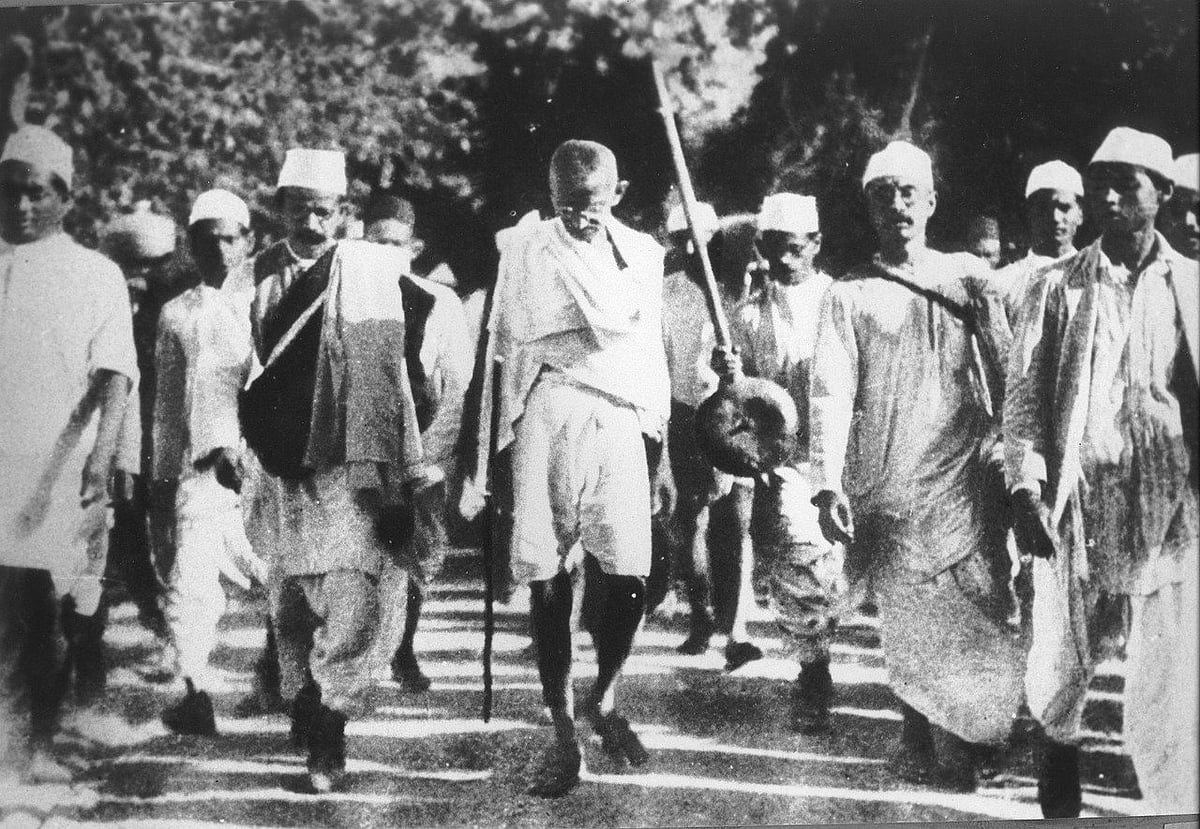
In Bangladesh, there remains only a faint memory of Gandhi – a mere whiff of his being. For the most part, he is remembered by some in the older generation who know about the Indian politics of yore. The new blood, meanwhile, follows the endless and thorough coverage of Amitabh Bachchan's ailing intestines. The health of Amitabh's belly, Sachin's elbow, and the well-turned ankle of Sania Mirza make Gandhi thoroughly consumer-unfriendly. In the parlance of the day, the Mahatma has no brand value.
But for those who do remember, Gandhi is recalled in Bangladesh as the man who came down to the coastal area of Noahkhali – the site of a 1946 communal riot – to walk the villages and to calm the mobs. There, the legend continues, some doughty anti-Gandhian proceeded to steal Gandhi's goat, which had regularly provided the Mahatma with the milk that was his nourishment, and cooked it for dinner. Gandhi was thus a faintly comical, rather than heroic, figure: He is the man who lost his goat. Such a transgression is not well received in a peasant land.
Gandhi was shot dead by a Hindu nationalist militant while protesting the then Indian government's decision to hold back funds owed to Pakistan. A similar decision today would be considered as patriotic by a nation state. Opposing it would be considered treacherous.
The Gandhian tradition never took root in East Bengal or even West for that matter. For his part, Gandhi was never particularly comfortable with the rebellious Bengalis within the Congress Party, who never treated him with the same reverence as did others. This was always a radical land. The most popular song of the era was about Khudiram Bose, who was hanged for bombing a crowded phaeton full of innocent colonials; Bose's bomb had missed the Lieutenant Governor by just a few minutes. The honour for being Bengal's favourite son does not go to Gandhi, but Subhash Chandra Bose, the man who allied first with the Germans and then with the Japanese to fight the British. Several high-level committees continue looking for him to this day.