
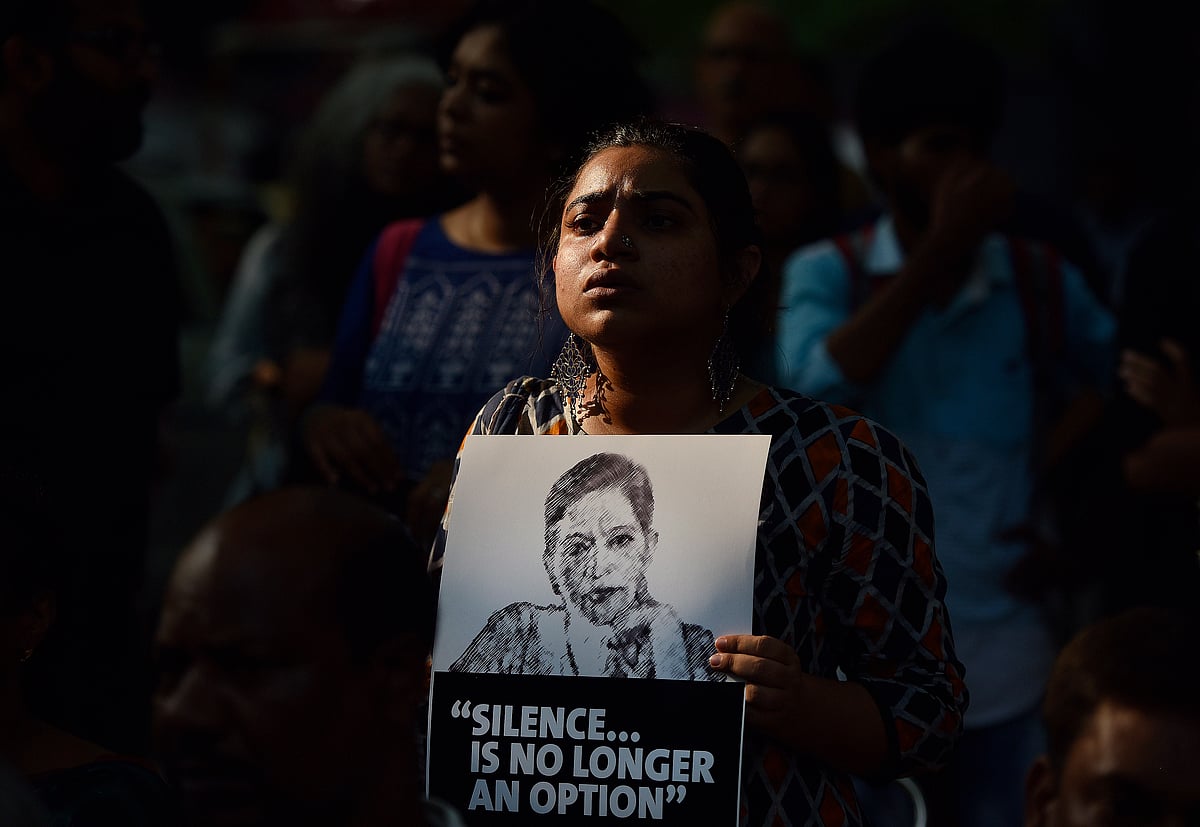
IN A LAND where the majority is quick to take offence, and “hurting religious sentiments” is a crime, any transgression can be deadly. The food we eat, the clothes we wear, the books we read, our language and, indeed, the words we speak, are subject to intense surveillance in India. The price to be paid for a perceived offence can range from abuse on social media, a court case that drags on for years, a physical attack or even death. Many of those deemed offensive are aware of the risks they take, yet they do not back down. Regardless, they speak up.
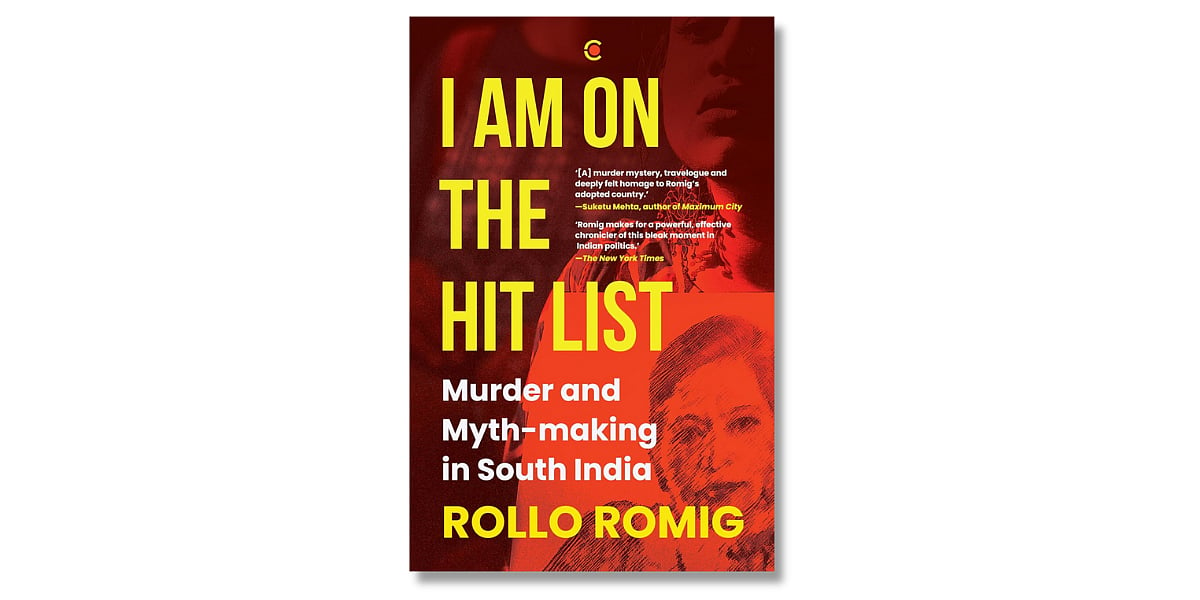
Rollo Romig’s eloquent telling of the story of the slain journalist Gauri Lankesh, one such fearless soul, is more than just a murder mystery, more than just an exposition of India’s politicised policing, its dysfunctional justice system, the vulnerability of these to power or money. In asking questions about why certain people murder, how they overcome moral qualms, and what gives them the ability to eliminate voices they dislike, Romig explores, with great finesse, the politics and philosophy of hate and intolerance. I Am on the Hit List: Murder and Myth-making in South India is also Romig’s paean to his adopted country by marriage, teetering somewhat dangerously between breathless admiration and cynical realism in how he views the grand mess that is India. But it is the empathy he musters and the access he secures to those who were close to Gauri that allows him to present an intimate and authentic picture of the activist-journalist in all her complexity.
Following Gauri’s murder in Bengaluru on 5 September 2017, it has been easy and somewhat predictable to cast her as a saint, to etch her martyrdom into history. But Rollig, a journalist himself and faithful to the tiny details, shows her to have been all too human. He points out that Gauri, the irreverent iconoclast who defied convention, “spent the last thirty minutes of her life in the most ordinary Bangalore way: in traffic.” The lack of a parking space near her office in the crowded residential area of Basavanagudi, where she returned for a forgotten tiffin of biryani, made her wait in her car while Prasad, her office assistant, brought it down to her. Her parting words were poignant: “Goodbye, goodbye, goodbye.” She drove home only to be shot at point-blank range, and died on her own doorstep.