
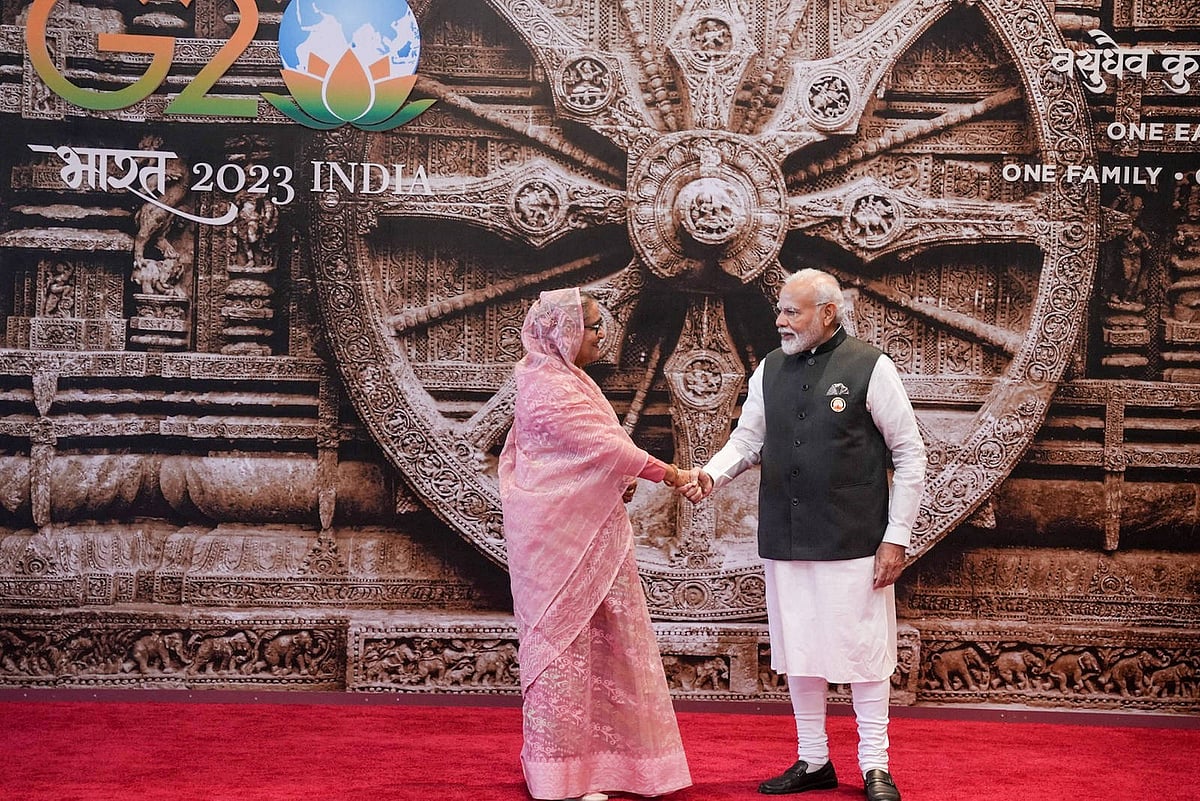
On 7 January, Bangladesh's prime minister, Sheikh Hasina, is set to claim re-election in what some observers have called "staged polling", the opposition Bangladesh Nationalist Party (BNP) has termed a "dummy election" and The Economist has described as a "farce". Desperate to avoid a genuine democratic exercise, Hasina's government has preemptively removed its only real challenger from the field. More than twenty thousand BNP activists are behind bars, as are key BNP leaders, and the opposition party has decided to boycott the election rather than contest an unfair vote.
The farce is best explained with the facts. For the 300 directly elected seats in Bangladesh's parliament, the ruling Awami League has official nominees in 263 constituencies. In addition, it also has 269 party members standing as "independent" candidates, meaning there are two or sometimes even more Awami League candidates in many places – and that's not counting the candidates of other parties allied to the Awami League under the Moha-joth, or Grand Alliance.
All these characterisations of the election have come weeks before the actual voting. Post-poll controversies about electoral integrity, malpractice and irregularities are nothing new in Bangladesh. But attracting so much censure before a single vote is cast is quite an exception.
Led by the United States, some Western nations have been insisting that Bangladesh hold an inclusive and democratic election. In September, the US government announced that it was imposing visa restrictions on "Bangladeshi individuals responsible for, or complicit in, undermining the democratic election process in Bangladesh" – and there are fears of stronger sanctions to follow. The reason for such pressure was to avoid a repetition of Bangladesh's two last elections, both widely criticised as neither free nor fair. Both were held under the administration of the Awami League government after Hasina unilaterally abolished a constitutional provision that mandated the formation of a non-party caretaker government to oversee elections. This system, first tried successfully in 1991 as Bangladesh transitioned out of military rule, was written into the constitution in 1996 after Hasina, then in the opposition, herself mounted a two-year agitation demanding it. The amendment that abolished the caretaker system caused enormous controversy, and was never put to a referendum as required under the constitution at the time. Hasina, using her massive majority in parliament, also removed the referendum requirement for constitutional changes by the same amendment. She has been in power ever since.