
(This article is a part of the web-exclusive series that complements our latest print quarterly 'Diaspora: Southasia Abroad'.)
In 1975, Sakeasi Butadroka, an indigenous Fijian nationalist politician, moved a motion in the country's Parliament seeking the repatriation of all Fijian citizens of Indian origin to their ancestral homeland. However distasteful, the motion was in keeping with the times: in 1972, Uganda's Idi Amin had successfully deported people of Indian origin, inspiring indigenous nationalists throughout Britain's former colonies, and highlighting the fraught political legacy of colonial statecraft.
Though Butadroka's motion failed, Indo-Fijians remained deeply troubled by the apparent weakness of their rights. This was not without justification. In April 1977, The National Federation Party (NFP), an Indo-Fijian ethnic party, won the national elections. After taking what seemed an interminable time to form cabinet due to internecine bickering, Siddique Moidin Koya, a lawyer, was forwarded by the NFP to be sworn in as Fiji's second prime minister. Instead, Governor General Ratu Sir George Cakobau, the Queen's representative, told him that he had already sworn in former Prime Minister Ratu Sir Kamisese Mara.
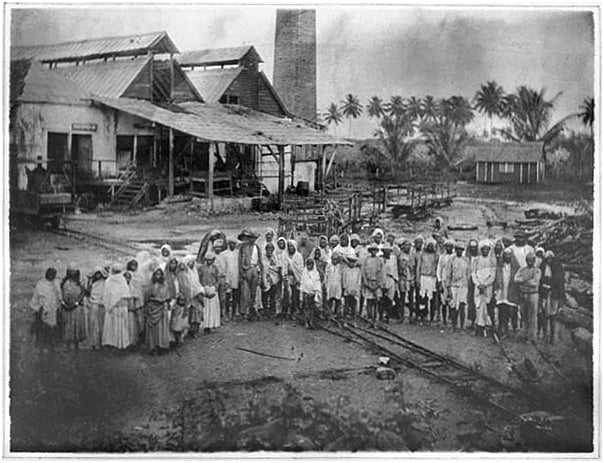
Within Fiji's racially charged environment, a pushback against the political clout of the Indo-Fijian community in the Independence era seemed inevitable. Indeed, the next 30 years would be marked by the Indian diaspora's struggle for political equality and the realisation of the citizenship rights to which they were entitled. As in many postcolonial struggles, the roots of oppression are embedded in British statecraft during the colonial period.