This week in Himal
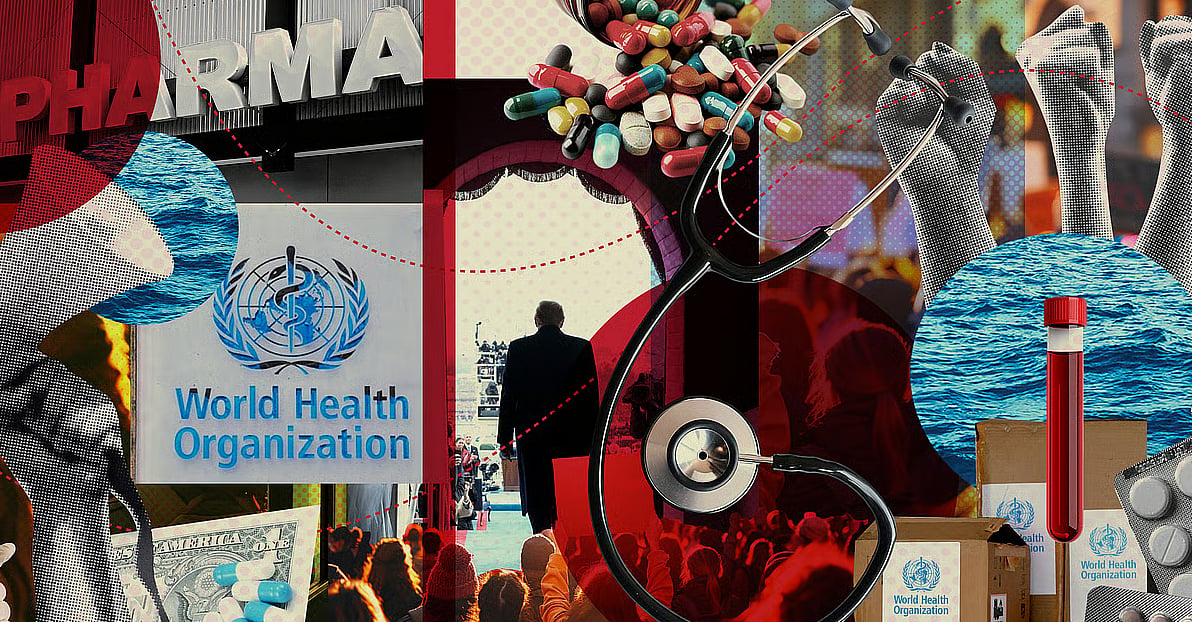
This week, as part of our “Pills, Perils, Profits” investigative series on Southasian pharma, health reporter Vidya Krishnan writes that US aid cuts have exposed the fragility of the global health order, and draws on past lessons, including from the HIV movement, to show how Southasia can fight back.
Don't miss Christopher Peacock's article on writer Tsering Döndrup’s defiant reckoning with Tibet’s legacy of violence through his banned work 'The Red Wind Howls'.
Lawyer Aman Wadud talks about the persecution Bengali Muslims face thanks to laws requiring them to prove their citizenship in episode 6 of our podcast series ‘Partitions of the Heart: Conversations with Harsh Mander.’
For the next episode of the Southasia Review of Books podcast, host Shwetha Srikanthan speaks with writer and filmmaker Alina Gufran on her debut novel, No Place to Call My Own, a bold exploration of belonging as a young Southasian Muslim woman.
Also read: Tsering Döndrup’s defiant reckoning with Tibet’s legacy of violence
Also read: Aman Wadud & Harsh Mander on the plight of Bengali Muslims in Assam
Also read: Samina Luthfa on the battles of women in a new Bangladesh: State of Southasia #27
Also read: Trump’s aid cuts have broken global health – but we can fight back
This week in Southasia
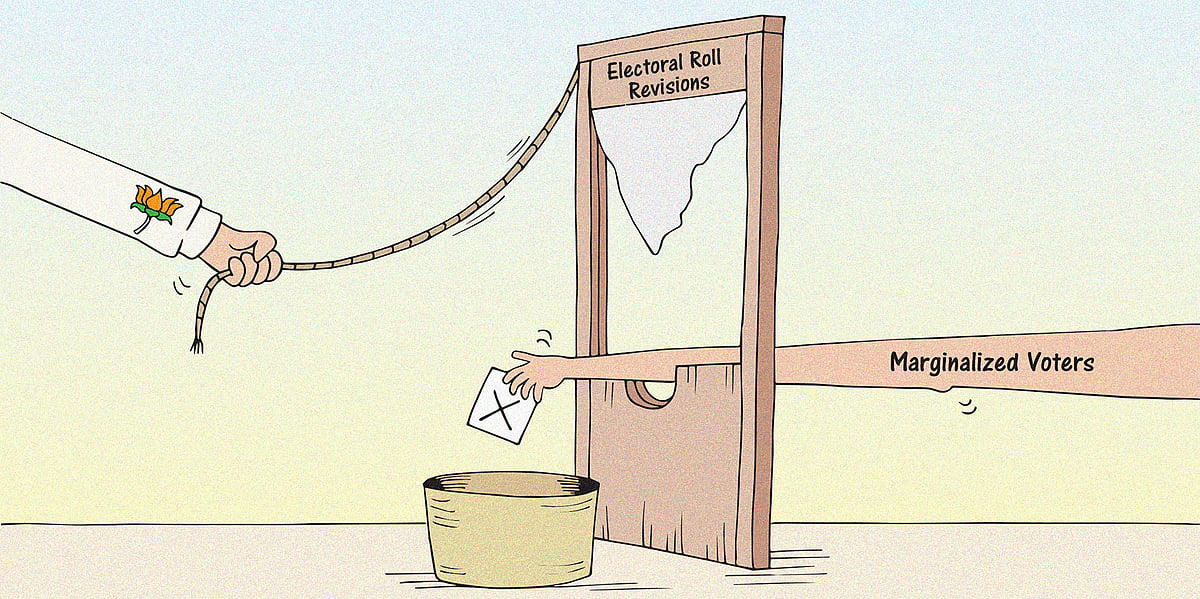
Bihar’s electoral roll revisions raises concerns of mass disenfranchisement
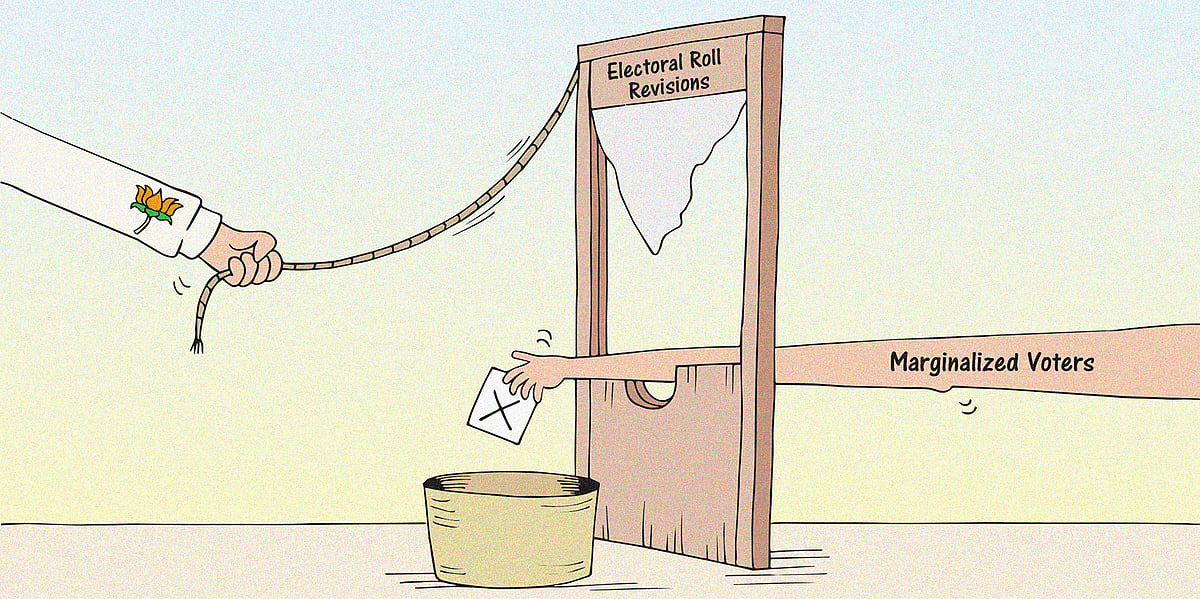
On 24 June, India’s Election Commission announced that they would begin revising electoral rolls in Bihar for the first time since 2003, ahead of state assembly elections. As part of this process, voters will need to prove their place of birth, while some will have to provide proof of their parent’s citizenship and relationship to their parents in order to avoid being struck off the voter list. Those legally challenging the decision have raised concerns about the short notice given to voters, who will have to either submit details themselves or be subject to a verification process by 25 July. In addition, those who rely on Aadhar or ration cards as identification documents, or who do not have proof of their parent’s identity will likely be excluded from the list.
Political opposition leaders have protested the decision, charging that it is an attempt to disenfranchise the poor, migrant workers and oppressed castes, and that the Election Commission is acting on the behest of the BJP in a bid to sway the upcoming elections in their favour - a charge the Commission denies. The decision to revise Bihar’s electoral rolls is puzzling given the Election Commission had already completed a revision of the electoral rolls, and had accepted the electoral roll from the 2024 Parliamentary polls to be valid before its sudden about-turn on 24 June. The revisions may also be rolled out to more states, with reports confirming that election officials are preparing to overhaul the West Bengal electoral roll in the coming weeks.
Bihar’s electoral roll revisions has also revived discussions of how legal instruments such as the National Register of Citizens in Assam, has rendered millions of people stateless, with political opposition leaders in West Bengal charging that the revision may be used to introduce the NRC in other states. In light of this, Suraj Gogoi and Rohini Sen’s article from October 2019 is worth revisiting. Harsh Mander’s conversation with lawyer Aman Wadud this week, as part of the ‘Partitions of the Heart’ series is also relevant.
From the archive (October 2019)
Also read: The NRC’s spillover effect
Elsewhere in Southasia
- Leaked audio confirms use of lethal weapons on students in Bangladesh was authorised by former prime minister Sheikh Hasina during 2022 protests, as Bangladesh’s International Crimes Tribunal to decide whether to frame charges
- US to impose 35 percent tariffs on Bangladesh, 40 percent tariffs on Myanmar, 30 percent tariffs on Sri Lanka by 1 August, negotiations with India still ongoing
- International Criminal Court issues arrest warrants for top Taliban leaders Haibatullah Akhundzada and chief justice Abdul Hakim Haqqani for persecution of women and girls in Afghanistan
- Social media platform X (formerly Twitter) says Indian government ordered them to block more than 2000 accounts on the platform for Indian users, including two Reuters News accounts, raising concerns of censorship
- Pakistani filmmaker Jami receives two year sentence in defamation case, granted bail after reading out anonymous account of sexual assault involving a director in the entertainment industry
- At least nine dead, dozens missing after glacial lake drainage in Tibet causes flash flooding
- Maldives’ Financial Ministry suspends release of weekly financial report for second week, news reports say capital expenditure of government companies, salaries and government allowances increased
- Bhutanese importers say Indian traders are applying Indian Goods and Services tax, bypassing GST exemption by Indian government, leading to double taxation
- Over 250 million Indian workers in multiple sectors including banking, mining and construction strike nationwide to oppose ‘anti-worker, anti-farmer’ labour policies including four new labour codes introduced by government.
Revisit some of our archival stories adding more context to some of this week's news updates from Bangladesh and Afghanistan.
Also read: As Bangladesh boils over, Sheikh Hasina’s peril is of her own making
Also read: How we see Afghan women
Snapshot Southasia
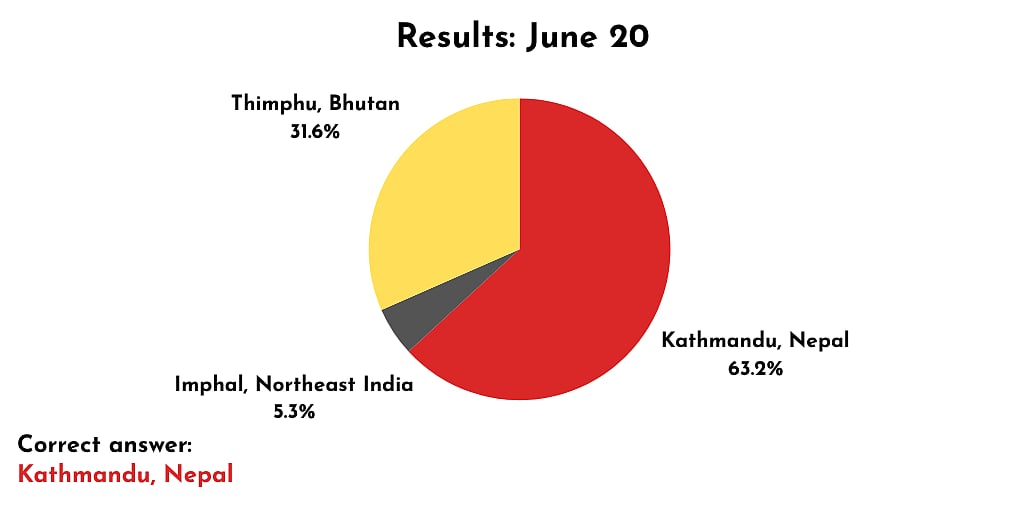
Every week we bring you one striking image from Southasia. Click below to guess where it was taken – and don’t forget to check in next week to see if you were right!
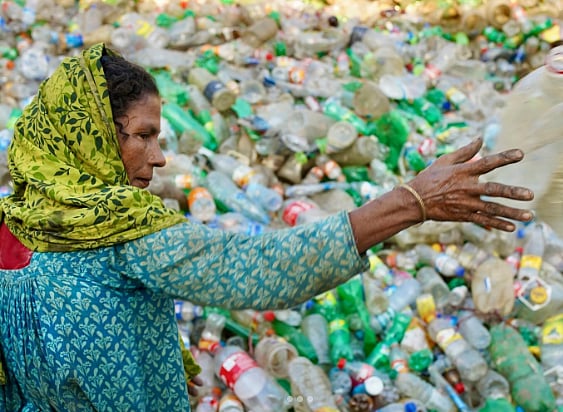
Where in Southasia is this image from?
Pune, Maharashtra
Balapitiya, Sri Lanka
Dhaka, Bangladesh