
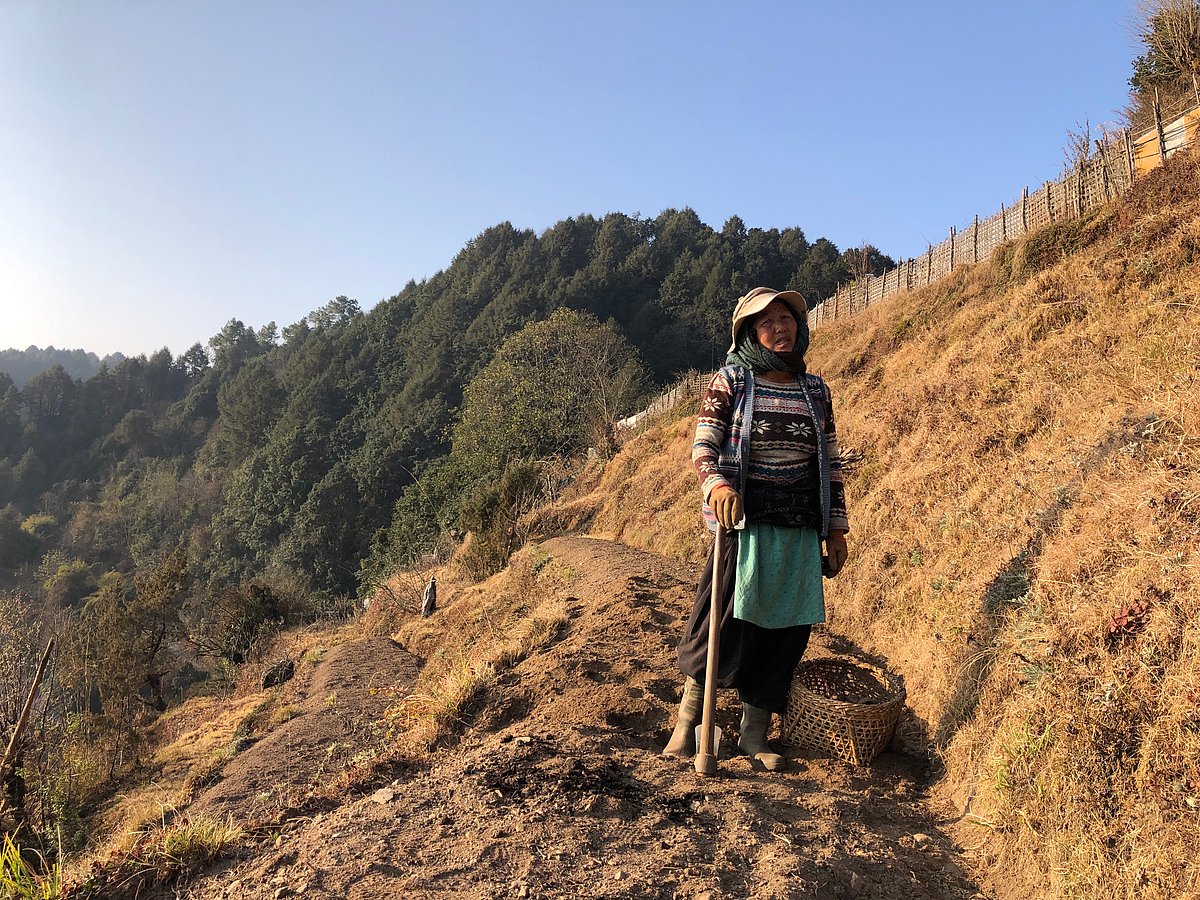
IN HELAMBU, in Nepal’s mountainous Sindhupalchowk district, Dawa Lama Hyolmo, a 61-year-old farmer, was working on her steep, sloping, terraced field. She dug the soil, carefully mixed in compost as fertiliser, and planted potato sprouts. “Since there hasn’t been enough snowfall this year, I’m worried about how it will grow,” she said one early morning in March. “Last year, there wasn’t enough rainfall when the potato plants needed it.” Lama was referring to climate-change induced shifts in weather patterns and how they are affecting agricultural activities in the Himalayan foothills under Mount Dorje Lhakpa, where she lives.
The same concerns were echoed by António Guterres, the secretary-general of the United Nations, when he visited Nepal in October 2023. “We must put an end to the fossil-fuel age,” Guterres said from the heart of the Himalaya. “We must act now to protect the people on the frontline,” he urged, drawing attention to the dramatic retreat of glaciers across the Himalayan range. “We cannot retreat.”
The impacts of climate change are hitting mountain communities in Nepal hard, with clear evidence of increased burdens in high-altitude regions like Helambu due to the rapid melting of glaciers and more frequent climate-related hazards.
Guterres’ message applied not only to Nepal but also to other countries on the front lines of the climate crisis, including in Southasia. But as Nepal and other poor countries like it try to respond and adapt to the climate crisis, they depend on rich countries responsible for the vast majority of global carbon emissions to come through with financial and technological aid to help front-line groups. Climate action plans and targets set by the Nepal government, guided by scientific recommendations, often come with the caveat that they can only be achieved if international support arrives in time to protect vulnerable communities. “To achieve this, we need a strong presence in international forums with the power to negotiate,” Bimala Rai Paudyal, Nepal’s former foreign affairs minister, said. “We have to prioritise climate change in our diplomacy, or we can simply call it climate diplomacy.”