
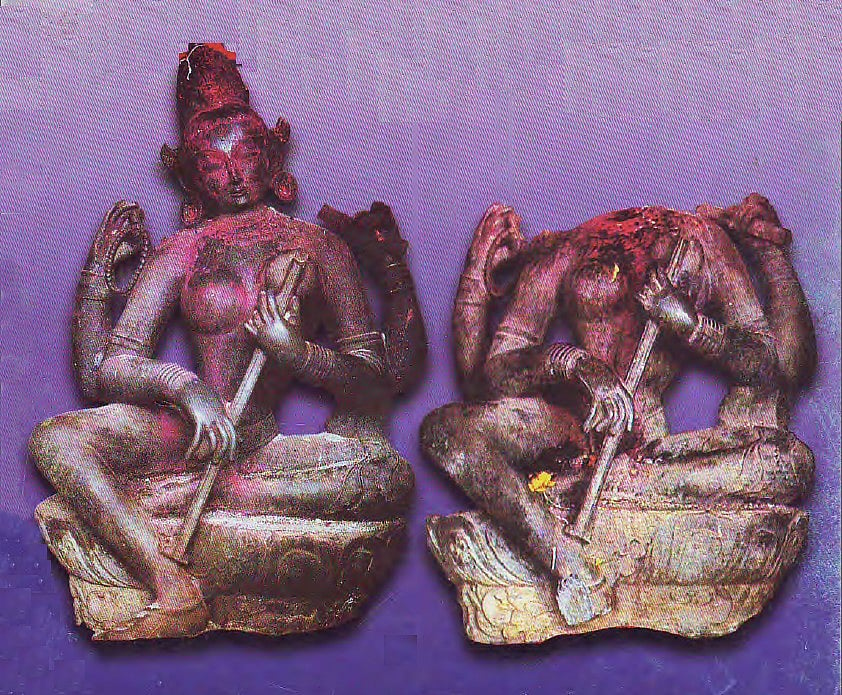
For 900 years, a sculpture of Uma-Maheshwar, showing Shiva- Parvati and attendant deities in Mount Kailas, had stood in a shrine at the Wotol locality of Dhulikhel town, east of Kathmandu. The grey limestone statue standing 20 inches was stolen in 1982 and today sits on a lonely pedestal at the Museum fur Indische Kunst in Berlin.
A 15th-century Laxmi-Narayan, half-Vishnu and half his consort Laxmi, was included in the 1990 sales catalogue of Sotheby's. Dark granite shining under the spotlights, the image was valued between USD 30,000-40,000 and sold off for an undisclosed amount by the New York auction house. The people of Patko Tole of Patan town have not had the deity to worship since it was lifted in 1984 and today make do with a crude replica.
An 11th-century Uma-Maheshwar image, which for eight centuries adorned a hiti water-spout in Nasamana Tole, Bhaktapur town, is now a prize in the collection of the Musée National d'Arts Asiatiques—Guimet in Paris ("one of the largest art museums in the world"). Since 23 May 1984, when the sculpture was pried off its brick and mortar backing and taken away, the celestial couple has not received propitiation from the devout who come to collect water at the hiti.
Since the 1960s, thousands upon thousands of stone sculptures have disappeared in this manner from the temples, monasteries, fields and forests of Kathmandu Valley and nearby towns. The only way devotees can view these deities is by travelling across the oceans to see them displayed, spot-lit and isolated in private drawing-room pedestals and museum niches. Others remain locked up in storage vaults, and quite a few still turn up for sale, advertised in glossy magazines specialising in oriental art.