
Despite the hype over the US-led 'war on terror', overwhelming global concern continues to be centred on poverty. The persistence of poverty in large parts of the world has created the conditions for the rise of various forms of extremism, while attempts by development agencies to fight poverty have proven sluggish, and the gains uneven. At least for many non-American donors, the realisation has finally begun to dawn that a form of governance that ensures dignity and security for all is necessary for the alleviation of poverty. Consequently, 'participatory governance' is the new mantra of the diplomatic community.
Democracy gives a government popular legitimacy, in that it symbolises the consent of the governed. Democratic governments claim to represent the people, and rule in their name. Weak democracies can foster fissiparous tendencies, as populist and chauvinistic politicians fan the fear of the inimical 'other' to consolidate their own hold over the masses. It has been argued that the historical Greek democracies disintegrated largely due to lack of discipline.
Scientific explorations of causes, effects and possible remedies of democratic process are now needed, as are comprehensive studies of political parties, commensurate with their role and relevance in governance. After all, strengthening of political parties cannot be accomplished without first understanding their dynamics, and such a comparative analysis has been particularly lacking in the Southasian context. The Stockholm-based International Institute for Democracy and Electoral Assistance (IDEA) has now attempted to fill that need by sponsoring the study and publication of a book dedicated to the functioning of political parties in the region. Irrespective of the quality of its contents, such a publication is an achievement in itself.
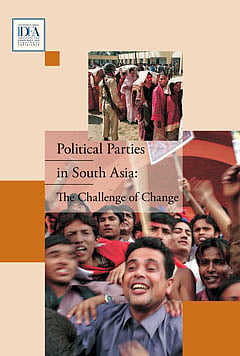
Based on research on and dialogue with political parties in the region, Political Parties in South Asia: The challenge of change follows the standard format favoured by international consultants. Had the book come ring-bound, it would probably have failed to stand out among the deluge of reports that flow from organisations similar to IDEA. That would have been a pity. Even though this publication is data-heavy and insight-deficient, it succeeds in laying important groundwork for more substantive debates regarding the capacity-building of Southasian political parties.