
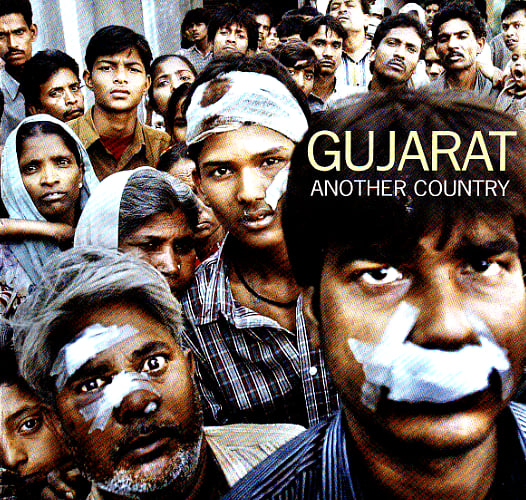
Ahmedabad is a divided city. On one side resides fear and anxiety, helplessness and anger. Walk across Jamalpur, Mirzapur, Dani Limda, Kalopur, Lal Darwaza and other parts of the Walled City. Go to Juhapura – one of the largest Muslim ghettos in India. Scratch a little, and people want to talk. An entire community feels under attack, with many resigned to their newfound fate of being second-class citizens. Rights are negligible, and the sense of representation non-existent. What remains strong is the cry for justice, and the knowledge they will not get it – not in Gujarat. Why? "Because", explains one elder in Shah Alam, "we pray to Allah. That is our transgression."
There are the borders everywhere. A patch of road, a wall, a turn across a street corner, a divider in the middle of a road – this is all it takes to polarise and segregate communities throughout Gujarat. Each town and city now has countless borders, forcibly making people conscious of their religious identity. Me Hindu, you Muslim. Or one could look at it differently: the borders on the ground merely reflect and reinforce the polarisation that has already taken place in the minds of ordinary Gujaratis.
Yet nothing prepares you for the certitude on the streets of the other Ahmedabad – in Navrangpura, Vastrapur, MG Road, Judge's Bungalow Road, Satellite, Vejalpur. Many Gujarati Hindus think they have the answers to some of the most troubling questions of our times. The more subtle would say there is a problem among Muslims. Others argue that Muslims themselves are the problem. They look back fondly at the 'Toofan', the 2002 riots, and their reminiscences have a striking thematic unity. The Muslims deserved it. They are all bloody Pakistanis and criminals. If we had more time, we would have wiped them out. See, they are crushed and scared. We taught them a lesson. And now, the world should learn from Gujarat about how to deal with the miyas. The one sentiment that is almost wholly absent is remorse. What remains, 54 months after the pogrom, is an all-pervading sense of arrogance among Hindus in the public sphere. Those who think differently possibly keep silent.
The story of Gujarat as a whole, then, is a tale of pride and prejudice on the one side, victimhood and alienation on the other. In control of this divisive agenda is the fascist government of Narendra Modi, who happily builds on this evolving social reality, and reinforces it. The everyday tragedy of Gujarat, often invisible, is in many ways more telling than the state-sponsored pogroms of 2002. The high degree of alienation among Muslims, the stereotypes and discrimination they face, the fact that a substantial section of society is committed to the Hindutva agenda, the absence of justice and accountability, and the continued secession of the state from its basic constitutional obligations – these are all elements that go into making Gujarat, in the very words of the Hindu Right, its laboratory.