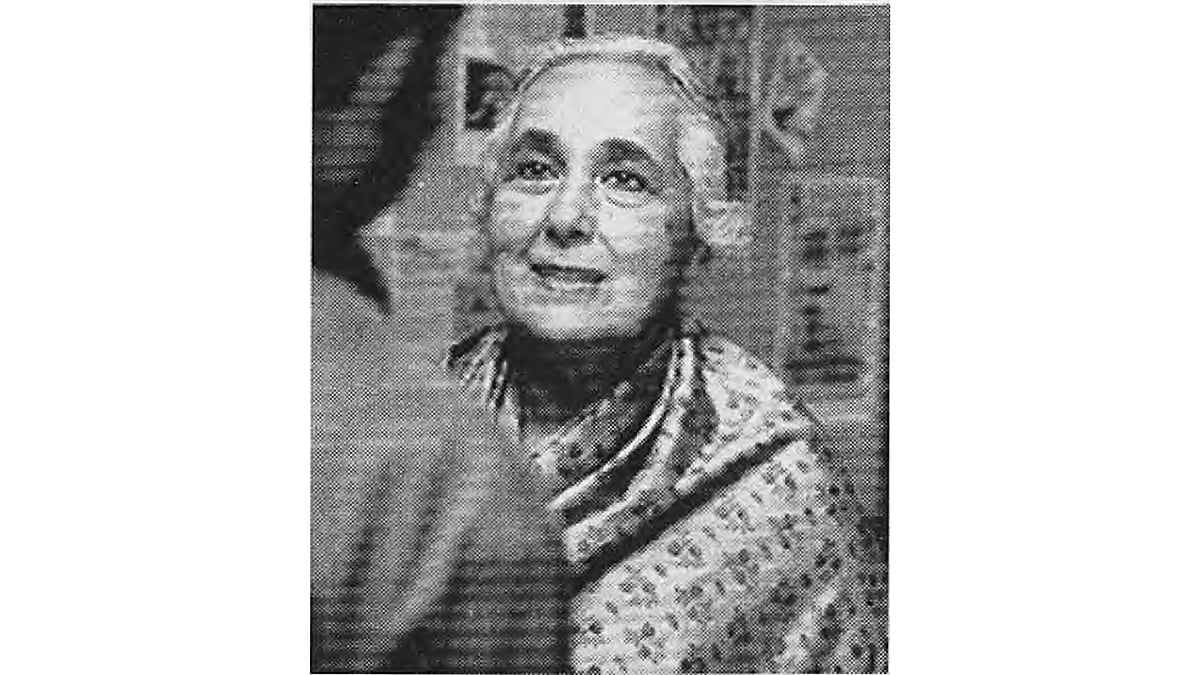
"..an historian who is indefatigable in the pursuit of knowledge and prolific in its publication, and who is above all a devoted partisan of the truth. … The early history of the country has been illuminated by Professor Thapar, whom I now present, more than by almost any other scholar. An historian of that period who seriously wishes to refute accepted fictions and dispel the general darkness will need several high qualities…"
– Citation presented by Oxford University to Romila Thapar while conferring on her an honorary Doctorate of Letters, 2002.
The distinguished scholar Eric Hobsbawm, author of a four-part history of the 19th and 20th centuries, recently gave a talk at Columbia University in New York City. In a speech on politics, memory and historical revisionism, he said, "The curious fact is that as we move into the 21st century, historians have become central to politics. We historians are the monopoly suppliers of the past. The only way to modify the past that does not sooner or later go through historians is by destroying the past". "Mythology", Hobsbawm added, "is taking over from knowledge". He then mentioned the case of Italy, where, he said, a government commission has been ordered to revise history textbooks in an effort to discredit the Italian republic's anti-fascist, communist roots.
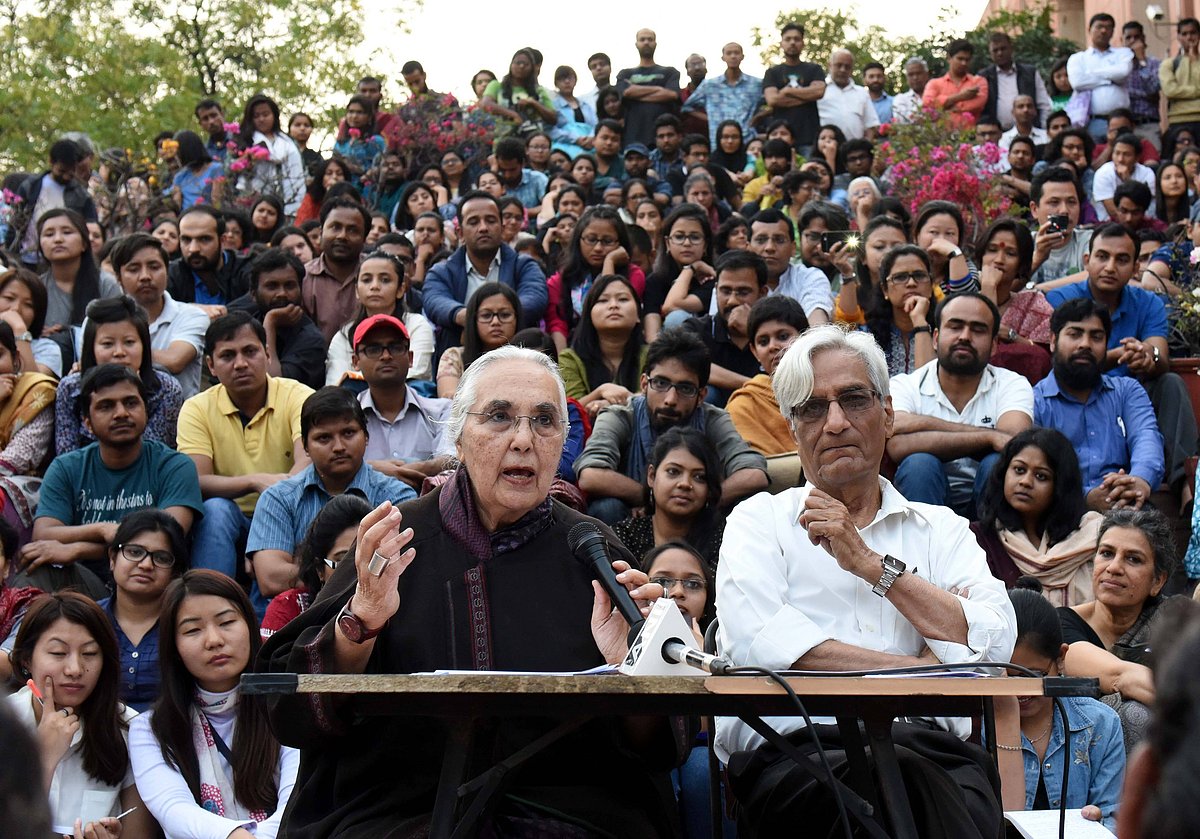
On the other side of the world, in India, simultaneous with Hobsbawm's speech, history was also being 'rewritten' in a disturbing manner with the unleashing of a vicious campaign against one of the Subcontinent's most distinguished historians, Romila Thapar. Emeritus professor of ancient Indian history at Jawaharlal Nehru University (JNU) in New Delhi, author of many seminal works on the history of ancient India, recipient of honorary degrees from many leading world universities, Thapar was recently honoured by the US Library of Congress in a manner befitting her scholarly standing. The library announced that it was appointing Professor Thapar as the first holder of the Kluge Chair in Countries and Cultures of the South, and that she would spend 10 months at the John W Kluge Centre in Washington DC pursuing "historical consciousness in early India".