
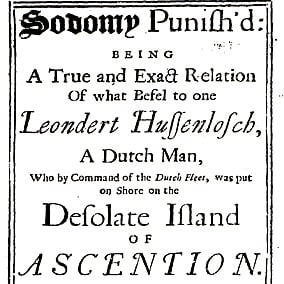
On a monsoon day, I went to see Lazarus House, an isolated and lacklustre building on the island of Vypin at Cochin, facing the calm waters of the Arabian Sea. Once upon a time, it was an asylum for lepers in the town, its cold cement benches and flooring giving little comfort to its unfortunate inmates. It was built in 1728 by the Dutch East India Company (Vereenigde Oostindische Compagnie – VOC), with public subscriptions from soldiers and officials stationed in the trading town they had come to occupy a few decades earlier, after driving out the Portuguese. Today, Lazarus House is a small convent school. In its immense solitude, I looked for the presence of Leendert Hasenbosch, a young Dutch soldier who had donated more than two-thirds of his annual salary in 1718 for its construction. I realised that this small and nondescript building is the only thing that remains in his memory. But his story is far from lost. Leendert's diary and other historical sources reveal details of his life and his terrible, lonely death as a castaway on Ascension Island in the South Atlantic.
The discovery of the diary of this unfortunate young Dutchman was as accidental as the twists and turns of his own life. Captain John Balchen, British commander of the East India Company ship James and Mary, left the Cape of Good Hope on Monday, 6 December 1725, to start his voyage to England. He was in the company of the Compton, another East India Company ship commanded by Captain William Morson. During the voyage home, Captain Balchen recorded in his logbook on 20 January:
Anchored on the NW side of the Island Asscesion… here is a fine sandy bay and good landing… sent our boat shore to Turn Turtles… this morning the boat returned with two… Here we found a tent with Bedding and Several Books with some writings by which we find there was a Dutch man turned on Shore here out of a Dutch ship for being guilty of Sodomy in Last May. Could not find him so believed he perished for want of water…
The log of the Compton had similar entries for the same date. Two days later, both ships weighed anchor and set off to continue their course to England, with the Dutchman's diary deposited in one of them. They reached Woolwich in April.