
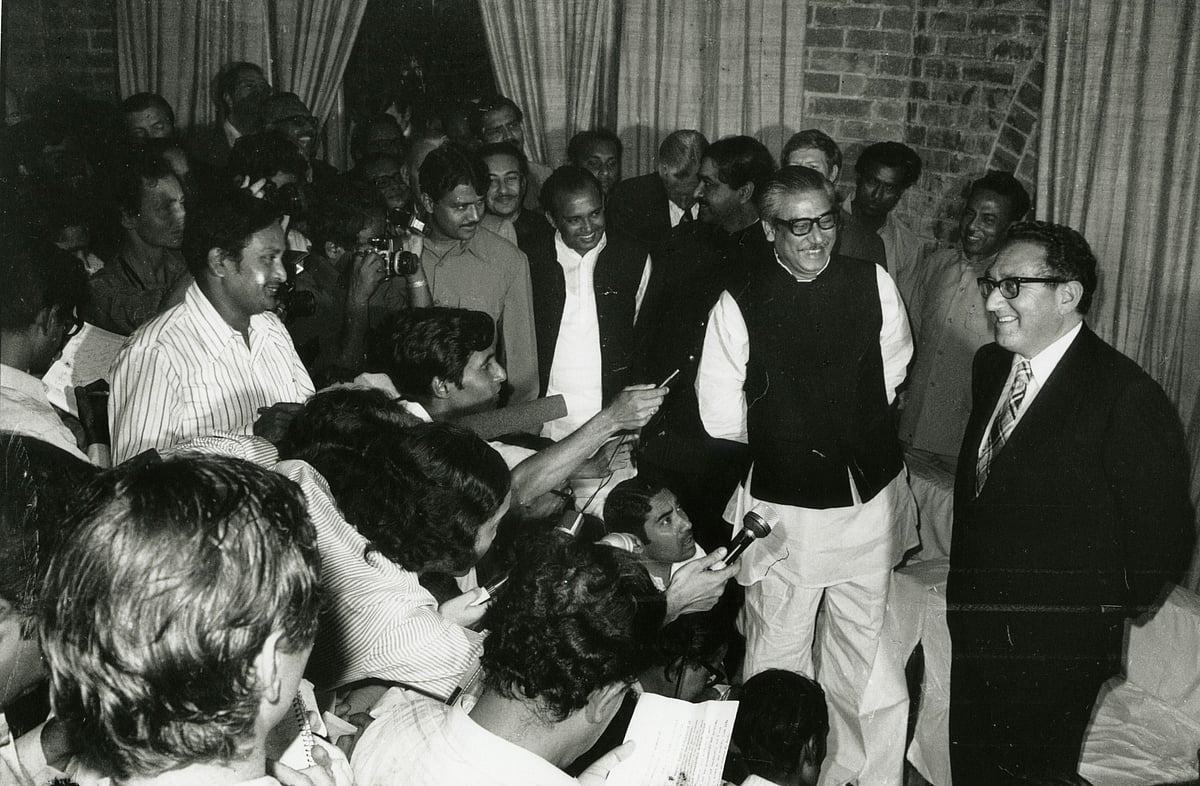
Henry Kissinger, the US statesman and long-time advisor to successive presidents of the United States, died on 29 November 2023. He was 100 years old and went too soon, as he never faced any consequences for the war crimes he helped plot and perpetrate all over the world, including in Southasia. There is no closure. And now he is gone. But the victims and results of his crimes live on intergenerationally.
In the lead-up to the emergence of an independent Bangladesh in 1971, worried about a Soviet-leaning India causing the collapse of Pakistan, the White House and Kissinger stood on the side of Islamabad as its forces carried out a vicious crackdown on the Bengali population of East Pakistan. Despite receiving multiple warnings from US diplomats about the atrocities being committed, Kissinger approved shipments of weapons that perpetuated them.
In his landmark book The Blood Telegram: Nixon, Kissinger, and a Forgotten Genocide, the international-affairs scholar Gary J Bass documents US policy on Pakistan using, among other things, White House audio-tape recordings of conversations between the US president at the time, Richard Nixon, and his national security advisor, Kissinger. Bass presents one particular line that especially sticks in the mind. Kissinger hears about the increasing revulsion among Americans, including people in the US government and diplomatic service, at the Nixon administration's complicity in the genocide of Bengalis by Pakistan's military and security forces, and their assorted ideological allies. In response, he sneers at those who "bleed" for "the dying Bengalis".
The dying Bengalis. That phrase is tattooed in my consciousness. It represents much more than a callous disregard for human life. It represents a political and economic order where, let alone living Bengalis, even millions of dying Bengalis do not change the trajectories and calculations that matter to power.