
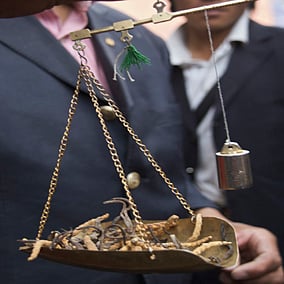
Unlike in previous years, the auction for the highly sought after fungus known as cordyceps sinensis, or Yartsa Guenboob – known to have medical and aphrodisiac properties – held in Dzongkha, Bhutan's western district of Gasa, was not a cause for joy. Overall collection in 2015 declined sharply to a total of 231 kilograms, and returns were significantly lower than in earlier auctions, where prices went as high as BTN 1.3 million (USD 19188) per kg. Fewer collectors participated, and many went home disappointed.
Official records indicate that 671 kg cordyceps, worth about BTN 469 million (USD 6.92 million), was auctioned in 2014, making it the highest quantity auctioned since cordyceps collection was legalised by Royal Decree in 2004. As the cordyceps fungus has been in major demand in the international market, the price routinely increases every year. However, in 2015, a significant downturn in terms of both growth and quality of cordyceps was witnessed, according to Gyeltshen, a forestry official monitoring the auction in Gasa.
In Wangdue Phodrang district, Namgay Dorji, a cordyceps collector, expressed concern that his collection would not earn more than BTN 32,500 (USD 480). After spending a month in the mountain and hill areas, carrying food on his back, Dorji managed to collect only 50 pieces of cordyceps, while his wife picked around 40 pieces. But Dorji remained optimistic that the next collection season would be better, and placed the blame on unauthorised collectors and encroachers for the decline in quantity and low quality of cordyceps. The couple usually earn around BTN 200,000 to 300,000 (USD 2952 – 4428) per year from cordyceps collection, making it the largest source of income for their family of five.
With the increase in the number of collectors and smugglers, many like Dorji believe a proper boundary survey and stricter rules are greatly needed. Illicit collectors tend to be less concerned about maintaining the environment when picking cordyceps, and this can have detrimental effects. Recently, park officials accompanying local highlanders from Sephu and Dangchu caught groups of undocumented collectors, seized their cordyceps collections and forced them to pay fines. Dorji says that these collectors usually work in groups of seven to ten, encroaching in districts across the highland boundary and pick cordyceps without the required collection permits.