
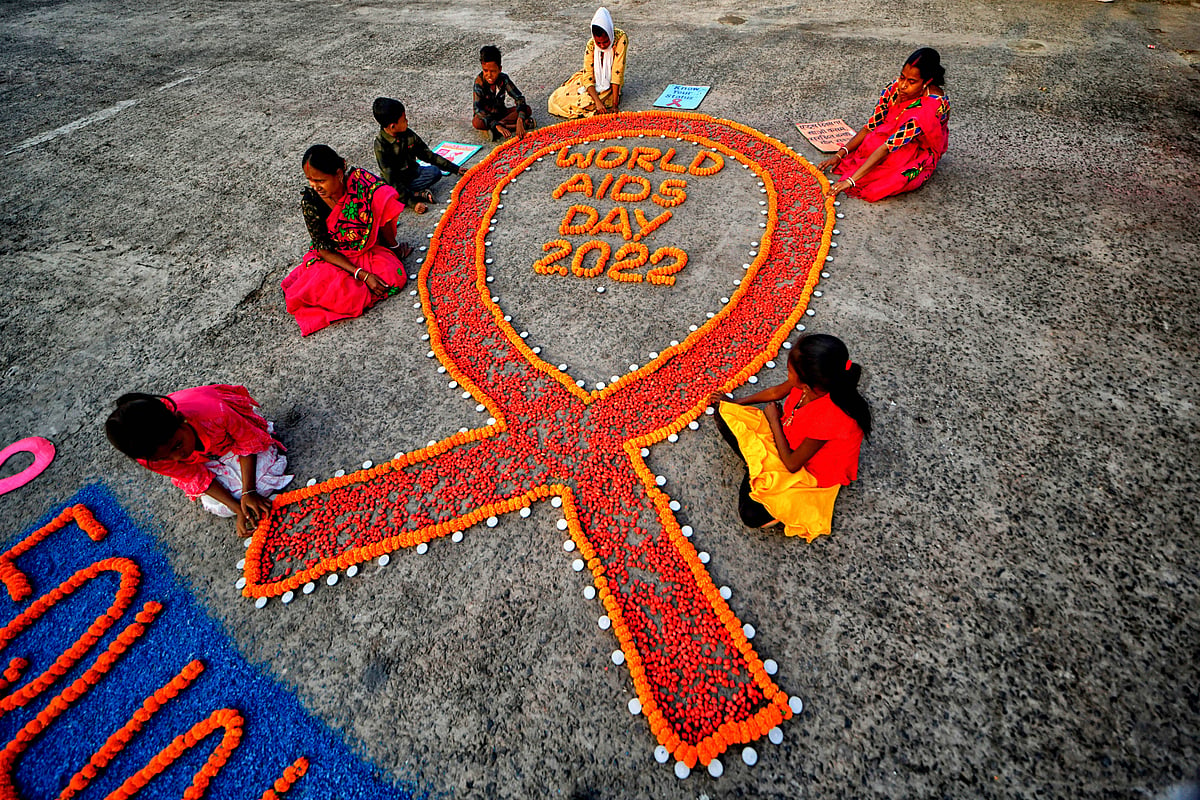
WHEN A 14-YEAR-OLD from Uttar Pradesh developed a rash that spread all over her body, her grandparents initially thought it was an allergic reaction. When it did not subside, they took her to a spiritual guru who they hoped would cure her by warding off a supposed curse.
None of them had any idea that the 14-year-old was HIV-positive. She had contracted the virus from her 38-year-old mother, who was unaware of her positive status at the time her daughter was conceived. “I was devastated,” said the mother, who believes she was infected by her husband, a contract worker based in Africa. “I could never gather the courage to tell my daughter that, because of my ignorance, she is suffering.”
The mother, who often works 12-hour shifts on construction sites and road-building projects in Mumbai, wants to hide the truth from her family and the wider community as long as possible. “People already call me names in the village because I am working alone in the city,” she said, adding that she is afraid that her family would be ostracised if anyone comes to know about their HIV-positive status. “I don’t want my child to die with the shame of this burden.”
The teenager from Uttar Pradesh is one of a growing number of children and adolescents in India living with HIV, some of them unaware of their HIV-positive status. In a study published by the US-based National Library of Medicine, the medical researchers Bhanu Mehra, Preena Bhalla and Deepti Rawat write that 35 percent of HIV cases in India are reported from the 15- to 24-year-old age group. They also note that data on HIV prevalence among adolescents who fall outside this age band is less widely available. There are more than 81,000 HIV-positive children in India, accounting for 3.5 percent of total infections, according to India’s National Aids Control Organisation (NACO).