
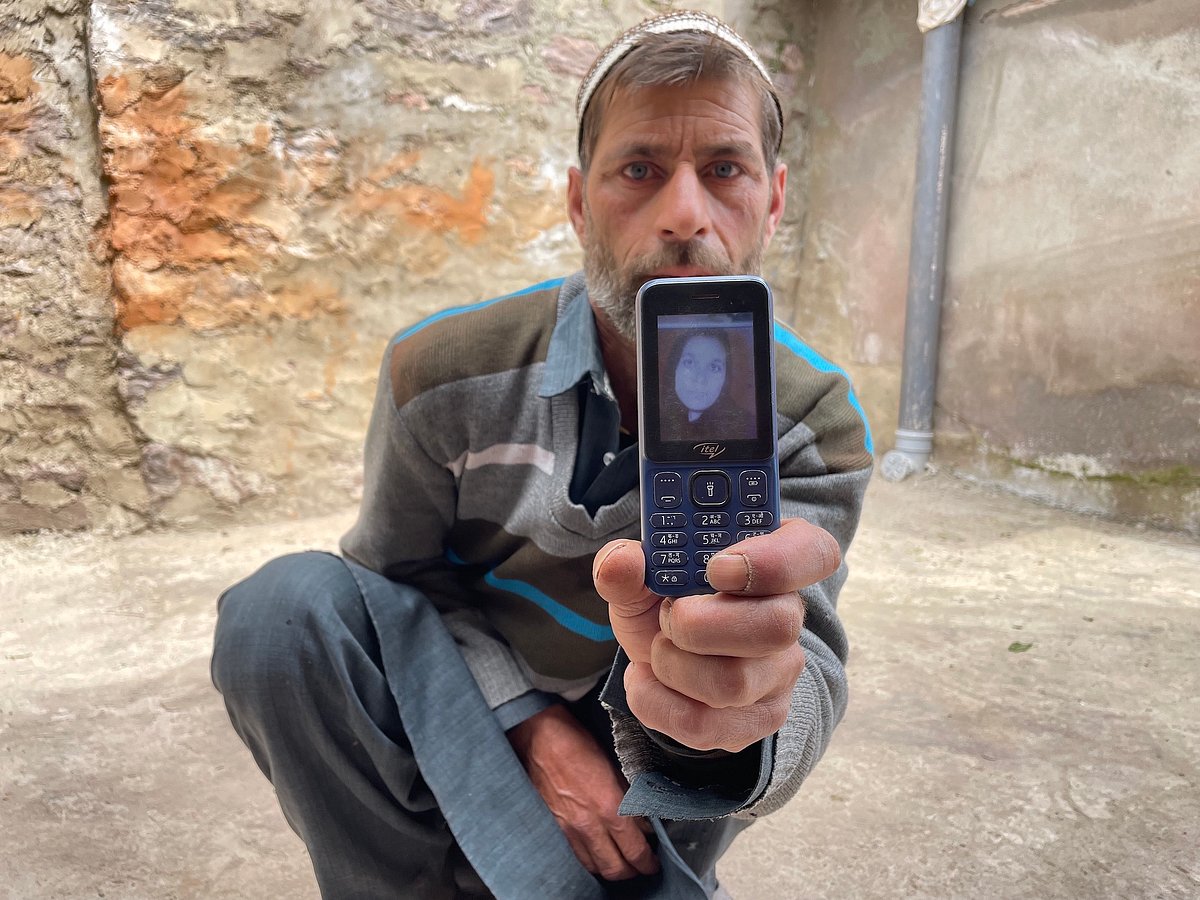
On the morning of 13 November 2020, Bashir Ahmad Dar was having breakfast in his two-storey mud house in the village of Balkote, on the western fringes of the Kashmir Valley. His wife, Farooqa Begum, had climbed up to the second floor to fetch some clothes for their children when a mortar shell hit. Dar managed to get his five kids safely out of the burning house. He went to search for Farooqa "only to find her body in pieces," he recalled, his eyes moist. "Her head was badly damaged by shrapnel."
Farooqa died on the spot. She was 35. Dar, a labourer and now 45 years old, said the couple were married in 2005 and, despite financial difficulties, had lived a happy life – until the mortar shell put an end to that. It had apparently been fired by the Pakistan Army from across the nearby Line of Control (LoC).
Balkote lies a short distance from the town of Uri, perched amid rugged pine-forested mountains. The LoC runs mere kilometres away, and is the defining feature of life in the area. Formed along the ceasefire line at the end of the 1971 war between India and Pakistan, and 750 kilometres long, the LoC functions as the de facto border between the two hostile neighbours in these parts. Especially after armed insurgency exploded in Indian-administered Kashmir in the 1990s, sending tensions between India and Pakistan soaring, exchanges of fire across the LoC became frequent. Civilian life on both sides became increasingly difficult, and civilian deaths too often routine.
Efforts at a stable ceasefire – most notably an agreement signed in 2003 – came and went. In 2020, with hostilities peaking again after the Indian government stripped Jammu and Kashmir of statehood and special constitutional status, a record 5133 ceasefire violations claimed 46 lives and left almost 200 injured on the Indian side, including civilians and security personnel, according to official figures from the government of India. Civilians accounted for 22 of the dead and 71 of the injured. In early 2021, the government said the preceding three years had seen more than 10,000 ceasefire violations in all, leaving 70 dead and 341 injured.