
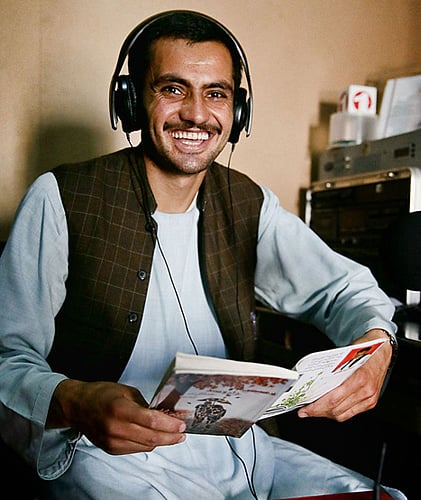
Shaffiqa Habibi, director of the Afghan Women Journalist Union, is concerned at the declining number of female voices within the Afghan media. Despite the industry's significant growth since the overthrow of the Taliban, journalism remains a dangerous occupation. "Over all it is difficult to be a journalist in Afghanistan," she says, adding, "but being a female journalist in Afghanistan is even more dangerous". She has a point. It is estimated that of 2,300 female journalists, about 300 had left the profession as of mid-2013, primarily due to concerns of personal security, as well as familial pressure. "Women are constantly harassed and threatened by officials, unknown people, and some family members, so it makes it difficult for women to work in the field of media, even though it is very important that we have female reporters to reflect the challenges that Afghan women face in this country."
While the disincentives female journalists experience are unique in many ways, they are symptomatic of broader issues of access and security faced by an industry whose mandate it is to question authority and challenge ideas. As the foreign media covering Afghanistan focuses on NATO troop levels and the Bilateral Security Agreement that would keep them there, Afghan media have been more concerned with the ramifications of the 5 April presidential elections. They know it is not the number of foreign troops that will determine their future, but whether or not Afghanistan will be able to stage a credible election that will help the country become a modern state and provide the stability necessary for progressive media reform. For the future of independent journalism in Afghanistan, the stakes are high.
Anatomy of an industry
If measured solely in terms of the number of news organisations, the growth of the Afghan media is a development success story. The tally varies, but there are about 175 FM radio stations, four news agencies, 75 TV channels, seven daily newspapers and hundreds of other publications. About half the population of 29 million own mobile phones while Internet cafes are not uncommon in major cities. Kabul alone has 42 radio stations and 30 TV channels. Smaller cities have 10 to 25 TV channels and around 20 radio stations each, according to the American-funded Center for International Media Assistance at the National Endowment for Democracy. They would know: much of the money for media development came from the United States.
The Afghan press corps, though tested under fire, is still very young and, to some extent, lacks professionalism. In the years prior to the elections, foreign media had begun outsourcing ground level news-gathering to reputable local Afghan reporters – those with the experience, bravery and reliability to go where foreign news agencies were reluctant to send their employees. While the 2014 endgame has driven something of an upsurge in foreign coverage and the overseas staffing necessary to do the job, it will be mostly Afghan reporters in the field covering the news in the long term, be it for local or foreign news organisations.