
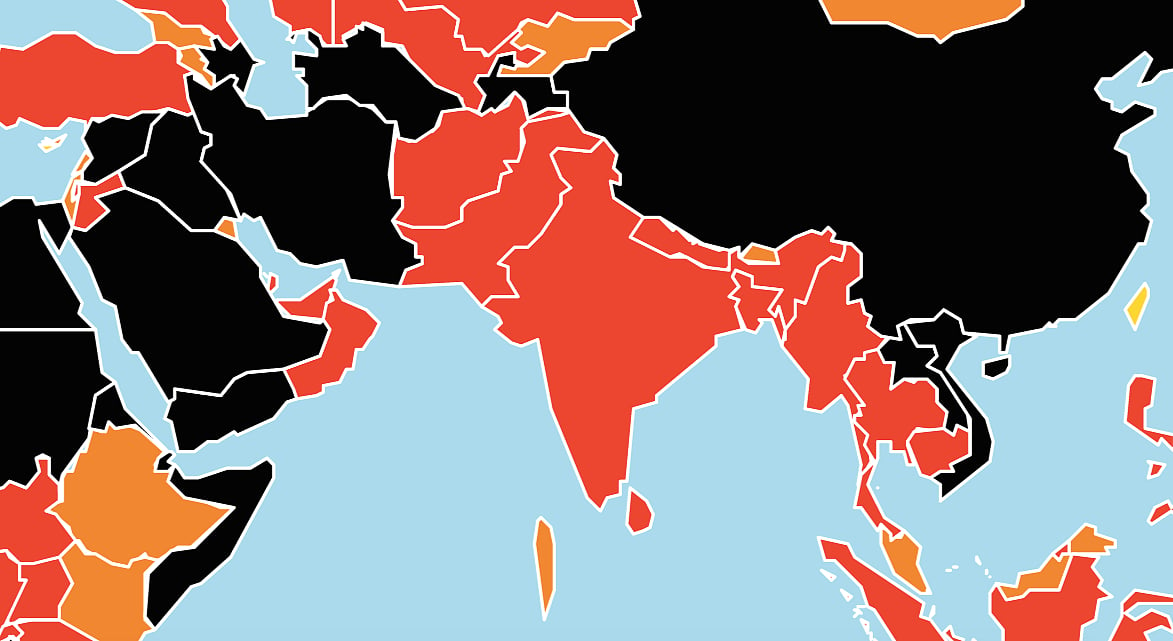
On 3 May 2020, the world marked World Press Freedom Day under the shadow of the COVID-19 outbreak. With a large part of the world under lockdown, journalists have improvised and tried different mediums to tell their stories. Meanwhile, in the guise of responding to the crisis, governments have found new opportunities to restrict journalistic freedoms, as well as free speech in general.
In Southasia, such restrictions have come in many forms, from controls on news gathering and expression, to legal harassment, arbitrary arrests and physical violence. In almost all instances, this has been done without legally invoking emergency-time regulations.
Several Bangladeshi journalists have been detained or assaulted by the police, while the Digital Security Act continues to be abused to intimidate the media in connection to COVID-19 reporting. In India, the government unsuccessfully tried to force the media to report only officially sanctioned information, while the Uttar Pradesh government has filed criminal charges against Delhi-based The Wire for "creating or promoting enmity, hatred or ill-will between classes". Sri Lanka's Human Rights Commission has written to the police, concerned about the arrests made (at least 17 so far) for spreading misinformation on social media about COVID-19; recently, the police also warned the public including media organisations that they would take action against those who criticised state officials' response to COVID-19. The Myanmar government has asked phone operators to block over 200 websites, including those catering to ethnic minorities, purportedly for spreading 'fake news'. In Nepal, a bureaucrat was picked up from his home after making social-media posts critical of the prime minister's response to the outbreak, while the state-run radio service removed an interview with a former prime minister that was also critical of the prime minister. Pakistani journalists, meanwhile, marked press-freedom day by protesting the continued detention of editor-in-chief and owner of Jang Group, a major media house in the country.
Since press-freedom laws still provide some protection to those working in media organisations, states have for the last few years targeted the social-media activity of both journalists and the wider public. Countries in the region have frequently used overbroad provisions of online-regulatory laws to do so. And while criminal defamation has so far been widely used to intimidate critical reporters, cracking down on 'fake news' is quickly becoming the new tool of choice.