
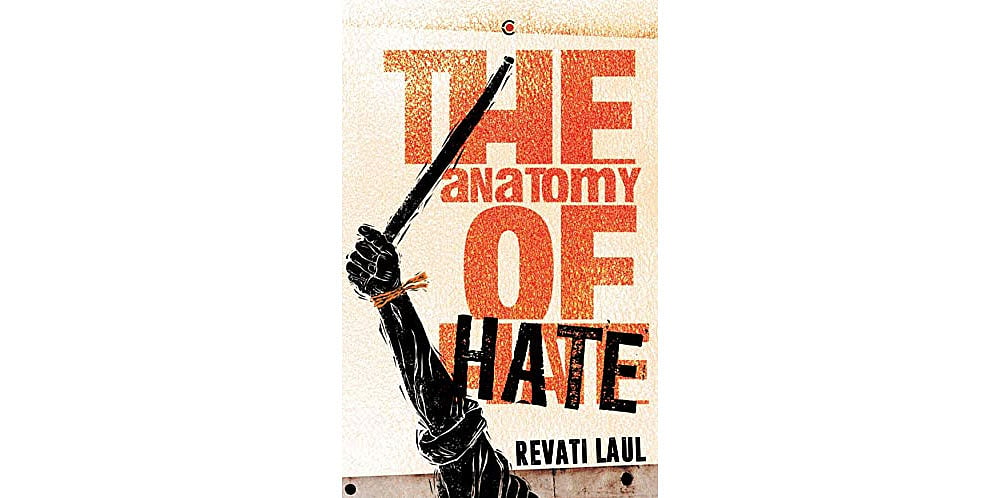
Commenting on the performance of the Bharatiya Janata Party (BJP) in the Gujarat State Assembly elections in December 2017, where the incumbent party had barely managed a majority, journalist Revati Laul writes in her book The Anatomy of Hate, "In Gujarat, it seemed as if there was no more room for the hate to grow." In the context of the massive victory for the BJP in the 2019 general elections – in Gujarat alone, the BJP won all 26 parliamentary seats – it is ironic to read Laul's assessment – that they had gone "as far as they could".
Laul moved to Gujarat as a reporter with the Delhi-based news channel NDTV following the anti-Muslim pogroms of 2002. The widespread support among many Hindus for the anti-Muslim violence haunted her. Keen to understand the dynamics at play, she thought interviews with some of the perpetrators of the mob violence would be a good way to explore these complexities. After considering making a documentary film, and then writing a magazine cover story, Laul eventually decided on a book. Unsuccessful in obtaining grants from research foundations and institutions, she decided to crowdfund her journalistic project. Scheduled to run for 45 days, the crowdfunding campaign exceeded her target of INR 800,000 (USD 11,600) in about 15 days, the result of which was The Anatomy of Hate.
Judging perpetrators of mob violence – such as the members of militant Hindutva groups who were part of the 2002 Gujarat massacres – as 'evil' primarily caters to our instincts of righteousness. But moral condemnation does not provide insights about the politics of polarisation. The ineffectiveness of the left in countering fascist ideologies – whether seen in the German Communist Party during the rise of the Nazi ideology in 1930s Germany, or the present crisis of the left in India – is testimony to their failure to grasp and engage with the politics of divisiveness. Moreover, in the Gujarat of 2002, it was not just a handful of fringe extremist groups, but at times mobs of thousands who participated in the killing of Muslims, making it even more crucial to understand the forces at work.
The Anatomy of Hate's approach is in sharp contrast to a simplistic condemnatory paradigm. As Laul writes, "Choice is a vexing word. What part of choice applies when a tidal wave of anger tears through a state? What part of it is the moment, the madness, the collective, and what part individual, personal history?" To answer these questions, the book takes an intimate look at the lives of three individuals who participated in the mass violence of February-March 2002.