
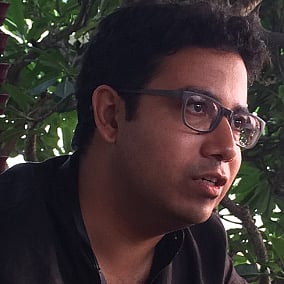
Chhetria Patrakar's first sighting of Kushanava Choudhury at the Galle Lit Fest is of him belting out a song along with the lead singer of the Bangladeshi band Chirkutt, whom he had encountered only the previous day. Choudhury has recently published a book on Kolkata to critical acclaim, and at a discussion at the Lit Fest he discussed his book, his own journey back to Kolkata (he and his family had left for the U.S. when he was a child of 12), and what Kolkata means for modern democracy.
At the public forum, Choudhury traced the unlikely origins of Kolkata as a capital; the city's anguished witnessing of deaths due to the famine engineered by the diversion of food to the British war effort; the violence of partition and its absorption of refugees after 1947, when 50 years of growth of population was crammed into five years; and its post-Independence emergence as a city of complex and finely calibrated social relationships, different in many ways from India's other large urban centres.
Kolkata is often portrayed as a city of the past, a decaying megapolis, an urban cosmos steeped in communist nostalgia out of step with the modern times. Indeed the moderator of Choudhury's session seemed to share that opinion, asking when the city would join the rest of modern India. Choudhury questions the assumptions underlying this perception however, arguing that the vision of a modern India of never ending consumption would be simply untenable.
What kind of visions, then, can we have of the future Choudhury asks, suggesting that a robust engagement with 'the lives we have lived' in cities such as Kolkata could offer more insights and answers.