
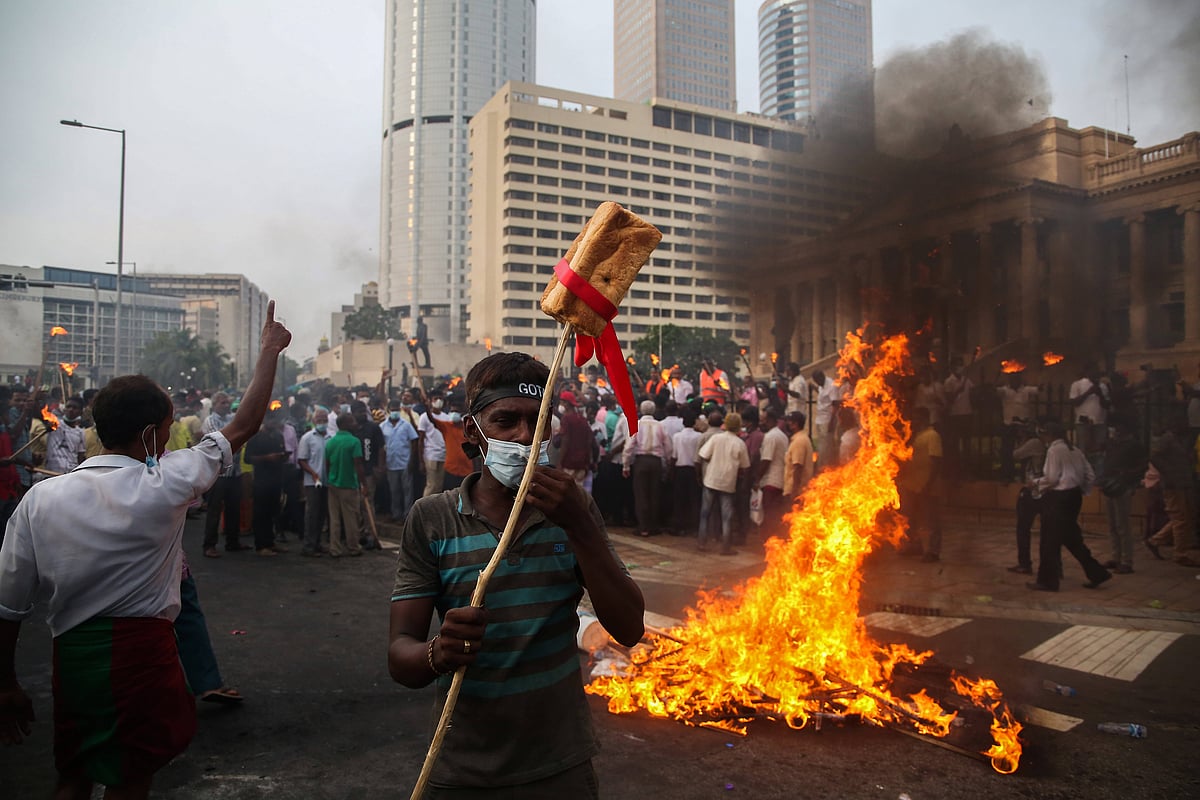
TWO YEARS AFTER Sri Lanka’s worst economic crisis since 1948, shortages and queues have ended, the inflation rate is back down to single digits and tourism is rebounding. If you were to believe the US assistant secretary of state Donald Lu, “there is no greater comeback story than the story of Sri Lanka.”
Ranil Wickremesinghe, who became president in 2022 following the ouster of Gotabaya Rajapaksa by a wave of protests now immortalised as the Aragalaya, has been overseeing the implementation of an International Monetary Fund (IMF) programme meant to stabilise Sri Lanka’s economy. The programme – the latest in a long line of IMF efforts that have failed to fix the country’s structural problems – calls for brutal austerity measures and an attempt to privatise the last strategic assets that remained under public ownership after the government’s fire sales in the 1980s and 1990s. Wickremesinghe has indicated that he would like to complete the IMF programme before holding elections due by the end of the year. However, critics have pointed out that the unelected Wickremesinghe and the current parliament – elected in 2019 on a decidedly anti-IMF platform – have absolutely no democratic mandate to carry out the programme’s stipulated reforms.
Over the last two years, the mainstream media coverage of the economic crisis in Sri Lanka has become tedious and repetitive, serving up cookie-cutter takes that are both historically short-sighted and ignorant of broader trends in global political economy. In this context, Asoka Bandarage’s Crisis in Sri Lanka and the World seeks to provide an antidote to what she calls the “amnesiac and attention-deficit narrative in the corporate media”, which frames the crisis in Sri Lanka as the product of “a confluence of the 2019 Easter bomb attacks, COVID-19 pandemic, the Ukraine War, Chinese loans and widespread corruption and mismanagement in the Rajapaksa administration.”
Bandarage – a Sri Lankan academic and researcher who has written extensively on the political economy of development, gender, conflict and ecology – charges both domestic and external observers with misrepresenting, decontextualising and dehistoricising the crisis in Sri Lanka. For her, the economistic explanation of the crisis “focuses exclusively on inefficiency and corruption”, while sociological strands of analysis are at fault for identifying “the roots of the current crisis in terms of ethno-religious politics rather than economics”. The Aragalaya, which was narrowly focused against political corruption and mismanagement, is also not spared critique. For Bandarage, even the protesters, despite their calls for systemic change, “failed to develop a cohesive awareness and critique of the global political economy and the financial system at the root of the country’s crisis.”