
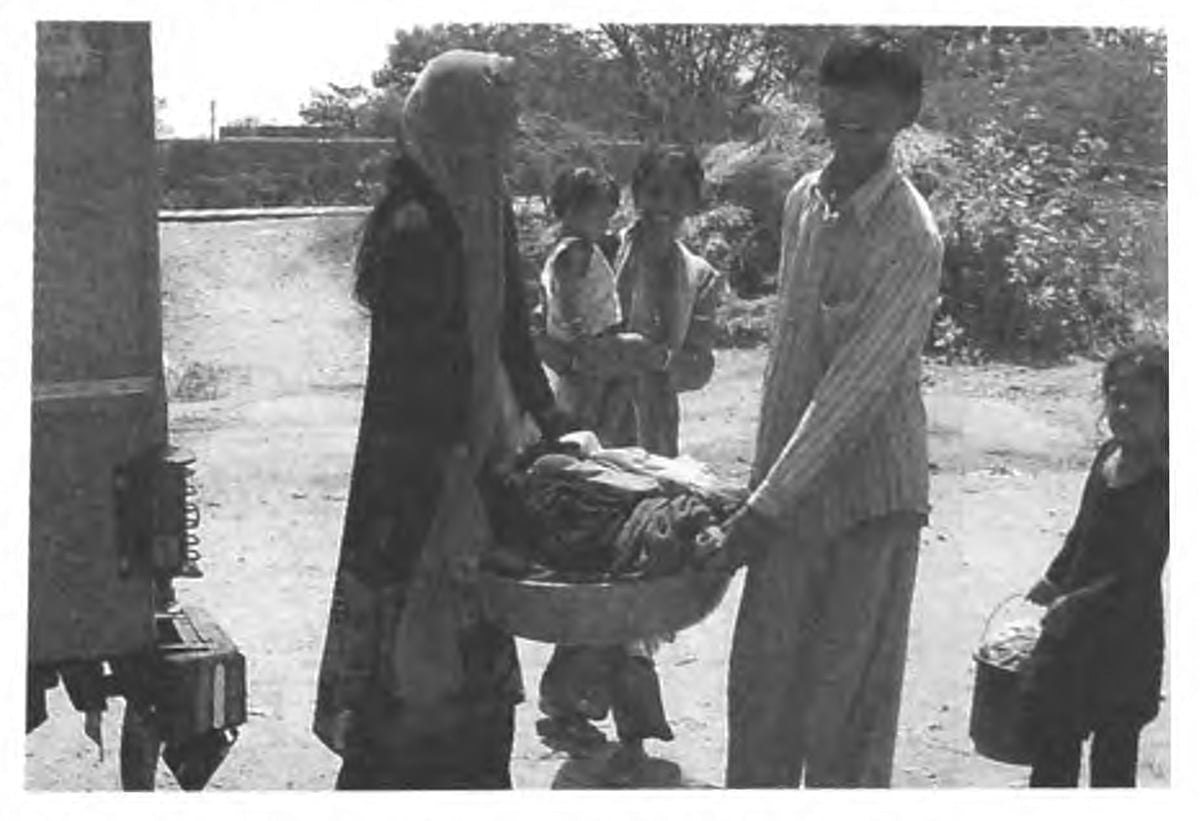
A cluster of unfinished houses stands in two rows in a small clearing in Rajgadh, in Gujarat's Panchmahal District. Two goats rest on a charpoy outside a house, and a group of children playing a game with tamarind seeds chase away a black hen that wanders too near, incessantly pecking away at the ground.
Eleven Muslim families, displaced from their hometowns in other parts of Panchmahal by the Gujarat riots of 2002, now call these two-room, unpainted structures home. Inside are a few mats and pillows on the floor, as well as some pots and pans, neatly arranged on makeshift shelves in makeshift kitchens. There is no electricity, no plaster on the walls and no bathroom. When nature calls, the families visit the shrubs behind their homes, with the women in particular seeking the darkness of the night or early dawn. Amidst these very shrubs are also reminders of other houses that were to be constructed here: half-finished brick walls, which rise up as if in the hope of finding a roof to hold them together.
The description 'relief colony' hangs anachron-istically over the Rajgadh dwellings. There were to be about 40 families here, comprising people who were either hounded out of their homes or fled on their own due to a fear of pogroms. But, as 30-year-old Hasinabibi Makrani explains, the non-government agency that started the construction of these houses had to stop its work midway due to police and political intervention. The first few families had already moved into the unfinished houses when police officers suddenly turned up to chase away workers at the site. The agency, the residents believe, had not secured the requisite paperwork before starting construction. It is arguable whether a state that displayed such insensitivity towards its Muslim population would have even considered such a request. But the 'illegal' tag has proved sufficient for the police and other arms of the state to deny basic civic conveniences to the residents of this 'relief' colony.
Fearing for their safety, and unable to return to their hometowns due to threats from Hindu neighbours, the 11 families have remained in Rajgadh, fashioning lamps out of discarded bottles, and sleeping outside every night to escape the oppressive airlessness of their homes. Hasinabibi's biggest worry is centred on her son, who goes to a school five kilometres away. "He is in the tenth standard this year," she says. "How can he study without lights at night?"