
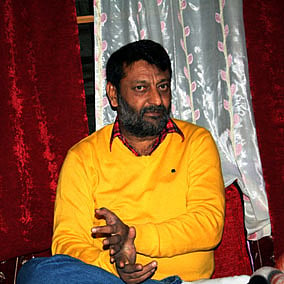
Farooq's eyes are red from lack of sleep. His hands look cold and withered. In the initial moments of our meeting, only the sound of the rain outside and the porcelain cups we are sipping tea from breach the silence in the room. He is constantly fiddling with his thumbs. I notice a half-chipped-off finger nail. A teenage boy sits silently holding a portable video camera pointed towards us, which makes me uneasy. "He is my nephew. Since my release, he hasn't turned off his camera," he says with a mild, comforting laugh. It is around three weeks after Farooq's acquittal on 29 September 2014.
Farooq Ahmed Khan spent 18 years and four months in various Indian prisons, mostly in solitary confinement.
Staring at the damp mauve walls of the room at his maternal house in Anantnag (also known as Islamabad) in the south of India-administered Kashmir, he speaks heavily and anxiety is evident in his voice. Trained as a mechanical engineer in Anna University in Chennai, he joined Kashmir government's Public Health Engineering department in 1990. Five years later, at the age of 30, he was charged with carrying out a bomb blast in a market in India's capital New Delhi, and subsequently faced charges in other 'terror' cases.
What he would later experience is a horrifying story about the Indian legal system and a pockmarked path that Khan and many others have been forced to tread. It features a script written by 'special anti-terror' Indian agencies that target a particular community and instil fear and crush dissent, while securing promotions and gallantry awards for themselves.