
After discovering my first shaligram, I could find little that described its cultural, mythological, or religious significance until I discovered an entertaining old glossary of colloquial Anglo-Indian words and phrases called Hobson-Jobson, the second edition of which was published by two British colonial scholars in 1903. From a few quotes they collected from notations in obscure writings, some as early as the 16th century, I read that a shaligram is "A pebble having mystic virtues… usually marked by containing a fossil… often adopted as the representative of some god… considered a representative of Vishnoo… found in the Gunduk River," and – most alluring – "it is the only stone that is naturally divine; all others being rendered sacred by incantation."
Beyond such curious ramblings and speculative rumours, however, little else about the shaligram pilgrimage was available to a larger readership until, in recent decades, a few of us anthropologists and others began to write a little more about them.
When I came across Shaligram Pilgrimage in the Nepal Himalayas, by anthropologist Holly Walters, published in late 2020, I was intrigued and pleased. Hera meticulously researched book provides deep insight into the culture of these sacred fossils and of the age-old pilgrimage to Muktinath. Shaligram Pilgrimage is the most comprehensive study of the "living fossils" written to date.
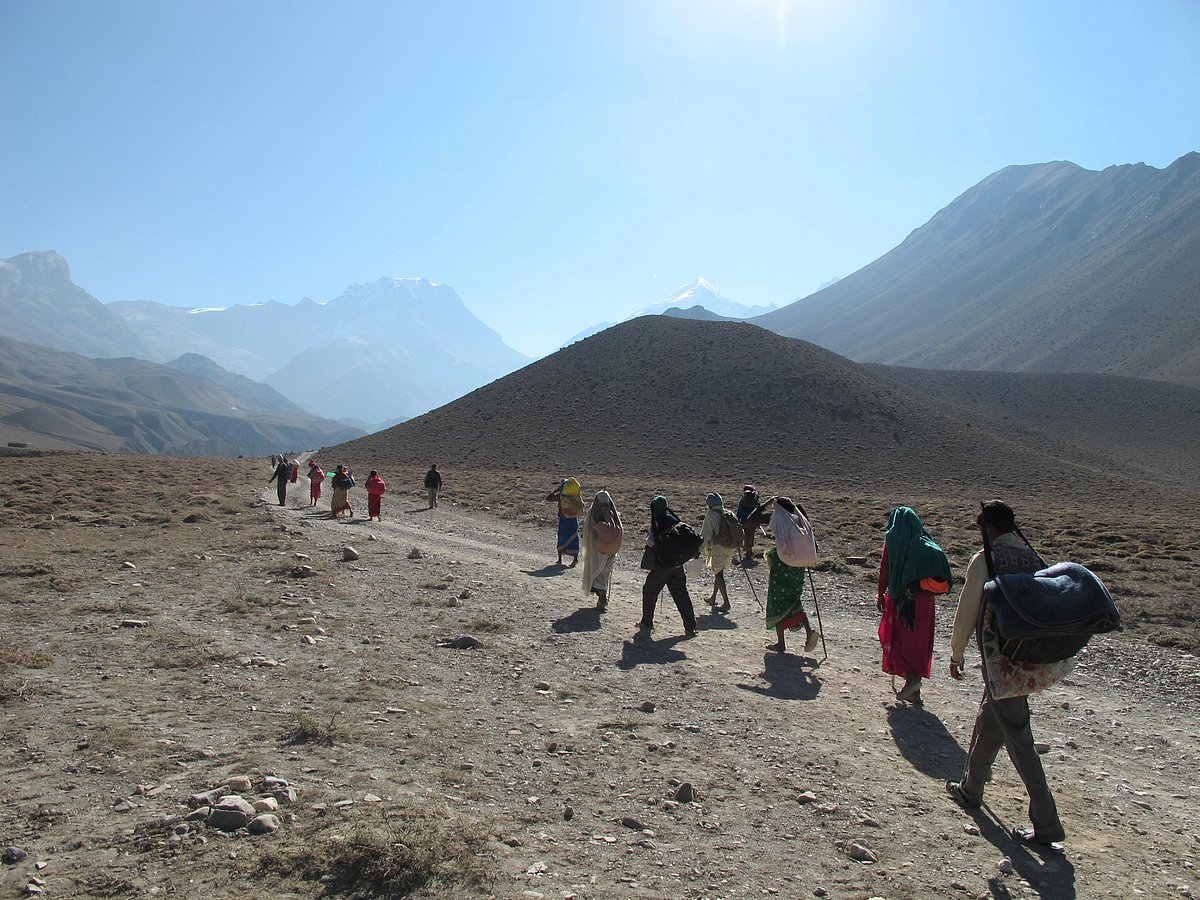
I found my first fossil in the Himalaya in the 1960s while trekking high in the hills on the west side of the Kali Gandaki River Valley. It was so unexpected that I kept it as a talisman. Later, while walking the riverside trail on my way to the mountainside temple of Muktinath, I met Hindu pilgrims who showed me black, round, spiralled fossils they had found along the Kali Gandaki riverbank. "Shaligrams," they said. "Very old. Very sacred." They knew where to look for them from stories their elders told, of trekking north up the pilgrim trail toward Nepal's border with Tibet, years before. Muktinath, the destination of countless pilgrims over more than two thousand years, is the principal site for the veneration of shaligrams, and finding the sacred fossils along the way fulfills one of the main objectives of each pilgrim's yatra.