
This week at Himal
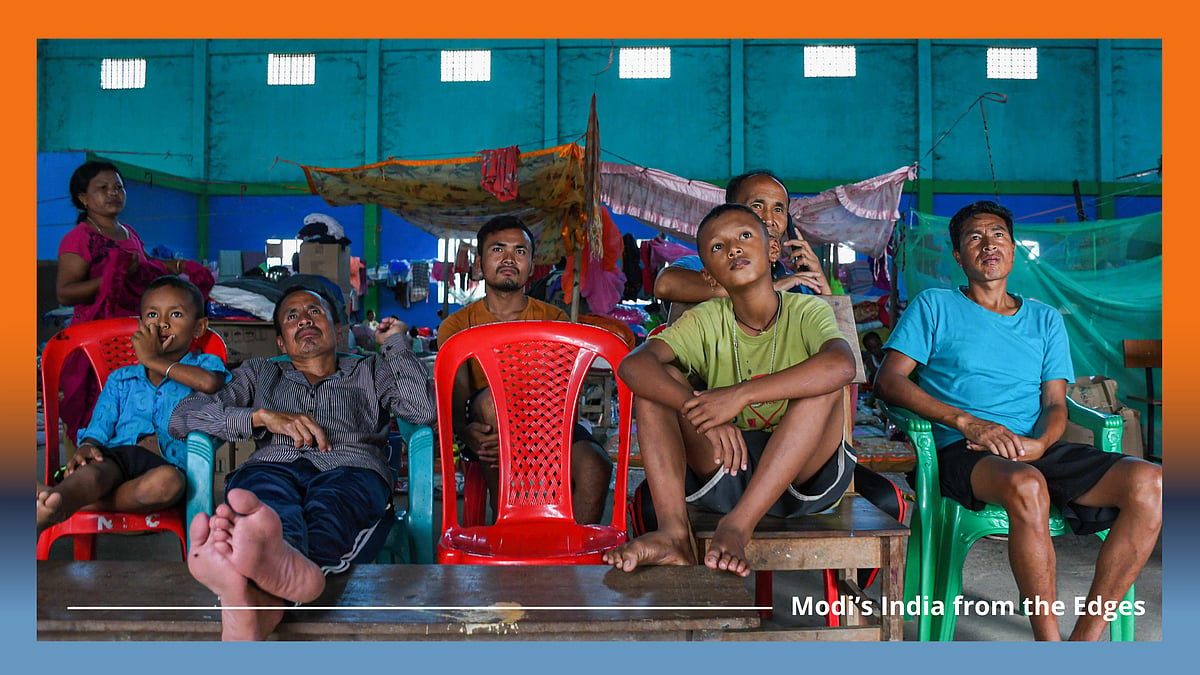
As India goes to the polls, our special series, “Modi’s India from the Edges”, continues, presenting regional perspectives on Narendra Modi’s decade in power. Makepeace Sitlhou writes that while the BJP claims to have overcome the ‘tyranny of distance’ between the Northeast and the rest of India, its politics have only served to create greater division, as their response to the ongoing conflict in Manipur shows.
This week, Shashank Kela unpacks India’s early attempts at industrialisation, reviewing Pulapre Balakrishnan’s book ‘India’s Economy from Nehru to Modi’ which offers a valuable account of India’s economic history, but neglects the social and political elements inseparable from it.
Independent newsrooms like Himal’s need your support to bring out underrepresented perspectives and underreported stories.
Himal does not depend on advertising, corporate support or a restrictive paywall. We need your support as a reader to keep bringing out underrepresented perspectives and underreported stories, and to keep our in-depth, independent journalism open-access and free to read for all. Please contribute to Himal’s fund for the ‘Modi’s India from the Edges’ series – we cannot do this without you!
Also read: Under Modi, the Northeast is more united with India, but more divided within
Also read: Why did India fail to industrialise where East Asia succeeded?
This week in Southasia
Iran, Israel and the impact on Southasia
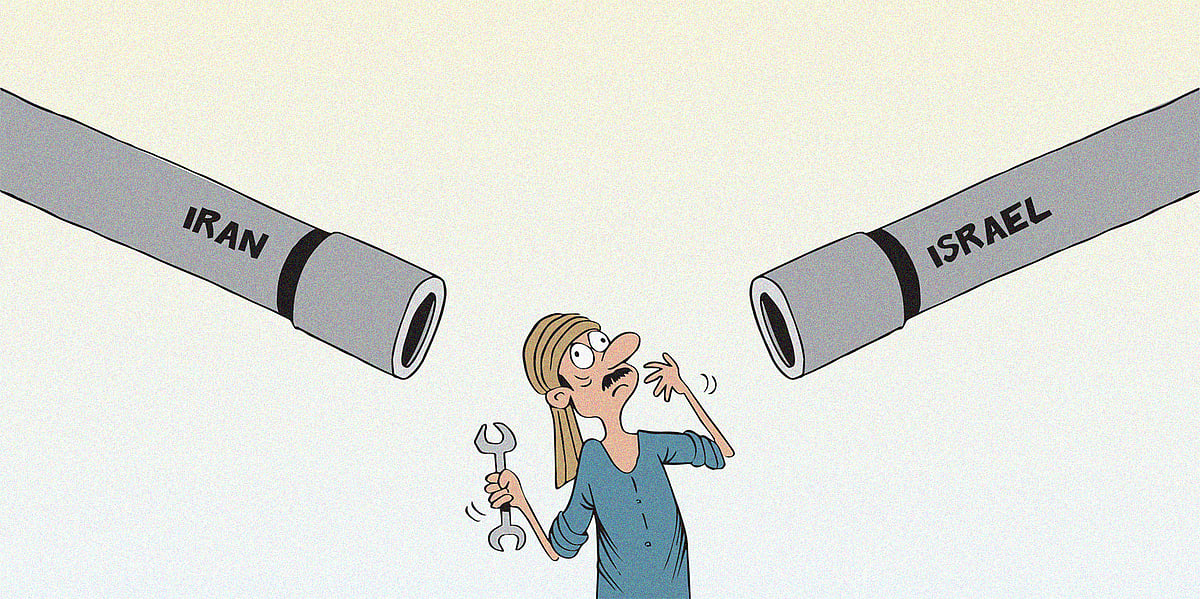
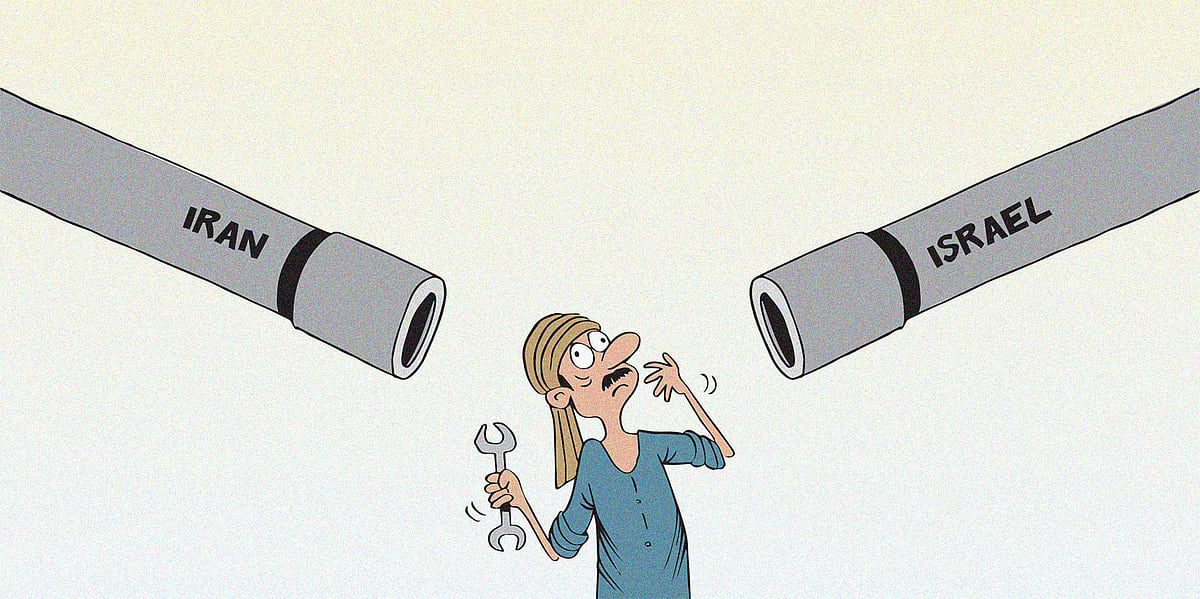
This week, escalating tensions in West Asia impacted the Southasian region.
Indian officials rushed to make contact with the crew members of the commercial ship MSC Aries, linked to Israeli billionaire Eyal Ofer, which was seized by Iran on 13 April. Seventeen of the 25 crew members were Indian. The ship was seized shortly before Iran launched a missile attack on Israel, in turn a response to Israel’s attack on an Iranian diplomatic compound in Syria. At the same time, a long anxious wait ended for the crew members of the Bangladesh-owned ship, MV Abdullah, after a USD 5 million ransom was paid to the Somalian pirates who captured their vessel. As Houthis continue to impede passage through the Red Sea in what they say is an act of protest against Israel’s war on Gaza, international naval forces have been stretched thin, leading to a resurgence in pirate attacks.
The 13 April strike is Iran’s first direct attack on Israel in what has been described as a long ‘shadow war’. These attacks have escalated following Israel’s brutal bombardment of Gaza, which has killed over 30,000 Palestinians and wounded more than 70,000 others, six months after the 7 October attack by Hamas. After 13 April, India called for “immediate de-escalation” and has said it will pause plans to send thousands of Indian workers to Israel – an agreement signifying deepening ties between the two countries. Pakistan’s Ministry of Foreign Affairs said it was “critically urgent to stabilise the situation and restore peace.” Bangladesh’s foreign minister also called for de-escalation and for Israel to “stop the indiscriminate killing of people in Gaza”.

Elsewhere in Southasia 📡
- India kicks off its national elections today for 543 seats in the Lok Sabha. A total of 102 constituencies in 21 states will vote in the first phase of the elections, with the results announced on 4 June.
- Hundreds of people across Pakistan and Afghanistan reported killed after lightning and heavy rains on 16 April.
- National League for Democracy leader Aung San Suu Kyi moved from prison to house arrest amidst severe heat wave. Myanmar’s military junta also grants amnesty to more than 3000 prisoners to mark Thingyan New Year holiday.
- Maldives High Court orders retrial for former president Abdulla Yameen on bribery conviction ahead of Maldives’ parliament elections on 21 April
- Former Nagpur University professor Shoma Sen released on 17 April after India’s Supreme Court granted bail in the Bhima Koregaon case. Sen was detained for six years under the stringent Unlawful Activities Prevention Act.
- New report from inter-faith and anti-caste platform Savera finds continued ideological, financial and organisational links between Vishwa Hindu Parishad in India (VHP) and its American counterpart, VHP-A, despite the latter’s claim to being an independent entity. Previous reports from Savera reveal that VHP-A provided financial and material support to VHP and worked to popularise far-right politics in the United States.
- Sri Lanka government fails to reach agreement with private bondholders on restructuring its International Sovereign Bonds in setback to debt-restructuring process, talks to continue ahead of International Monetary Fund’s second review of Sri Lanka’s Extended Fund Facility programme.
- Hindu mob enters school in Telangana, forces principal to chant Jai Shri Ram, forcibly applied vermillion on him after he refuses to admit three Hindu students wearing saffron to mark Hanuman Deeksha into school. An FIR has been filed against the school.
- New investigative report by Swiss developmental organisation Public Eye finds Nestle added 2.2 grammes of extra sugar per serving of Cerelac wheat based cereal in India, 2.7 grammes extra sugar per serving in Pakistan and 1.6 grammes extra sugar per serving in Bangladesh, while the same products were sold in the UK and Switzerland with no added sugar, raising concerns of double-standards in public health
- Maldives’ president Mohamed Muizzu ratifies Anti Defection Bill, which will ensure lawmakers lose their parliamentary seats upon floor-crossing, but last minute amendments require MPs to resign of their own volition, fail to outline penalties for non-compliance
- Chinese authorities begin relocating a 19th century Tibetan monastery that will be submerged under hydropower project, despite protests from Tibetans
- Family members of Nepalis serving in the Russian army stage protest in Kathmandu, demanding repatriation. Police arrest 12 protesters.
Only in Southasia!
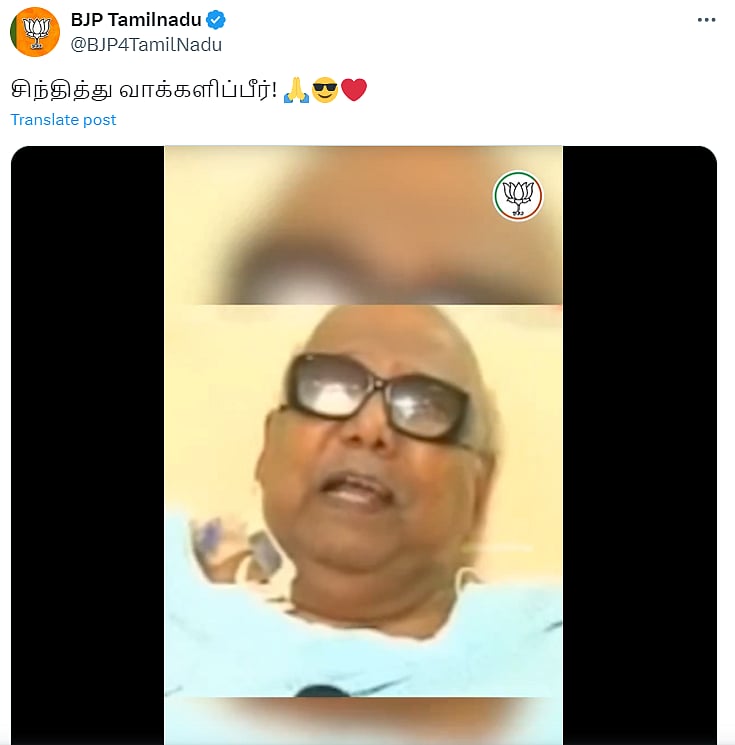
The Bharatiya Janata Party appears to have given up altogether on campaigning in Tamil Nadu. Instead, they’ve been turning to a most unlikely ally - their ideological nemesis, former Chief Minister of the Dravida Munnetra Kazhagam, M Karununanidhi. In a video posted on 17 April circulated by the BJP, Karunanidhi appears in a clip exhorting people to go from house to house to “Save Tamil Nadu, save Indian democracy”, before being abruptly cut off with the appearance of the BJP’s lotus symbol, and a voiceover asking people to vote for the BJP.
Now that’s a jumpscare.
Unsurprisingly, the video was lampooned on social media, with many social media users from Tamil Nadu pointing out that the BJP had to resort to using Karunanidhi’s face and voice due to their inability to make inroads with voters in the state.
From the archive
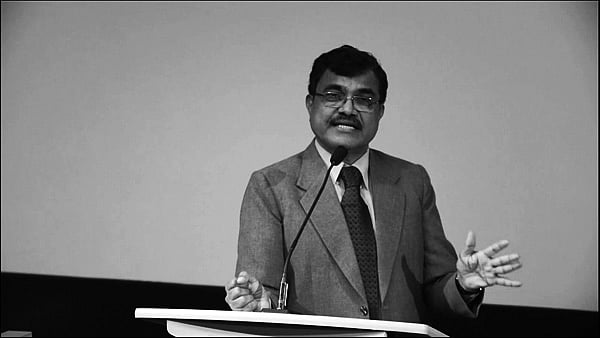
Anand Teltumbde: On India’s rising authoritarian tide (September 2018)
This week, as news broke of Shoma Sen being released on bail from Mumbai’s Byculla prison, a 2018 interview with Anand Teltumbde, the Goa-based public intellectual and civil rights activist who was also targeted during the Bhima Koregaon case is worth revisiting. In the interview, Teltumbde describes the impact of police harassment and what lies behind India government’s moves to quash dissent. Sen’s release has also revived discussion about the use of the Unlawful Activities (Prevention) Act. In light of this, Makepeace Sitlhou’s October 2020 article written shortly after the closure of Amnesty International’s India office is also worth a read.