
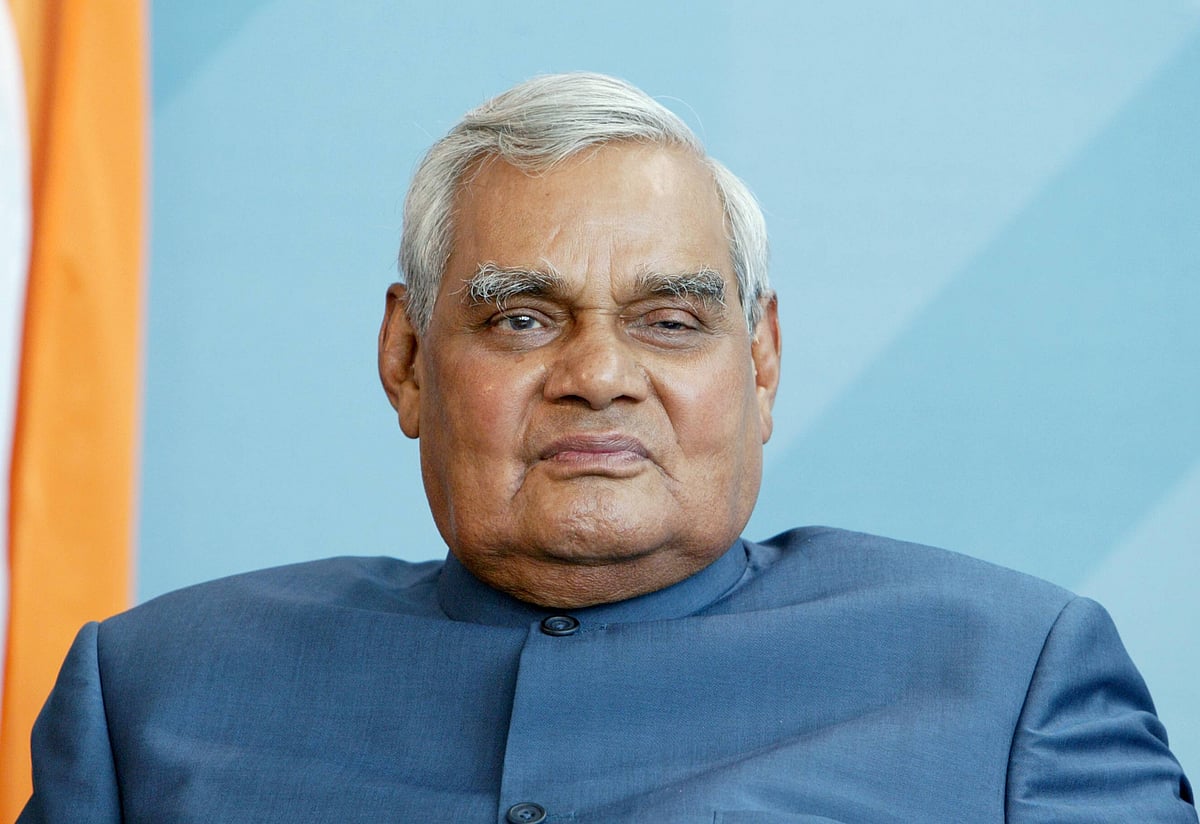
In April 2002, Atal Behari Vajpayee, then India's prime minister, toured the state of Gujarat, where communal riots had recently left some 2000 people dead, most of them Muslims. During the tour, he addressed a now-famous press conference also attended by Narendra Modi, then the chief minister of Gujarat and since 2014 the prime minister of India. A journalist asked Vajpayee what advice he had for Modi. Vajpayee replied, "He should perform raj dharma" – the duty of a ruler. As an uncomfortable Modi could be seen trying to attract his attention.
Modi's critics both within and outside of his Bharatiya Janata Party (BJP), of which Vajpayee was a founder, point to this press conference to highlight what they feel is a stark contrast between the two leaders. Many today consider Vajpayee to have been comparatively more inclusive in his politics, while Modi is often thought to be more hard-line. The latter's nearly decade-long rule of India has been described by myriad observers as a strongman regime, with declining press freedom and democratic backsliding.
The 2002 Gujarat riots continue to haunt Modi. He has variously been accused of engineering or abetting them, or at the least of administrative incompetence in failing to prevent them, although India's Supreme Court has exonerated him of all charges. With a national election looming, Modi remains sensitive to any association with the 2002 violence. In 2023, his government banned a BBC documentary, India: The Modi Question, which referred to a British government report holding Modi responsible for the "climate of impunity" that allowed for the bloodshed under his watch.
Vajpayee, too, was reportedly unhappy with how Modi had dealt with the crisis, and had wanted to sack him. The "raj dharma" remark was understood as a rebuke for failing in his duties. But Vajpayee was outmanoeuvred by the Rashtriya Swayamsevak Sangh (RSS), the parent organisation of the BJP, and by Lal Krishna Advani, his number two in the party and the government. Vajpayee backed down and Modi stayed on.