This week in Himal
This week, Nikita Jain writes about India’s anti-Naxalite drive, Operation Kagar, which has impacted Adivasis in Chhattisgarh, leading to deaths, injuries and a clampdown on civilian protests even as the government continues to tout the counterinsurgency operation’s success.
Don’t miss Salman Rafi Sheikh’s article on how Pakistan’s promotion of Asim Munir to field marshal in the aftermath of the Pahalgam attack has only served to more deeply entrench the military in national affairs.
Legal academic Mohsin Alam Bhat speaks to Harsh Mander about how the threat to India’s Muslims and other minorities is an existential crisis for the country’s democracy, in episode 8 of ‘Partition of the Heart: Conversations with Harsh Mander.’
For the upcoming episode of the Southasia Review of Books podcast, host Shwetha Srikanthan speaks to Wendy Doniger, a professor on the history of religions at the University of Chicago, on her book “The Cave of Echoes: Stories about Gods, Animals and Other Strangers”, on the role of mythology in everyday life, including in defining cultures.
Also read: Asim Munir’s promotion to field marshal signals an authoritarian Pakistan
Also read: Mohsin Alam Bhat & Harsh Mander on the threat to Muslims as a crisis for India’s democracy
Also read: Umesh Moramudali on Southasia and the Trump tariffs: State of Southasia #28
Also read: India’s deadly war on Naxalites and Adivasis in Chhattisgarh
This week in Southasia
Yarlung-Tsampo dam revives discussion around water weaponisation
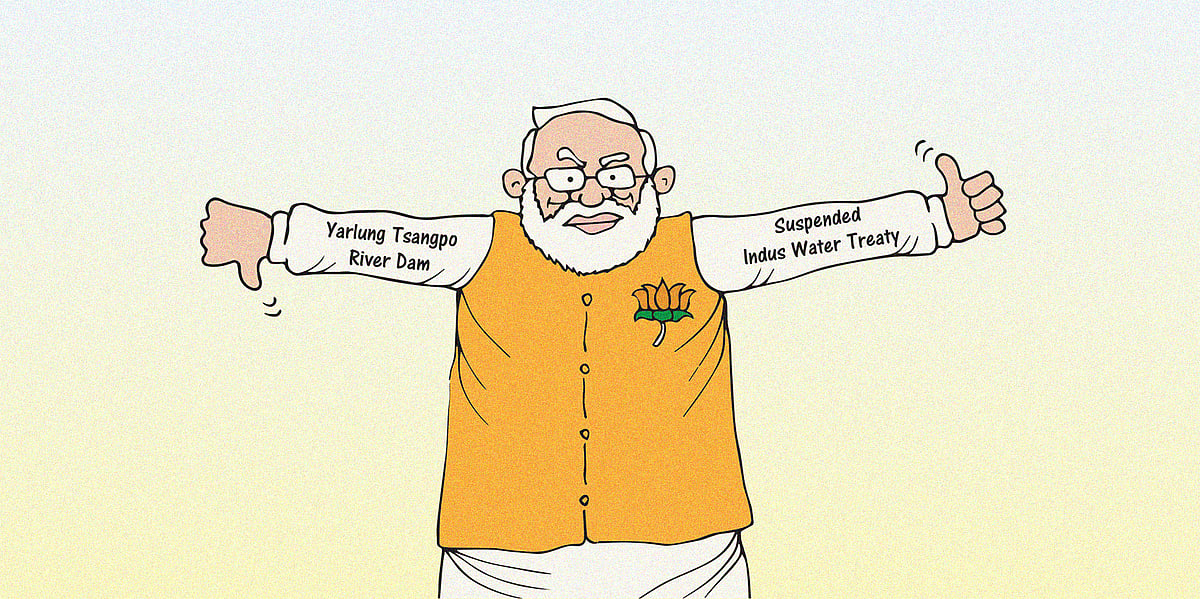
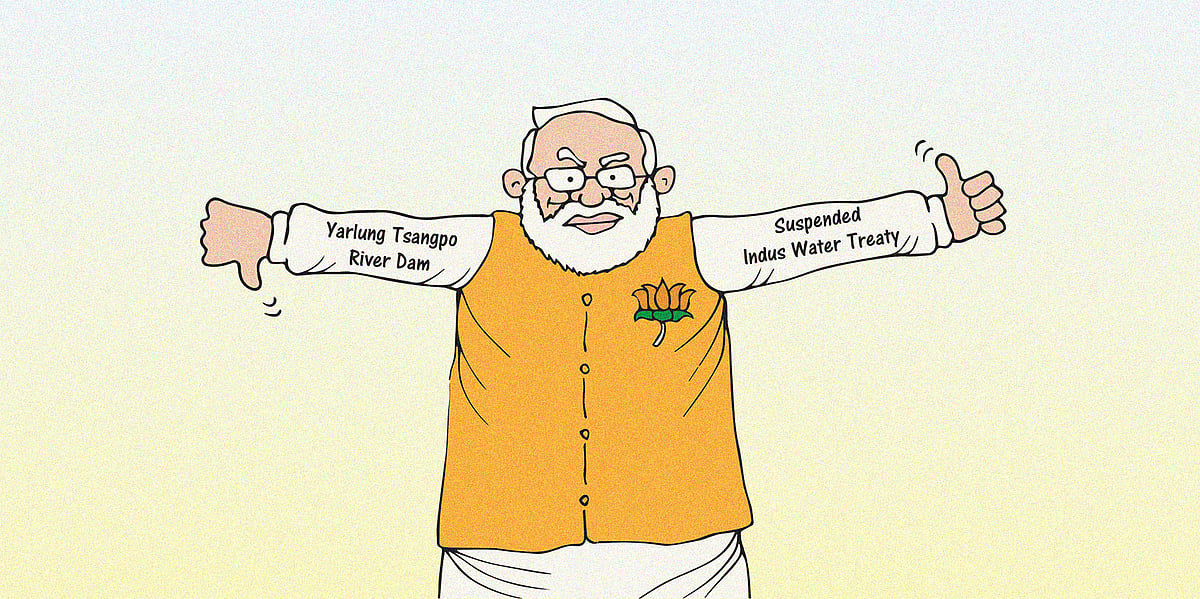
On 19 July, Chinese Premier Li Qiang attended the opening ceremony to mark the beginning of construction of a large hydropower dam on the Yarlung Tsampo river. The dam is said to cost approximately 1.2 trillion yuan (around USD 167 billion). Announcement of the project has been met with criticism from Indians and Bangladeshis, as well as Tibetans who have raised concerns around ecological destruction and mass displacement. India and Bangladesh have raised concerns that the dam could lead to water shortages in their countries, particularly during heightened geopolitical tensions with China.
These concerns contrast with India’s stance after the Pahalgam terror attack in April 2025, with political parties and mainstream media calling for vengeance. At the time, India abruptly suspended its Indus Water Treaty with Pakistan despite there being no provision for unilateral suspension in the agreement, and despite the treaty having remained in effect even during times of war. On 27 June, the Permanent Court of Arbitration in the Hague issued a supplemental award urging India to resume the functioning of the treaty, a move India dismissed as “illegal”. Even though India’s home minister defiantly said that India would never resume the functioning of the treaty a month ago, experts have pointed out that withdrawing the treaty would have infrastructural, ecological and political implications for India as well as Pakistan. And India’s suspension of the treaty has revived discussions about renegotiating the terms of the treaty to account for shifts in knowledge and to recalibrate power asymmetries between the two countries. Given this, Daanish Mustafa’s article from May 2025 is worth revisiting, as is Tamara Fernando’s article from 2019 on Southasia’s - and primarily India’s - relationship to water.
From the archive (May 2025)
Also read: Pakistan loses nothing from India’s suspension of the Indus Waters Treaty
Elsewhere in Southasia:
- Indian vice president Jagdeep Dhankar resigns from his position for health reasons, after receiving impeachment notice against high court judge Yashwant Varma
- A plane crashed into a school in Dhaka, Bangladesh, leaving 31 dead. Protestors demonstrating at the crash site clash with police, met with tear gas
- Police go on strike across Pakistan-administered Kashmir, put forward a 10-point Charter of Demands that includes requests for higher salaries and expanded medical coverage
- United Kingdom and India sign free trade agreement aimed to bring in GBP 6 billion investment to both countries, reduce UK tariffs after three and a half years of negotiations
- Bombay High Court in India acquits the 12 men convicted of bombing a train in 2006 after evidence of confession extracted via torture comes to light
- 101-year-old Kerala former Chief Minister and member of Communist Party of India (Marxist) VS Chanathandan dies on 21 July, sparking reflection on his legacy. His body was taken to his hometown, Punnapra
- Two political prisoners, a member of the National League for Democracy and an activist lose their lives in Myanmar’s junta-run prisons due to inadequate medical care, making 14 deaths of political prisoners since January
- Bhutan rejects over 20 Lhotshampa refugees deported from the US, leaving them to reside in Nepalese border camps, with the refugees facing the possibility of statelessness
- A Dalit sanitation worker comes forward with information about ‘hundreds of bodies’, many of them women and girls, that he was made to bury in and around Dharmasthala Temple, Karnataka; special investigation team initiated to identify and exhume gravesites
- Kabul receives United Kingdom’s special envoy to Afghanistan, Richard Lindsay, in first UK official visit since Taliban takeover marking ‘limited engagement’ on aid delivery, migration and curbing terrorism
- The Nepal Cabinet declares Madhesh Province a disaster crisis zone due to protracted drought. The label will remain in place for three months
- The Supreme Court of Sri Lanka rules former president Ranil’s State of Emergency in 2022, during mass protests around Sri Lanka’s economic crisis, was in violation of constitutional rights
- At least 13 people including 9 children, die in 48 hours across Khyber Pakhtunkhwah due to monsoon rains, 234 people killed in flash floods across Pakistan since 26 June
Revisit some of our archival stories adding more context to some of this week's news updates from Afghanistan, Nepal and Myanmar.
Also read: The Taliban is here to stay in Afghanistan – and the world must start engaging with it
Also read: Lhotshampa go home
Also read: Myanmar’s prison system is an overt tool of repression
Snap Southasia
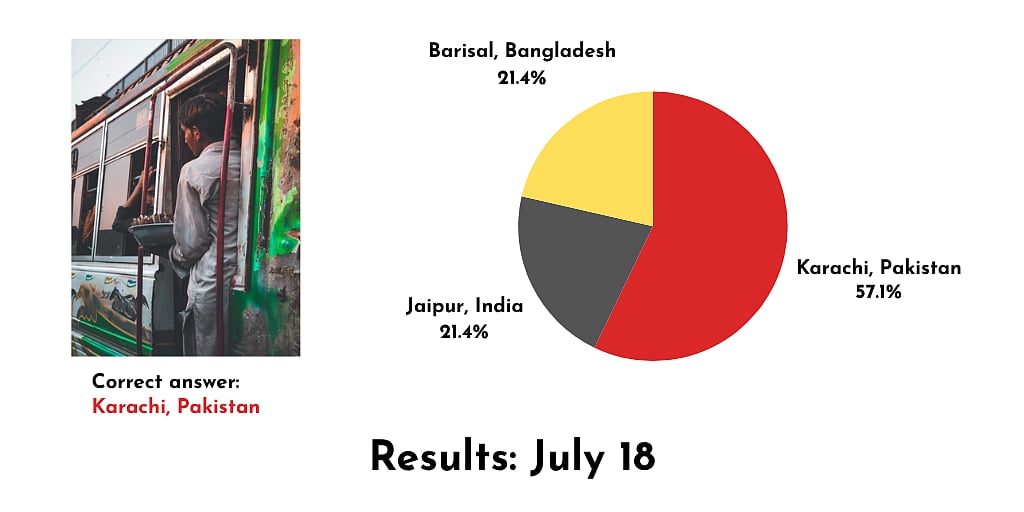
Every week we bring you one striking image from Southasia. Click below to guess where it was taken – and check in next week to see if you were right!
Want your photography featured in Snapshot Southasia? Write to me at raisaw@himalmag.com
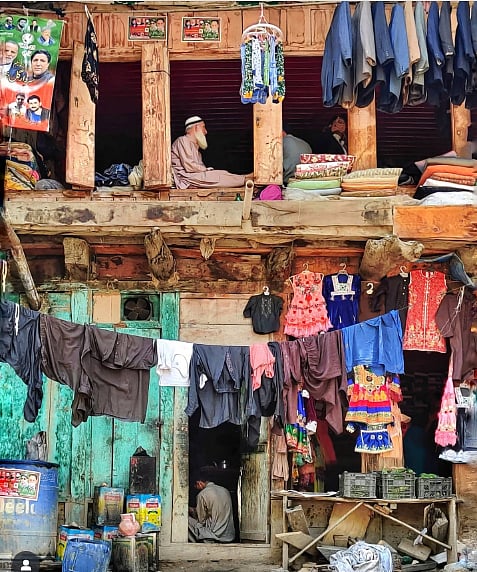
Where in Southasia was this photo taken? Click on your guess below!
Kabul, Afghanistan
Kel, Pakistan-administered Kashmir
Chittagong, Bangladesh