
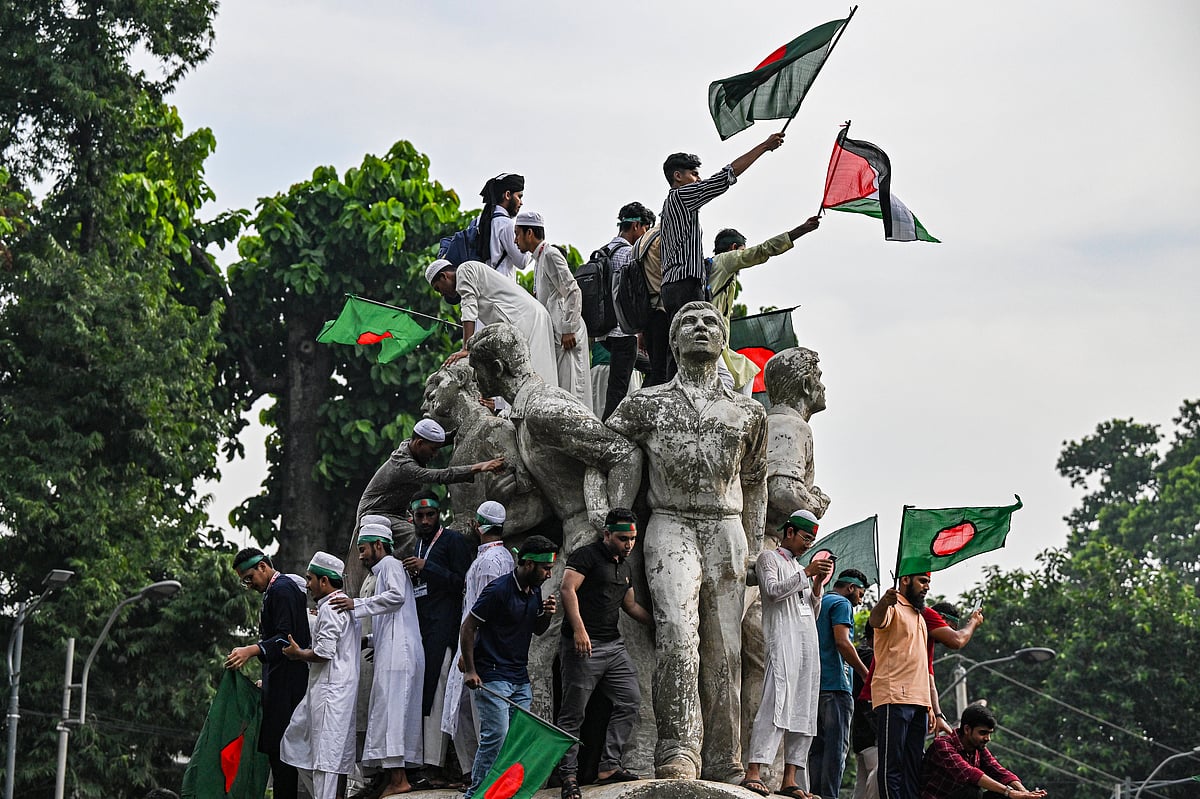
SHEIKH HASINA WAZED ruled Bangladesh with an iron fist for 15 years. In August this year she fled for her life to New Delhi, and the world was treated to images of a Gen-Z revolution in Bangladesh. Young men and women stood defiant in the driving monsoon rain. Protesters shook hands with armed soldiers atop armoured personnel carriers. And students managed traffic on the streets of Dhaka in the anarchy that followed the revolution.
Although it was clear what sort of government Hasina ran in Bangladesh, nobody imagined that it would collapse so quickly or so dramatically. Like the last Shah of Iran, she had acquired a reputation for stability and development; her allies at home and abroad had invested heavily in her continued rule, chief among them the Government of India. So her fall, hurried flight and subsequent replacement by an interim government of her opponents constitute a major setback for the foreign policy of India’s prime minister, Narendra Modi, his Bharatiya Janata Party (BJP) government and its backers.
Avinash Paliwal’s voluminous India’s Near East: A New History could not have arrived at a better time. Based on declassified government documents and interviews with key figures in Bangladesh, India and Myanmar, it makes the case that New Delhi has historically taken an active interest in the existence of stable, well-disposed governments on its eastern flank. In practice, this has usually meant a Burmese junta Delhi could do business with and a secular Bangladeshi government hostile to Pakistan. It has also largely kept markets open to Indian trade and ensured central control from New Delhi over the bewildering diversity of India’s Northeastern states with the aim of enhancing India’s security, material prosperity and strategic position in relation to China. The victims of this policy have included the nationalist aspirations of the Nagas, Mizos and Assamese, the health of democracy in Bangladesh, and the welfare of the Rohingya in Myanmar.
2024 has not been kind to that policy. The collapse of autocratic control has been no less dramatic in Myanmar than in Bangladesh, although it has proceeded over several years now and the junta still holds Yangon and other pockets in a many-fronted war. Today, India’s Near East reads like a testament to failure.