
| Image: Bilash Rai |
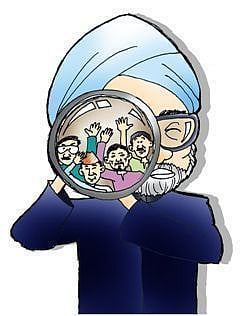
India has been the latecomer to 'Southasia'. As the most populous and powerful country, at the very centre of the region, after 1947 India assumed for itself the mantle of historic, civilisational 'India' without a thought to what the others lost in terms of heritage, identity and governance. A large nation-state both by virtue of its size and the history at its command, India has been locked for too long in a small-country mindset. As such, it has alternated between being the regional bully (remember Farakka) and the munificent squire (the Gujral Doctrine). The xenophobia and blinkered nation-statism of newly formed political elites impacted each Southasian country, and most importantly Big India, long keeping the region of Southasia from being realised. Regionalism would be impossible so long as the country that hosts 1.1 billion of Southasia's population of 1.5 billion – and more than two-thirds of the subcontinental expanse – were to insist on going it alone because it felt it did not need the others.