
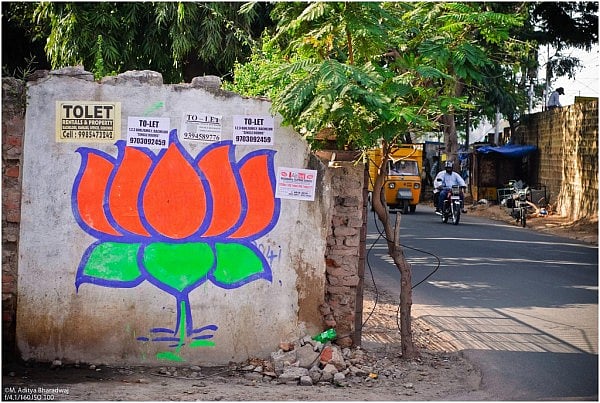
Let us begin with the assumption that we want a secular society in India. How then would one define it? Very briefly, it would be a society governed largely by rational principles, such as ensuring the social welfare of all its citizens. This would be done by providing employment and a reasonable distribution of income, healthcare, access to education, and a guarantee of human rights. Such a society is possible within the framework of certain polities, since some are better equipped than others for this purpose. A secularising process is problematic since every society has multiple identities that have evolved through its history. A secular society need not deny religion (based on belief and not on rational principles), but at the same time it should not give primacy to religious organisations determining the character of the society. A secular society therefore is not anti-religious, but cannot permit religion to control the functioning of society.
Let me start with speaking about what I mean by secular. First, I would like to emphasise that the prevalent Indian definition of secularism is not only inadequate but tangential. Second, I would like to consider what is meant by secularising society as different from endorsing the secular. Third, I would like to argue that religious articulation and organisation has been historically different in India (and possibly China) from that of Europe, and our understanding of it needs rethinking. And fourth, I would like to argue that there has been in Indian thought, a strong potential for nurturing a secular society.
The definition currently popular in India either equates secularism with atheism which is incorrect; or else more commonly, it describes secularism as the harmonious co-existence of all religions, which is desirable but is not the same as being secular. This is sometimes described as the Indian definition of secularism. Its origin goes back to nationalist leaders challenging colonialism, and who used it as a counter to communalism, both Hindu and Muslim. Right wing religious nationalisms were not essentially anti-colonial. Communalism denied a shared history to Indians. It subscribed to the colonial interpretation of the Indian past and saw Indian society as a collection of discrete religious communities, such as the Hindu and the Muslim. The co-existence of religions pays virtually no attention to the negative feature that the religions were of unequal status, which is a potential source of conflict. Describing the religions as those of the majority and the minority communities, has underlined the inequality. Furthermore, in understanding secularism as the co-existence of religions, religion remains the primary factor in social functioning.
The ideology of secularism in Europe has a historical context. It was formulated primarily as a social and political ethic, which, at that point in eighteenth century Europe, was pertinent to many aspects of life and thought. As one aspect in the modernising of society, it opposed organised religious institutions that had social and political control over society. For example, it contended with the control of the Church over education, as well as the exercise of religious identities in many areas of governance.