
This article is part of Dialectical, a Himal series that explores Southasia’s languages, their connections and shared histories.
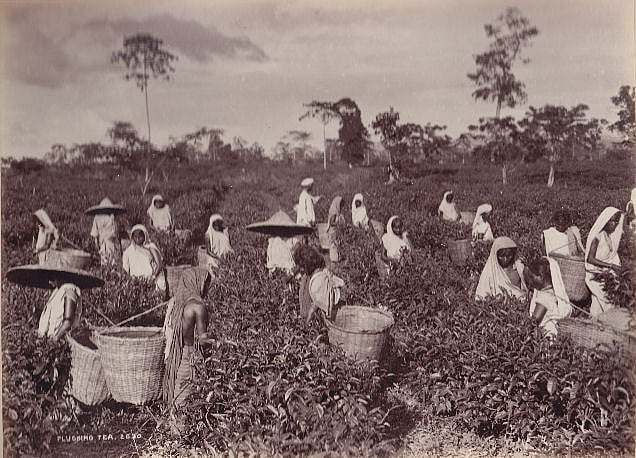
FOUR COUNTRIES in Southasia – Bangladesh, India, Nepal and Sri Lanka – are among the largest tea producers in the world. The establishment of commercial tea plantations in the region by the British in the 19th century engendered the migration of diverse groups of people to tea-growing areas to work there as labourers. Many of these tea-plantation workers belonged to marginalised communities, and they brought their eclectic languages along to their new homes. Little has been written about these languages; the research focus has largely remained on estate-worker rights in an exploitative system.
Here I discuss the historical and current state of minority languages that emerged on the tea estates of Southasia. Along the way, I also examine the emergence of some contact languages for intercommunity communication among tea-estate workers. Sadri, for instance, became a lingua franca among the estate-worker communities of the Indian state of Assam, who speak a variety of languages including Santali, Kurukh, Mundari, Sora, Kurmali and Odia. Nepali emerged as a lingua franca among the tea labourers of the Himalayan region, whose mother tongues are often Tibeto-Burman languages like Gurung, Rai, Tamang, Bhutia, Lepcha and Limbu. In Bangladesh, estate workers in the Sylhet region speak as their lingua franca an undocumented language (a spoken language with little to no formal records, typically passed down orally) known as Deshoali. In the tea plantations of the Nilgiri Hills, in the Western Ghats of northwestern Tamil Nadu, five minority languages – Toda, Kota, Kurumba, Irula and Paniya – are spoken apart from the lingua franca, Tamil. And in Sri Lanka there is Estate Tamil, the language of the Malaiyaha Tamil community in the country’s central hills, with a unique identity of its own to set it apart from Indian Tamil and the Jaffna Tamil spoken in Sri Lanka’s north.
This article, the first in a two-part series, focuses on the tea estates of Assam and Darjeeling. The second part surveys the unique languages of tea estates in southern India and Sri Lanka.